Best
types and makes of detectors
I am revamping this page with the tips and set up info from the best hunters. It is not an even playing field out there and setting your macine up correctly will pay huge dividends to your find rate.
There are no really bad
detectors built these days amongst the well known makes, they will all
find metal objects. Every guy thinks his machine is best and that is
all that matters, confidence in your machine. The depth argument is
a total waste of time as most finds are only normally only a couple
of inches deep, air testing a machine and saying mine goes an inch deeper
than yours make no difference. To me the test of a good detector is
how much junk you don't have to dig in order to make the right find.
My previous model a 1266 XB liked iron too much and I dug every plough part and rusty nail, the Coinstrike I now
use however eliminates iron perfectly. Some of the new machines require
a very long learning curve so it is not advisable to bring a brand new
detector with you but stick to your old faithful if you can!!
Tesoro |
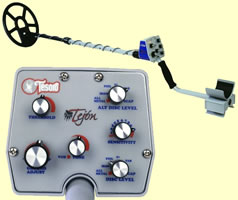
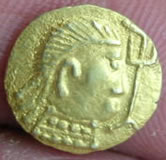 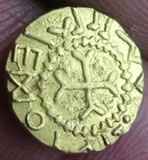
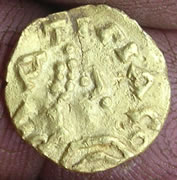
These were the settings in use when I found my Saxon gold:
Coil: 9 inch concentric
Disc: Barely above iron
Sensitivity: Cranked up until unstable then backed off back to smooth operation
Threshold: 1:00
Tone: 3:00
Also utilized 5.75 inch concentric coil in areas such as fair sites
Sal
|
I also use the Tejon as one of my main machines and set it up so that my main disc is set up just at the L in Foil.I don't even use the 2nd mode nor the pinpoint feature anymore , but inexperienced users may want to. It slows me down. Ground balance slightly positive. I like Threshold at about 2 O -Clock. Tone is preference
Dig any repeatable signal . Yeah you'll get some junk but in the last two hunts I've found 15 hammies with the Tejon.
Good Luck
Can Rod
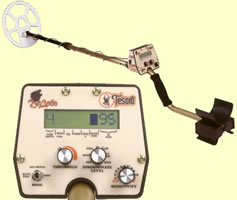
Tesoro DeLeon
Coil: 9" Concentric
Search Mode: Disc
Sens: As high as possible while maintaining a smooth operation
Discl Level: No more than Iron or a hair above
Regardless of reading, dig all signals, even broken ones.
Use of the larger (And also very sensitive) Tesoro 10x12" coil not recommended as it causes the machine to be very noisy and erratic.
My wife Marjo uses this machine in the U.K. and usually does very well with it.
_________________
Can Dan HH |
F75 |
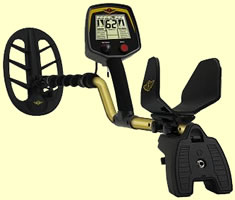
Sensitivety - Depends on the ground. Have run it as low as 73 and as high as 99.
Disc - 6
Notch - leave at factory preset.
Number of tones - 2F
Processor - DE
I have heard that the "notch" setting has software issues. First time I used the machine, it sounded like band practice. What I was told is that if you try to notch something out, it's actually notching it in (or something like that) Best thing to do is leave it alone, it works fine. If you have changed it at all, or want to be safe, do a factory reset (turn machine off, then pull trigger and hold menu button while turning it on) It is amazing how the chatter disappears
Mass Bruce
|
The F-75 is gonna be a keeper in my arsenal.
Love its fast recovery, faster than any machine I've ever seen it seems to combine features I like in both my Garrett and the Tejon. Unfortunately I only had a chance to use it for a day as the crappiest weather the week we were there. Couldn't see the screen, so I figured I would hunt by sound only and therefore go with the Tejon.
Most my pals in the UK that are doing well with 'em are hunting with disc at 4
notch- factory
fast grab often
PF mode as its almost as sensitive like the JE mode, but more stable
Sensitivity as high as possible without falsing and chattering.
2 -3 tones
Can Rod
|
Explorer II |
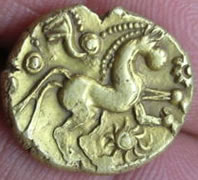 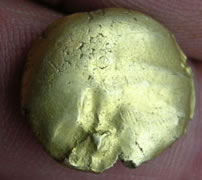
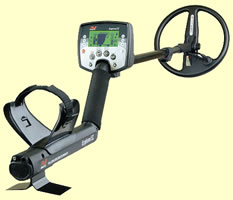
I believe a lot of people run the Explorer II differently. I will post how I like to run it here, so that others can see, and post how they like to run theirs.
I run it wide open, and I don't believe that is for everyone. It can suck your brains out, as you like to say.
Smart Screen always.
Ferrous mode
IM (iron mask) -16
Sensitivity-- Manual, as high as it will go and still run stable.
Gain. Set pretty high, I use 8.
Volume 10
Limits 9
Variability 7
Threshold tone and volume, set low.
Use Fast when hunting in trash, and Deep when the fields are quiet. Don't use the 2 at the same time.
This setting allows for good targets to be heard amongst the iron trash, as well as providing exceptional depth. I was pulling greenies out of the hooker field at 14 inches, which only sounded like blips of iron, until I removed a few inches of soil with my boot, and got a good signal.
Cal Jim
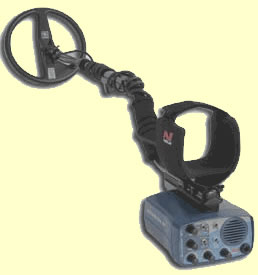
Minelab Sovereign…...
Disc : Zero (fully ccw)
Notch : Zero (fully ccw)
Mode: Discriminate
Volume : 3 o'clock
Threshold : Adjust to a slight hum
Sensitivity : Auto for the 1st timer, later adjust for max power without falsing.
The 10" stock coil seem to be the best. Some may prefer an 8" in trashy areas. I have used a SunRay 12" to cover large area's quickly.
If you’re using an Elite or GT, use the band selection switch to reduce interference.
On the GT, I would 1st run in the “fixed” ground track mode.
Cal Jim |
Sounds pretty similar to Jims.
Not always wide open, sometimes 29
IM -15
always IM with deep on most of the time.
gain 8 or 9
volume 10
I'm in ferrous sounds.
NS Andy
|
Not much to add to Andy`s settings Those are a winner but I always hunt in Ferrous sounds
Tenn Mark
|
| |
Garret |
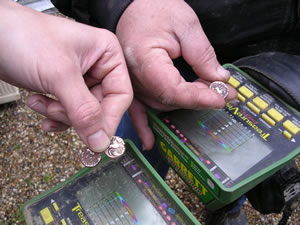
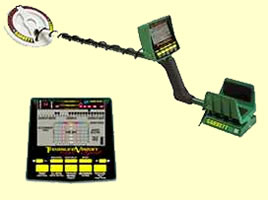
Garrett 2500 Settings-
Relics Mode
Sensitivity 10
Threshold- slight hum
I use belltone but not neccesary
The trick with Garrett is it'll lock as you image it at 90 degrees if the cursor bounces around more than a few segments its trash. dig everything that locks on above 3 as have found many hammies in the just above foil range.
Run with the 12.5 imaging coil if possible.
Can Rod
Hey there, forgot to mention on the 2500 a very important feature. Manually Groundbalancing and use of the true all metal mode turns the 2500 into a real animal. Only 5-10 % of folks use it but it becomes a different machine. Ground balance it by bobbing it as you hold the fast track button so you get a slight positive on the downward bob just above the ground. The machine is now about 20% deeper, and you can toggle back and forth between last mode as a coin check if you wish. This becomes a lot noiser but will still ID properly. Have dug greenies at over 14 inches using the 12.5 inch coil in allmetal. HH
|
Whites |
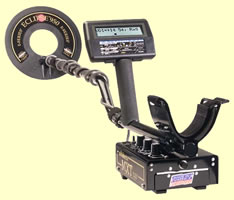 
White’s MXT (with 12” Super coil)
MODE: Relic
GAIN: 10 (+1, +2, +3, if conditions allow)
DISC: ~2
THRESHOLD: As desired
TRAC: Ground (some folks prefer Lock after ground balancing)
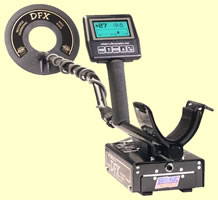
White’s DFX (with Eclipse DD coil)
There are dozens of settings that can be adjusted on the DFX. And many settings have a secondary effect on one or more other settings. If you try to set this machine up too hot, you will turn it into a doorstop.
We use the preset Relic program and change the following:
A.C. SENSITIVITY to 70 (slightly higher, if conditions allow)
TONE I.D.: On
V.C.O.: On
DISCRIMINATION: Accept –40 to +95
GROUND FILTERING: 3
PREAMP GAIN: 3
We also use Sun Ray probes on both of these machines and on our Explorer SE. A White’s Bullseye pinpointer also comes in handy at times for very small targets.
Mike & Sandie
|
|