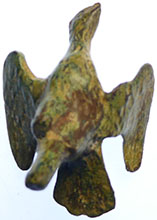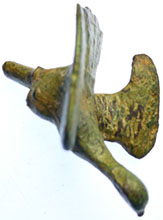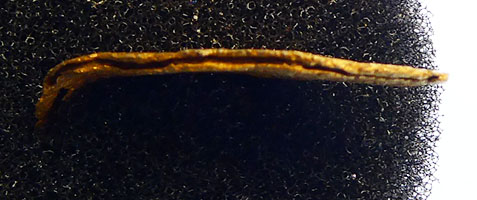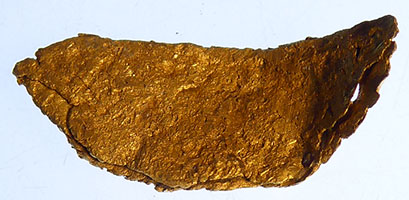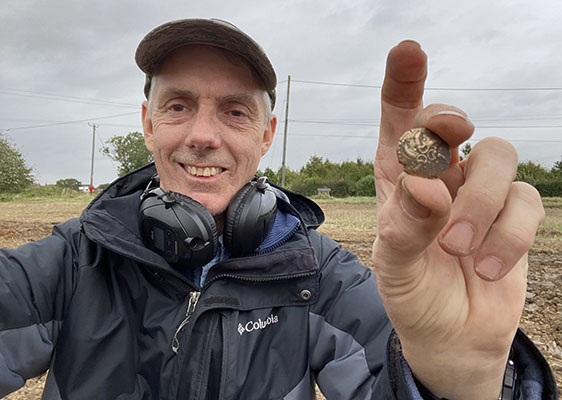
Metal detecting holidays in England with the World's most successful metal detecting club.20 years plus.
Twinned with Midwest Historical Research Society USA.
Comments and ID's against Roman coins are from our expert Mark Lehman who also lectures on the subject in the USA
Comments and ID's against Celtic coins are from John Sills who runs the National Celtic Coin Index
Comments and ID's against early Medieval coins are from Dr Martin Allen who runs the National database at the Fitzwilliam museum
Comments and ID's on military buttons are from Tim Burton info@hamwichouse.com
Contact Louisiana Sal stateside for an American's view on hunting here sal@historyhunts.com
Contact Ch Ron for an American's view on hunting here ron guinazzo <rpg61@msn.com>
Quick
News Page Updated 9th June 2025 
New 2025 April finds page
2025 March finds page
2024 Oct finds page
2024 Sept finds page
2024 April finds page
2024 March finds page
2023 Oct finds page
2023 Sept finds page
2023 April finds page
2023 March finds page
2023 Feb finds page
2022 Oct finds page
2022 Sept finds page
2022 April finds page
2022 March finds page
New season kicks off 6th Sept 2025
Total available fields to choose from is 180 +
London Time - Chicago Time - Miami Time - Ontario Time - Los Angeles
Report any sightings of illegal metal detecting you see to our local dedicated police officer.
Take pictures of them together with the registration numbers
on their vehicles and phone or email below.
Tel 07890 513899 - PC Andy long
email - wildlife@essex.pnn.police.uk
6th May 2025 - Updates and exportsI am busy beavering away applying for export license for the guys pouches and updating the site with the latest finds. The streamlined export electronic process is super fast at the moment with export license issued in some case only taking a day to be returned approved. Voting is currently taking place for members fovourite 'Find of the Year' and the new Free Forum competition has been launched with a chance to win a free week trip next season. Make sure you vote and then send me your entry into the competition, entries are logged on the Forum Comp Page. This will be a fascinating count of all the buttons we find in a season. Lots of individual pages below have been updated with the latest finds. Missed finds in the guys pouches are posted to the bottom of the last finds page 2025 April finds page.
|
||||||||||||||||||||||||||||||
6th May 2025 - New April find page createdI have split the latest finds page in half to improve loading times. I am currently uploading more finds from last week to the new 2025 April finds page
|
||||||||||||||||||||||||||||||
5th May - End of the season - girls kick buttGreat end to the season with more great finds posted to the latest 2025 March finds page. The female members kicked butt with their latest gold finds below. It is now time to start the export process and members voting for their 'find of the year'. Great news for Boston Dave, who found the gold monkey below, the British Museum are unable to accurately date it and there fore it will be returned to him. Stunning find.
Stunning detailed high carat gold animal figurine - reported to museum as potential treasure This was on a site with 1300 BC items found, Roman and Celtic gold finds so impossible to date - I will go for medieval 3.0g, 24.4 mm L x 3.9mm W
Cheri pops this beauty Celtic qtr stater
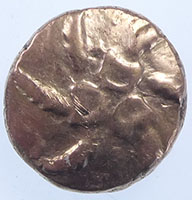
Heybridge Horse type Celtic gold qtr stater - Trinovantes tribe c50-BC - reported to museum 1.25g, 11.2mm
Huge 450 million year old fossils Sea Urchin EchinoidEchinoids (sea urchins and sand dollars) are echinoderms, related to sea stars and crinoids. All echinoderms have external skeletons made of numerous plates of the mineral calcite (a form of calcium carbonate), and a unique water vascular system that drives most of their motion. Echinoids have rounded or flattened shells, called tests, which bear numerous spines. Tiny tube feet, connected to the water vascular system, extend through holes in the test and allow the animals to move on or within the sea floor. All echinoids exhibit the characteristic five-fold symmetry of echinoderms.
1260 AD Non Heraldic personal seal 4 have been found attached to pasture rights. The design is typical of mid 13thC non heraldic seals.
Medieval (13th century) lead alloy seal matrix. It is circular in plan, with a complete suspension loop.. The central design is a flower with eight petals with owners legend. Subsequent actionsSubsequent action after recording: Finder applying for an export license ChronologyBroad period: MEDIEVAL Date from: AD 1200 Dimensions and weight
Materials and constructionPrimary material: Lead Manufacture method: Cast
Copper-alloy Post-Medieval pipe tamper, circa 17th century AD. This pipe tamper has an incorporated signet ring with seal matrix. The oval seal face depicts a bird within a circular border. Ref: Bryon Pateman-collecting seals. Similar examples can be seen on PAS-SWYOR-1BFD12.
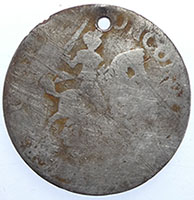
1726 Spain 1 Real - Felipe V (Cuenca and Seville) - mint mud larking find
1780 dated commemorative button - Louis XVI of France mint - mud larking find CHRS·REGN·VINC·IMPER 3 lis in a roundal
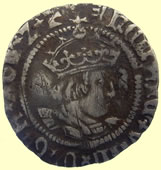
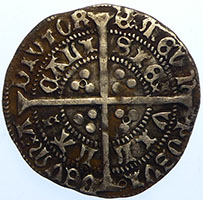
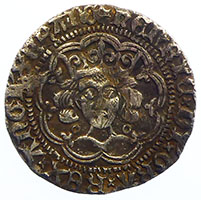
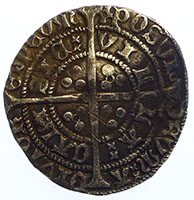
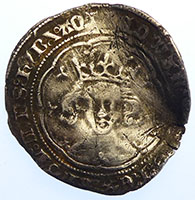
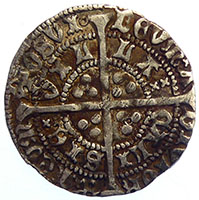
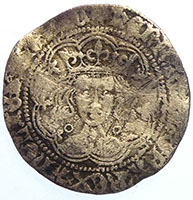
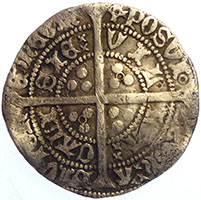
(1422-1430) Henry VI hammered silver half groat - Annulet issue - double satire stops - annulets between two sets of pellets on obverse- 11 arches to tressure - IM Cross 1
Obv hENRIC DI GRA REX ANGL Z FR' Rev VIL/LAx/CAS/ISx/ - Calais mint
1823 Madras Presidency (British India) 1/16th silver Rupee
Laura's first ever gold coin find
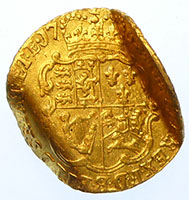
1798 George III milled gold half guinea - 4.143g, 2.044mm
|
||||||||||||||||||||||||||||||
6th April 2025 - More great gold finds
More great gold finds including a crisp medieval hammered qtr noble. I have updated the latest gold to the goldpage. More great finds uploaded to the latest finds page 2025 March finds page. I have loads more finds recovered over the last couple of weeks to upload yet.
1854 Victoria milled gold sovereign 8g, 22.05mm
1361- 69 Edward III hammered gold qtr noble - Treaty period, Large pellet at centre of reverse cross Obv EDWAR DEI GRAC ANGL D 1.93g, 18.95mm
c 10thC Late Saxon stirrup strap mount Class A Type 11a Sub triangular mount depicts a Lion looking upwards with its front paw raised and tail curled between its legs and over the back
Ny Dale pops his 2nd gold coin
1828 George IV milled gold half sovereign 4 g, 19.36g
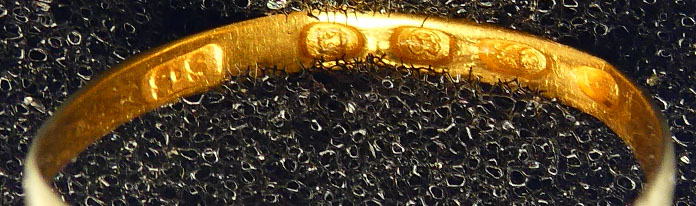
1807 - 22 carat gold ring - 1.51g, 21.5mm - London date letter M Maker PB
1882 - 9 Carat gold ring - London date letter G 1.76g, 19.5mm
Kerry's first gold coin in 25 years of detecting
1828 George IV milled gold half sovereign 3.96g, 19.31g
Unique coin - probable modified Henry IV die and legend ANGLE Z F + Not recorded legend in the reference books 1413 Henry V hammered silver penny -Mullet and broken annulet by crown - pellet on breast and neck Satire after TAS Obv + hENRIC REX x ANGLE Z F Rev CIVI/TAS+/LOND/DON - London mint
2ndC Roman silver coin sent for ID Obv: IMP CAESAR TRAIANVS HADRIANVS AVG
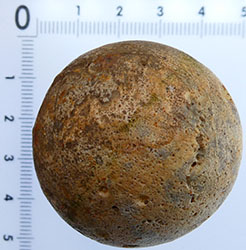
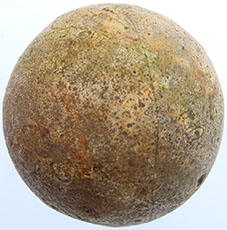
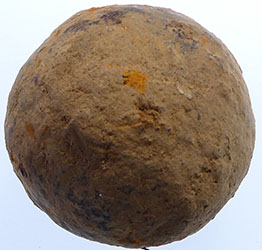
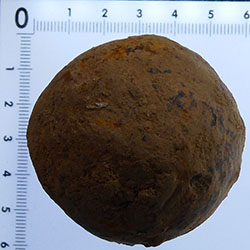
16thC stone/ musket/cannon balls 5.1g,17.42mm 21g, 27.5mm 24g, 26.99m Stone canon balls, or shot, were made by hand by an experienced stonemason. The process was, and still is (can be made for living history demos but not fired ), a time consuming job. Material would have been any hard natural stone that was available, usually sand stone but sometimes granite. The stone would be hand worked to small radius sections and then rubbed up with a stone block. A reverse section template would be used for accuracy.
|
||||||||||||||||||||||||||||||
18th March 2025 - Eclectic mix of finds
Tx Mike finds the first great find of the year. An absolutely stunning enameled mourning ring found on pastureland that has never been ploughed so it was completely undamaged. Mike wins the club freebie pack of the Club sweatshirt, finds pod and the Sprinks 'Coins of England' book. While I was at the museum discussing this find's makers mark they showed me an amazing book written in the 1890's covering gold and silver makers marks. I managed to find an1950's reprint off Amazon and it has arrived, it will be of great help to research the makers of all our gold and silver finds.
Nc Michael found our largest ever 2000 BC Bronze Age flat axe, monster sized. Another brilliant pastureland find was the huge George III oval counter mark Dollar 1792 found by NY Todd. I picked up 5 disclaimed Celtic gold coins from the museum and also a previously reported treasure that turns out to be a neat Bosun's whistle, details posted below.
Ill Mike - Celtic gold ESS -13E4E5
I have started a new 2025 March finds page where all the other neat widgets being found are uploaded.
Tx Mike gets his freebies for the first monster find of the year
Note the skull engraving on the ring
Stunning 1721 Gold and black enamel mourning ring - reported as treasure A.M obt 2 May 1721 Maker RD 5g, 22.13mm
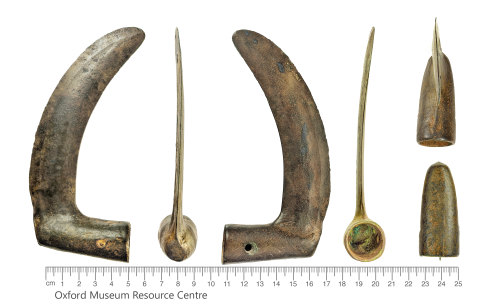
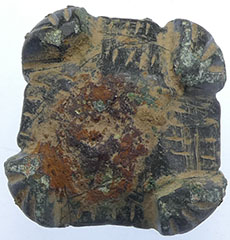
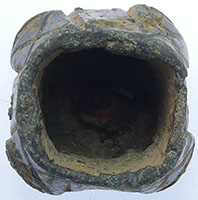
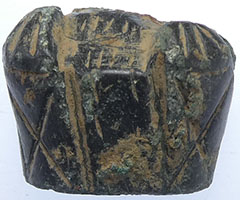
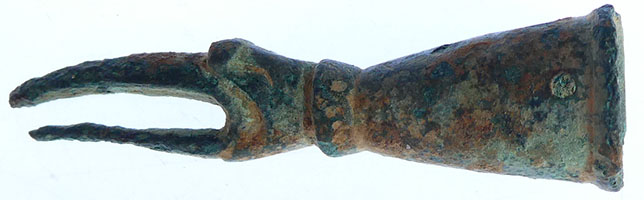
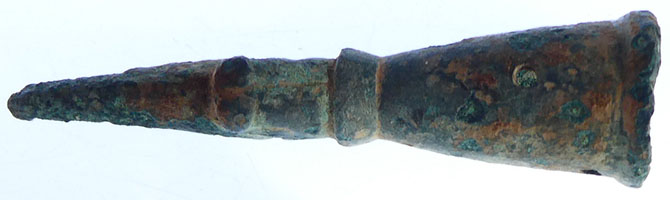
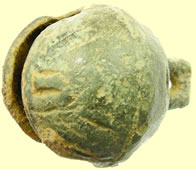
Vir Phill found this in Sept and I reported it as potential treasure to museum as it had that classic 16thC construction. I just got it back disclaimed from the museum ID'd as a bosun's whistle. Record ID: ESS-6715AB - POST MEDIEVAL whistle. A fragment of a silver gilt bosun's whistle of post-medieval date (c.1500-1700). Description: The whistle remains as one half of the ovoid hollow of the whistle which would have been attached to a tube through which air would have been blown into the hollow. The hollow would have been constructed in two halves and joined at their bases. The remaining half has semi-circular cut out which, when joined to the other half would have created a circular opening, allowing the blown air to escape. The fragment is decorated with a raised design in the form of a flower with five heart-shaped petals and a raised knop at its centre. The fragment is slightly bent and retains much of its gilding. Measurements: height: 8.5mm; width: 13.4mm thickness: 9mm weight: 0.75g Discussion: More complete bosuns' whistles with the same decoration recorded on the database and submitted for the consideration as Treasure include SOM-77474D (2017T629) HAMP-D7F787 (2013T746) CAM-AEA9B6 (2018T1014); HESH-DB1922 (2010T456); LVPL-8EE474 (2015T412). These are all dated to within the range of c.1500-1700.
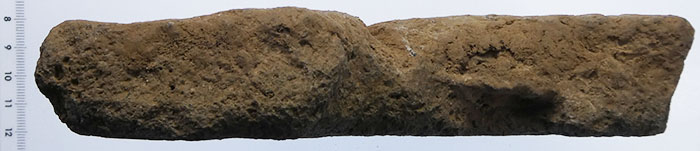
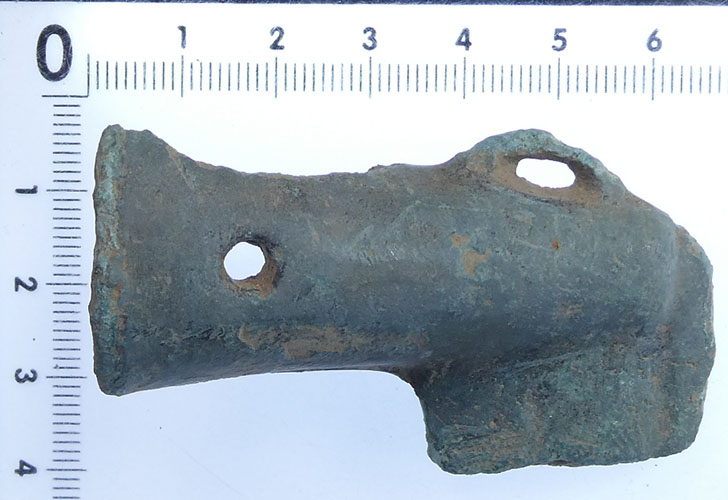
2000 BC Bronze Age flat axe 111mm L x 67mm W x 9.66 mm T - 303g
18thC silver seal matrix
Two piece set made up from the grooved base and the small grinding tool 1stC BC to 1stC AD Celtic Woad cosmetic grinder - boat shaped The grinder was used to pulverise vegetable material such as woad in the preparation of dyes. These are also known as perfume or cosmetic grinders. During the Celtic period in Britain a biennial herb called Isatis Tinctoria; was cultivated for the blue dye that could be obtained from it when crushed. This plant is also known as woad. The dye would then be applied to the skin 53.5mm L x 8.5 mm W
George III oval counter mark Dollar 1792 - look like a Santiago mint, 27.6g, 39.8mm CARLOS IV. 8 reales. 1792. Santiago. DA. C sobre R en CAROLUS. AR 26,6 g. 40 mm. VI-834 var.; AC-1021. Golpes en anv. y hoja en rev. MBC-/MBC. Muy rara.
George III (1760-1820), oval countermark upon Spanish Eight Reales of King Charles IIII (1788-1808), 1792 FM, , small oval hallmark of George III right at centre of obverse, bust of Spanish King laureate and draped right, date below, legend and toothed border surrounding, CAROLVS.IIII. DEI. GRATIA, rev. crowned quartered shield of arms, pillar with ribbon motto either side PLUS ULTRA, legend surrounding, .HISPAN. ET IND. REX. S. 8R.DA. weight 26.92g (ESC 129; Bull 1852; S.3765A). These emergency countermarked coins were struck in relation to a crisis with the silver coinage at the end of the 18th Century where the supply of silver in commerce and for the Mint had dwindled due to the Wars in France after the Revolution in 1797. From March 1797 the Bank of England therefore released stocks of its Spanish dollars each with an oval countermark valued at 4s and 9d for currency. They did not really alleviate the problem of smaller change and were issued on an off with the oval countermark until a more complex larger octagonal mark replaced them from January to May 1804, as the oval pieces were being counterfeited. Eventually the octagonal replacements were also copied widely and the ultimate solution was to have the Soho Mint totally overstrike the Spanish Dollars with the Bank of England design.
1618 Spanish hammered silver half reale, Phillip 1.81g, 18.65mm
|
||||||||||||||||||||||||||||||
5th Feb 2025 More exports and fossils
Senior member Louisiana Sal, is heavily involved with ship wreck hunting off the Florida coast . He has written a fantastic new book detailing all the gold coin finds with the link above. Amazing coins in excess of over £7 million dollars worth. I am still processing export pouches and any missed finds are posted to the last finds page 2024 Oct finds page. A couple of real nice fossils were in the pouches that I have added to our fossil page.Fossils. I picked up more disclaimed treasures and hoard coins from the museum, like the beauty gold ring below and applied for export licenses.
Medieval gold ring with ruby - disclaimed and returned to finder 1.835g, 24.29mm
A complete gold and gemstone ring of medieval date (c.1300-1400). Description: The hoop of the ring, now misshapen, is circular in cross-section. It meets the 'pie dish' bezel, to which it is joined by way of protruding collars. The bezel is circular in plan and sub-lozenge-shaped in profile, the bottom half being deeper than the top. The top half of the bezel has an opening which is bevelled to hold a stone setting. The stone is a red cabochon-cut gemstone, possibly garnet. The hoop has a small but deep nick on one of its shoulders. Measurements: diameter: 19.2mm; width (of bezel): 4.6mm; thickness (of hoop): 1mm; height (of bezel): 5mm; weight: 1.84g Discussion: This ring fits with a group of decorative gemstone finger rings described by Egan and Pritchard (2002, 326. fig 215) whom date them to the 14th century. A number of comparable examples of this type have been reported as treasure and reported to the PAS see: KENT-D6A961 (2018T945), BERK-57430E (2019T158), HAMP-6C5109 (2017T761), SUR-C32418 (2019 T997) and DUR-602602 (2019T35).
Fossil asymmetric rhynchonellid - Torquirhynchia inconstans The Mesozoic is divided into three time periods: the Triassic (245-208 Million Years Ago), the Jurassic (208-146 Million Years Ago), and the Cretaceous (146-65 Million Years Ago).
100 million years old Late Cretaceous period bivalve fossil
Record ID: ESS-BDBD72 A fragment of a cast copper-alloy brooch (cruciform) of early medieval date (c. 420-550 AD). Description: The brooch remains as the foot with horse head terminal. The foot has straight sides and is of an equal thickness all the way down to the horse head terminal where it is slightly waisted at the snout, before widening again slightly and rounding off at the nose. The top of the foot beneath the transverse break, has three pronounced transverse ridges, each decorated with two grooves.
Record ID: ESS-C0C8D9 An incomplete cast copper-alloy buckle (Marzinzik Type II.23) of Late Roman (c.350-410) or early medieval date (c.550-700). Description: The buckle remains as the sub-triangular plate, recessed on one side with raised edges. The two long sides have semi-circular lobes with rivet holes at their centres. The short edge of the plate is lobed on each corner, creating a v-shape at the centre. This probably a further rivet hole where the buckle pin would have attached. The pointed end of the plate has broken away. The plate is undecorated but the recessed side has slightly raised …
|
||||||||||||||||||||||||||||||
5th Jan 2025 Brilliant new books - Bronze Age ID and site updates
Spectacularly crafted multi stranded BC gold band - reported to museum as treasure 1.19g, 21.6mm L x 5.83mm W x 1.1 mm T
I got the new set of updated reference books above delivered in Nov and they are brilliant. I was amazed when I saw the gold band we found in Nov featured on one of the pages. The find is currently with the museum going through the treasure process. The books are so well detailed and are a must buy. I have a meeting this week with the Colchester museum to pick up disclaimed hoard coins and treasures and will post a list shortly on the closed members forum. I am still processing export pouches and any missed finds are posted to the last finds page 2024 Oct finds page. I have been updating lots more individual pages below on our site with finds from the first half of the season. A few list of individual finds pages is found at the Findsindex
|
||||||||||||||||||||||||||||||
11th Dec 2024 More exports and updatesThe turnaround time of export license applications being approved had really improved with the new system, currently it is taking under 3 weeks on average. Guys can have their export pouched shipped by International Insured and signed for or pick up next trip. As I process export pouches the missed finds are posted to the last finds page 2024 Oct finds page. I have been updating lots more individual pages below on our site with finds from the first half of the season.
|
||||||||||||||||||||||||||||||
19th Nov 2024 Recording and processingOur club has now been running for over 20 years now and a lot has changed over the years. Advancement in online technology has made my job so much quicker and more efficient. No more chopping down lots of trees to apply for each export license. In the past I would need to print per application up to 21 separate sheets of coloured paper, use 2 envelopes, fill out by hand a carbonated multiple sheet application form, take it all to the Post Office and send it off to export duty . The approved export license would eventually arrive back in the post using another envelope. Now I have an electronic online portal where I fill out all the details and upload just a single pdf file document with my coloured pictures and finds list. All my applications now appear in one place on my portal, the status of each application can be filtered and when the application is approved an e-mail arrives giving me an update. I can then print off the approved export license remotely and the job is done.
In the past I would have had to physically take any find for recording to the local museum where the FLO would photograph and prepare them for the PAS database. Eventually I would go the museum and pick them up after recording. Now with my full access to the PAS database it can now all be achieved remotely. I prepare all the pictures of the find in the museum format, enter all the physical details about the find, size weight, location etc. Once I have completed the record it is fired to the FLO to check all the details added are correct and then it is published on PAS. The FLO can ask for more info and change any details before publishing. All treasure and hoard items are still all physically taken by me to the museum as they go on to experts at the British museum to evaluate further and progress through the treasure process. I have been updating the individual find pages below with finds from the first half of the season. As I process export pouches the missed finds are posted to the last finds page 2024 Oct finds page.
|
||||||||||||||||||||||||||||||
28th Oct 2024 Season break - more great gold findsThat is it now, guys have left until Feb when the 2nd half of the season kicks off. I still have a load more finds the guys left to upload yet to the 2024 Oct finds page. Nc Daisy on her first trip started off with a beauty early decorated gold ring then popped a mint Aethelred II 978-1016 AD Saxon silver penny, the EMC has one other coin of this moneyer in the Crux type, but this is the first single find recorded. She is pictured posing below with the three Colchester club freebies. Mitch Pete again on his first trip popped his first ever Celtic gold coin with 25 BC Clacton Cross type. Updated the gold page with the latest finds.
Nc Daisy's first hunt
Aethelred II 978-1016 AD Saxon silver penny - sent for recording 1.4g, 19.77mm I have recorded the find as EMC 2024.0370. This is an Aethelred II Crux type penny of the Chichester moneyer Eadnoth, reading +EAD[N?]OD M-O CISE. EMC/SCBI has one other coin of this moneyer in the Crux type, but this is the first single find recorded. Best wishes, Martin
Rare find 1554-58 Philip and Mary groat - Lis mint mark
Early hand eteched and punched pure gold ring - reported to museum as treasure 1.69g,22.9mm L x 0.95mm T
17thC silver seal matrix - reported as treasure to museum
Pete's freebies for his first ever Celtic gold find
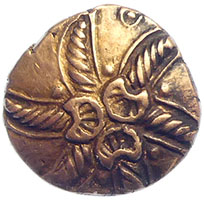
25 BC Clacton Cross type, ABC 2356, the companion quarter to British F, the Late Clacton stater, ABC 2332. In ABC it's illustrated as a 'three men in a boat' design but the obverse is probably a degraded boar ; at the moment there are around 30 known, mostly from Essex and Suffolk so it's a definite Trinovantian type. 1.37g, 12.7mm
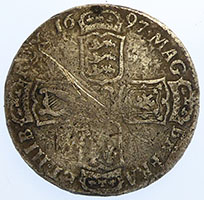
1697 William III milled silver half crown (30 pence)
Crusty BC Roman silver - needs cooking to remove crust
Charles I and Henrietta Maria. Royalist badge.A CHARLES I ROYALIST BADGE BY T. RAWLINS.
|
||||||||||||||||||||||||||||||
16th Oct 2024 Earliest milled silver found - more beauty relics and club record for coppers found
Lots of rain made the ploughed and rolled land very sticky so the guys decided to pick old pastureland for the day. They scored a club record and dug 251 copper coins for the day, a dozen milled silvers, amazing numbers of relics, several hammered silvers and a mint 1775 George III milled full gold guinea pictured below. Because there was no oxygen or fertiliser to attack the copper the coins came out in beautiful shape, early William III and George 1st copper had beautiful patina and dates showing. They returned the following day and got hundreds more coins including over a dozen hammered silver coins and a mint Roman silver. The most spectacular finds were the best looking crotal bells I have ever seen in 20 years. The details on the bells are amazing with one bell showing a double headed lionface below. I will be posting them shortly on the latest finds page. I have created a new hunt page to speed up load times 2024 Oct finds page. I got 10 days of finds to post yet to the new page this week.
Stunning crotal bells
Henry VIII Posthumous issueHenry VIII 1509-1547Amazing relic - Henry VIII bronze medallion/ weight ? 4.9g, 27.03mm
Brilliant find - First ever milled silver test pieces made 1560-1 Elizabeth 1st milled silver sixpence- 6 pointed star mint mark Elizabeth I (1558-1603), silver milled coinage by Elloye Mestrelle, undated earliest pre-production issue (1560-61),crowned bust left in elaborate dress and ruff, bust type A entirely within legend, initial mark mullet both sides, outer toothed circle and legend surrounding both sides, * ELIZABETH. D. G. ANG. FRAN. ET. HIB. REGINA, rev. long cross fourchée over quartered shield of arms, POSVI DEVM. AD IVTORE M. MEVM, The abbreviated Latin legends translate as on the obverse "Elizabeth by the Grace of God, Queen of England, France and Ireland"; and on the reverse "I have made God my helper." The mint mark of mullet (five-pointed star) was reserved only for use on the pre-production patterns, the currency milled pieces using the six-pointed mint mark of star. Though no original indentures or documentation survives for the production during the milled coinage by Mestrelle, writers Borden and Brown worked out in 1983 the sequence of dies used for the milled coinage, this represents the beginning being an example of the first milled coin ever produced in this country, the earliest issue struck in either December 1560 or January 1561. Elloye Mestrelle likely arrived from Paris with his family in 1559, and along with his sibling Philip was already a skilled engraver. It is thought that he came to England to sell his skills to the Mint, as the Queen was concentrating her energy into the recoinage, having ascended the throne the year before. He may well have lost employment engraving in France, as the first mention of him is in a pardon by Queen Elizabeth of 24th March 1561 where he is forgiven for any treasons, felonies or offences before his arrival at the Mint dating before 1st March 1559. He seems to have secured a contract during 1560 at the Mint and was known to be acquiring materials for his machinery in June of that year.
Born May 1769 Died Sept 1852 Full Name: Arthur Wellesley, 1st Duke of Wellington Biography: Commonly known as the Duke of Wellington, Wellesley was a leading military and political figure of the 19th century. His defeat of Napoleon in 1815 at Waterloo made him a heroic national figure and top military hero in British history. Born: May 1, 1769 Died: September 14, 1852 (aged 83)
Utah Shane's first ever gold find
1775 George III milled gold guinea 8.29g, 24.5mm
32 BC Mark Antony, Legionary silver Denarius. ANT.AVG.III.VIR.R.P.C Galley, Legionary Eagle between two standards
1340 AD French Jetton Crown introduced in 1340 by Philip VI (1328-50) Royal Crown with 3 rosettes across body of crown Rev Triple banded straight cross fleuretty AV
|
||||||||||||||||||||||||||||||
1st Oct 2024 Great Saxon season and our first bronzeMore great finds including a great season so far for Saxon sceats and our first ever bronze version. I thought initially it was just a weird little Roman bronze until it was confirmed by the Fitzwilliam museum as Saxon and recorded on the EMC database. The same field, that was previously an orchard, produced our best condition Saxon silver sceat I have seen dug. Clearly no oxygen and water has attacked the coins. Meanwhile one of our oldest and long term members Ont Denny, found another one of those beautiful 1300 BC gold armlet rings. The rest of the gold necklace and more of the rings is possibly out there somewhere on that field. That would be a spectacular find. I have posted loads more great silver and widgets to the 2024 Sept finds page. I have bags of finds to photo and post still so keep an eye on that page.
Georgian fob seal
Fantastically crisp condition sceat found in a previous orchard field c600 AD Saxon silver sceat - sent to EMC database for recording 1.243g, 12.65mm The coin (EMC 2024.0319) is Series E, VICO variety 1b. This type has symbols that might be read as VICO within the standard on the reverse, which might be a reference to a continental trading centre or vicus. Best wishes, Martin
Tiny Roman bronze with great detail - sent for ID - turns out to be 600 AD Saxon sceat- just sent off more details so we can get an EMC number issued. 055g, 10.98mm This is a Series O (Type 40) 'sceat'. Do you have some information for a record in EMC? Best wishes, Martin I have recorded this coin as EMC 2024.0322. From the evidence of lamination in the images and the low weight this seems to be a contemporary copper alloy plated imitation. Plated imitations seem to have become an increasing problem as the 'sceat' coinage progressed in the first half of the eighth century.
Makers mark damaged - - HS***HS or SH***SH - no hall marks
High carat gold ring - reported as potential treasure to museum 2.05g, 27.17mm
Ontario Denny is 85 years old and popped the 1300BC gold ring below
1300BC gold armlet ring 1.85g, 13.56mm dia x 5.04mm W
Unknown thick copper coin Crown C7 ID'd by Virg Phil 2.63g,14.75mm Features
Valentinian II, AD. 375-392
|
||||||||||||||||||||||||||||||
24th Sept 2024 More monster findsThe guys are still banging in monster finds and I have so many export bags of neat finds to fondle, picture, ID and post to the latest 2024 Sept finds page. One of my favourites, that could turn out to be 'Find of the year' is the solid gold monkey below found by Mass Dave. I have reported it to museum so their experts can play with it, quick bit of research appears to me it is late medieval but we will have to wait and see. It has also been a great start to the season with 4 Saxon silver sceats found off four different fields and two sites. They are all different and ID's and recored on the EMC database by Dr Martin at the Fitzwilliam museum. Mitch Dave found another monster hammered gold Nobel fi that turns out to a 384 AD Continental type, it is not an exact match but I have not had time to do more research yet. A brilliant eyeball find is the 'Devils toenails' below at 200 million years BC, I had never heard of them so luckily one the guys could ID it. Ill Mike found his first Celtic gold and it turns out to be another 'excessively rare' Cunobelin type in the Chris Rudd book. Check out Chicago Ron's Facebook page as he has face booked live some of the great finds.
Happy campers
Flanders, Philip 'de Stoute' (The Bold), 1384-1404, Gold Noble, (Noble d'Or), in the style of the English Coinage
Flanders, Philip 'de Stoute' (The Bold), 1384-1404, Gold Noble, Monster sized gold noble - almost an exact match as one above but it has a half rose on top of crown, two pellets left, one pellet right to ship front castle - similar legend with double satire stops. Needs more research to get exact type 7.9 grams, 31mm
10-40 AD Cunobelin Celtic gold qtr stater - Plastic type - reported to museum - excessively rare 1.22g, 11.04mm
Medieval monkey picture
Stunning detailed high carat gold animal figurine - reported to museum as potential treasure This was on a site with 1300 BC items found, Roman and Celtic gold finds so impossible to date - I will go for medieval 3.0g, 24.4 mm L x 3.9mm W
c600 AD Saxon silver sceat - sent to EMC database for recording 1.24g, 12.02 mm I have recorded the new find, which is Series A2, as EMC 2024.0312.
Many thanks,
Martin
1640's Civil War cannon ball - 73.42mm (2.8inches) 1.6 Lbs, 25.6 oz
25BC Dubnovellaunus Celtic gold qtr stater - reported to museum 1.37g, 12.52 mm Dubnovellaunos 25 BC to 5 AD
Dubnovellaunus is the name of a king who, based on coin distribution, appears to have ruled over Kent east of the River Medway. He was the first king of the Cantiaci to issue inscribed coins: some of his coins appear to date from as early as 40-30 BC. Towards the end of the 1st century BC he seems to have been succeeded by a king called Vodenos or Vosenios, although it is possible the two kings' reigns were contemporary or overlapped. A king called Dubnovellaunus succeeded his father Addedomarus as king of the Trinovantes ca. 10-5 BC and ruled for several years before being supplanted by Cunobelinus of the Catuvellauni.
5thC Roman silver coin sent for ID Here's your first AR - a siliqua, I presume (about the size of an old AR or CU-NI threepence, isn't it?) Mark Lehman
c600 AD Saxon silver sceat - sent to EMC database for recording 1.27g, 11.25 mm Thanks for this first find of the season, which I have recorded as EMC 2024.0301. The details of the coin are not entirely clear but this seems to be Series E, variety G4, a Continental variety with 26 coins on EMC. Best wishes, Martin
Gold bead found in 2022 and reported as treasure is ID'd as Saxon and aquired by mueum - great find BEADUnique ID: ESS-E72093 Object type certainty: Certain A complete gold bead of probable early medieval date (c. 600-700). Description: The bead is lentoid and has a circular aperture running through its centre, length-wise. There are some small cracks to the surface. Measurements: length: 9.64mm; diameter: 7mm; weight: 1.09g Discussion: Biconincal beads are known from high status Anglo-Saxon burial contexts and acted as 'spacer' beads in necklaces. These are constructed from coiled wire however, with one example recorded on the database being constructed in this way and then polished mostly smooth (WMID-033CC3). This was dated to the 7th century and thus submitted for the consideration as Treasure on the basis that the material, form and method of manufacture was similar to the coiled wire examples. There is no apparent evidence that the head recorded here was made in the same way, but the form does suggest a similar date. BERK-5FD5D1 also recorded on the database and submitted for the consideration as Treasure has also been dated to the 7th century on this basis. Conclusion: It is therefore likely that this object was at least 300 years old at the time of discovery and as the object is made of more than 10% precious metals, it constitutes potential Treasure under the stipulations of The Treasure Act 1996.
Devils Toenail's 'Gryphaea'Also known as ‘devil’s toenails’, they are an extinct species of oyster commonly found in England. It is said in folklore they were created when the devil clipped his toenails, due to their curved, ridged appearance being similar to a nail. They lived in large colonies in warm shallow waters and sat on the sea-floor with their shells half buried in the mud. 5-7cm approx. Period: Jurassic
|
||||||||||||||||||||||||||||||
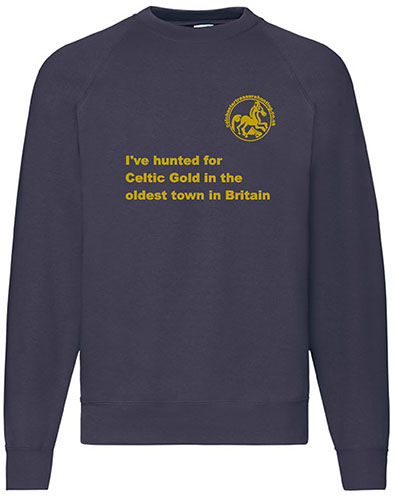
16th Sept 2024 Brilliant start to the season - five gold'sThe first teams of the season just left and they have started off 2024 with a bang. 4 Celtic gold coins two of which are very rare and one is new type for us, Raunds Wing type. Check out the Celtic gold coin page. I have started to post more finds to the new 2024 Sept finds page. Some really cool relics and both Saxon and Roman silver coins found, I have lots more to upload daily. The new team that arrived on Saturday have already popped two more golds I have yet to post them. Virg Brian (left) and Oh Chris - double gold rare qtr Celtic gold finders - modeling their freebie club sweatshirts mugs and the new Colchester club coin holders
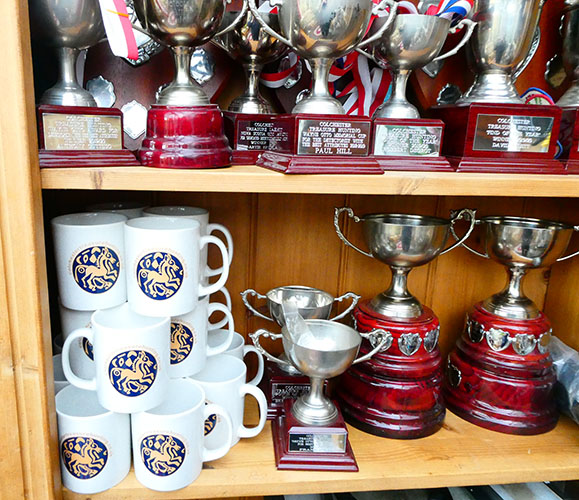
Virg Phil with his 2023/24 Club award with the detectorist with the best attributes- Phil popped the full Adde Celtic gold stater below Wayne Otto Memorial cup for the detectorist with the 'best attributes' during the season
45- 40 BC Reported to museum 1.152g, 11.32mm
Catuvellauni tribe
Very rare Heybridge Horse type Celtic gold qtr stater - Trinovantes tribe c50-BC Wreath between two pellet lines,stylized locks of hair above, crescents and pellet ring motifs below Horse r,large rump,various pellets around, pellet boss below ABC 2359 Extremely rare 1.25g, 12.88mm Reported to museum
The Trinovantes or Trinobantes were one of the Celtic tribes of pre-Roman Britain. Their territory was on the north side of the Thames estuary in current Essex and Suffolk, and included lands now located in Greater London. They were bordered to the north by the Iceni, and to the west by the Catuvellauni. Their name derives from the Celtic intensive prefix "tri-" and "novio" - new, so meaning "very new" in the sense of "newcomers", but possibly with an applied sense of vigorous or lively - so the name could mean "the very vigorous people". Their capital was Camulodunum (modern Colchester), one proposed site of the legendary Camelot. Shortly before Julius Caesar's invasion of Britain in 55 and 54 BC, the Trinovantes were considered the most powerful tribe in Britain. At this time their capital was probably at Braughing (in modern-day Hertfordshire). In some manuscripts of Caesar's Gallic War their king is referred to as Imanuentius, although in other manuscripts no name is given. Some time before Caesar's second expedition this king was overthrown by Cassivellaunus, who is usually assumed to have belonged to the Catuvellauni. His son, Mandubracius, fled to the protection of Caesar in Gaul. During his second expedition Caesar defeated Cassivellaunus and restored Mandubracius to the kingship, and Cassivellaunus undertook not to molest him again. Tribute was also agreed. The next identifiable king of the Trinovantes, known from numismatic evidence, was Addedomarus, who took power c. 20-15 BC, and moved the tribe's capital to Camulodunum. For a brief period c. 10 BC Tasciovanus of the Catuvellauni issued coins from Camulodunum, suggesting that he conquered the Trinovantes, but he was soon forced to withdraw, perhaps as a result of pressure from the Romans, as his later coins no longer bear the mark "Rex", and Addedomarus was restored. Addedomarus was briefly succeeded by his son Dubnovellaunus c. 10–5 BC, but a few years later the tribe was finally conquered by either Tasciovanus or his son Cunobelinus. Mandubracius, Addedomarus and Dubnovellaunus all appear in later, post-Roman and medieval British Celtic genealogies and legends as Manawydan, Aedd Mawr (Addedo the Great) and Dyfnwal Moelmut (Dubnovellaunus the Bald and Silent). The Welsh Triads recall Aedd Mawr as one of the founders of Britain. The Trinovantes reappeared in history when they participated in Boudica's revolt against the Roman Empire in 60 AD. Their name was given to one of the civitates of Roman Britain, whose chief town was Caesaromagus (modern Chelmsford, Essex). The style of their rich burials (see facies of Aylesford) is of continental origin and evidence of their affiliation to the Belgic people. Their name was re-used as Trinovantum, the supposed original name of London, by Geoffrey of Monmouth in his fictitious Historia Regum Britanniae, in which he claimed the name derived from Troi-novantum or "New Troy", connecting this with the legend that Britain was founded by Brutus and other refugees from the Trojan War.
5 BC to 25BC Addedomarus - Trinovantian tribe 5.44g,16.96mm Reported as hoard addendum coin to museum
Ct Todd's get his find of the year award 2023/24 season for that stonking 17th enamelled gold ring. Todd on his last day popped the Dubnovellaunus. qtr Celtic gold coin below.
25BC Dubnovellaunus Celtic gold qtr stater 1.307g, 10.32mm Dubnovellaunos 25 BC to 5 AD
A king called Dubnovellaunus succeeded his father Addedomarus as king of the Trinovantes ca. 10-5 BC and ruled for several years before being supplanted by Cunobelinus of the Catuvellauni.
1762 George III milled gold qtr guinea - love token 2.07g, 15.63mm
c 8thC Saxon bronze zoomorphic brooch 11.7g, 46.6mm L x 12.2mm W
13th C seal matrix - bird facing left
49BC Roman silver coin
|
||||||||||||||||||||||||||||||
22nd August 2024 Export licenses fully on line - more updates and kick off
The new fully on line export application system is working brilliantly. I was lucky to be chosen by to the Arts Council to fully test the system prior to launch and given early access to apply for export licenses. I have a on line portal where I can see all my applications and their progress in the system. I have received over half a dozen approved licenses issued already and I get a PDF file via e-mail I can instantly print off. I can also then forward the approved license document to the finder so they have their own copy for further use. It can also very quick getting a license approved with one being received back with one day of application!! It saves me a lot of work.
1000 BC Bronze Age awl 45.8mm L x 11.6mm W x 6.88 mm H 13.9g Bronze Age awls comprise a range of small rod-like tools that are usually round or rectangular in cross-section and pointed at one end with a square or chiseled edge at the other. They were probably used for perforating leather, wood and bone working and other crafts. Early researchers suggested they may have been used for tattooing human skin.
The start of the season is rapidly approaching with kick off on the 4th Sept when the Louisiana Sal's crew come in. I am still posting missed finds to the bottom of the 2024 April finds page and I discovered our found our first Bronze Age Awl find in Boston Sharon's pouch above. I have just added a new 2024Sept finds page and link on the menu ready for the first finds. It will be very interesting to see if our new land with a Bronze Age village at it centre produces some cracking finds. I have been updating the previous 2023/24 forum competition total as I process each export pouch, check out your guess is fairing so far. I have been doing huge updates on the individual finds page below:
|
||||||||||||||||||||||||||||||
2nd August 2024 - FOTY winner and disclaimed treasures
Dated to exactly 1650AD by the museum experts 17thC enamelled gold posy ring-reported as treasure to museum 'I am but a token' 1.73g, 15mm
Ct Todd with his other rare find a Charles II gold guinea
The members have voted by a landslide for Ct Todd stunning enamelled gold ring as Find of the Year. 2nd place was the BC decorated gold bracelet. Todd wins the free week detecting trip next week and the silver urn trophy.
c10thC Saxon beveled plain gold ring - no hallmarks 1.81g, 18.96mm
I picked up another load of disclaimed treasure from the museum last week. Some very interesting museum identifications including Cal Geo's early beveled gold ring above that turns out to be Saxon. I have now applied for exports licenses for all of them so the guys can take them home. Az Reid - Celtic gold full stater I have been updating the previous 2023/24 forum competition total as I process each export pouch, check out your guess is fairing so far. I am still processing all the 2nd half of the season find pouches and posted missed finds to the bottom of the 2024 April finds page. I have been doing huge updates on the individual finds page below:
|
||||||||||||||||||||||||||||||
17th July 2024 New land and export applications on line goes live
Unique ID: PUBLIC-AAB71E Object type certainty: Certain An incomplete medieval cast copper alloy gilded and enamelled 'Limoges' figurative mount dating c. AD 1150 - 1250. The object is anthropomorphic, depicting a robed figure. The plate forming the body is elongated and pentagonal in plan with a concave reverse and is slightly bent near the base where it terminates in a flat, angled lower edge. The head of the figure is solid; the stylised facial features are moulded with pellet eyes, arched brows and long nose with full lips. At the crown the head is flat and angled, sloping to the back with a pointed oval cross-section. It is worn but appears tonsured with feint vertical grooves at the back of the head representing hair. The narrow neck has a D-shaped cross-section and narrows from the jaw widening again to the sloping shoulders. A draped robe passes over each shoulder and the right arm appears bent upwards to the chest. The drapery on the main plate is defined with multiple asymmetrical cells for champlevé enamel inlay and traces of of red and blue enamel survive in a couple of recesses. There are also traces of gilding on the raised rims of the cells on the upper body. There are two circular perforations for rivets at centre of the top and bottom of the plate. The metal surface of the object has a dark brown patina.
Beauty medieval gilded and enamelled mount - red blue and gold remains
A Romanesque enamel mount depicting a saint - of the type produced in the Limoges area in Central France during the 12th and 13th centuries. Mounts like this were typically attached to a reliquary or religious book. The mount is sub-rectangular, convex at the front and hollowed at the rear. It depicts the head and upper body of a robed male figure - probably a saint. The head projects from the top of the rectangular body and is moulded in the round with a stylised mouth and nose. There are two small recesses for the eyes, filled with blue enamel. The top of the head is flattened and angled with a slight scar, possibly from the attachment of a missing halo. a stylised mouth and nose. The neck is long and oval in cross section. It joins to sloping shoulders at the top of the body. At the base of the left side of the body there is an angled recess where the right arm of the figure is depicted as bent upwards to the chest. The forearm and hand are detailed in a reserve of metal with linear recesses around (filled with degraded enamel). The hand appears to be raised in benediction. The left arm is a simple reserve of metal along the right side of the body with a recess alongside filled with blue enamel. Over the rest if the body are several linear recesses in-filled with blue enamel and depicting the folds of the robe. Towards the centre of the chest and set in a diagonal across it are two angular recesses filled with red enamel. It is possible that these represent an item of clothing or an object associated with the saint, but is not clear which. There are two large circular attachment holes through the body, set on the longitudinal axis. The rear is hollowed and undecorated
Just recorded Joe's great find on the National database. It has to be published by the FLO next to be visible by the public.
We have just obtained permission to start searching a new site from Sept that previously could not be detected due to a HLS restrictions that have now been lifted. I have posted the new map of the 13 field site on the closed members forum. It has a huge bronze age village on one of its fields so great potential. I am still beavering away doing export paperwork, recording finds on PAS and updating the site with finds from the 2nd half of the season. It is a long old process but a real value add seeing finds missed while the hunting were underway. Some of the finds have been ID'd by the museum like the enamelled 'Limoges' figurative mount dating c. AD 1150 - 1250 above. These finds are entered directly by me onto the National PAS database and are not live to the public until approved by the Colchester FLO.The British Museum export finds advisor can also request certain finds are recorded by me onto PAS that they deem important. I am still posting full finds lists and pictures to the closed members forum and approved exports that have arrived by post. This system is replaced and goes fully electronic to the public on the 13th August but I have been given early access on the 6th August to test out the system. Approval will now be on-line and I can print out the approved exports. I have a meeting this week with the museum to pick up more disclaimed treasures and will post details when I find out what they are. It is still voting time for find of the year (FOTY) by the members, the winner gets a free weeks detecting next season as their prize. By voting the member also gets to enter the new forum competition to win another free weeks detecting holiday next season. Check out the new forum competition for the rules and have your guess entered. I have been updating the previous 2023/24 forum competition total as I process each export pouch, check out your guess is fairing so far. I am still processing all the 2nd half of the season find pouches and posted missed finds to the bottom of the 2024 April finds page. I have been doing huge updates on the individual finds page below:
|
||||||||||||||||||||||||||||||
30th June 2024 More updates and export changesApproved export licenses have been returning and the list of names posted onto the closed members forum. Export license applications I produce, that are mailed to both the finder and the Licensing unit now have additional attached larger high resolution pictures on request from the finds advisor that check each application. I have also been asked to one of the first users of the new Export License on line applications system I beta tested a few months ago. I will be given live access a week before the system is launched nationally to test export applications. It will certainly be a great step forwards to speed up the whole process. It is currently voting time for find of the year FOTY by the members, the winner gets a free weeks detecting next season as their prize. By voting the member also gets to enter the new forum competition to win anther free weeks detecting holiday next season. Check out the new forum competition for the rules and have your guess entered. I have been updating the previous 2023/24 forum competition total as I process each export pouch, check out your guess is fairing so far. I am still processing all the 2nd half of the season find pouches and posted missed finds to the bottom of the 2024 April finds page. I have been doing huge updates on the individual finds page below:
|
||||||||||||||||||||||||||||||
1st June 2024 Exports and PAS recordingsI am still busy preparing export license applications and posting any missed finds pictures to the bottom of the last hunt page 2024 April finds page. Full finds lists and pictures posted on the closed members forum.
450 million year old fossils Sea Urchin EchinoidEchinoids (sea urchins and sand dollars) are echinoderms, related to sea stars and crinoids. All echinoderms have external skeletons made of numerous plates of the mineral calcite (a form of calcium carbonate), and a unique water vascular system that drives most of their motion. Echinoids have rounded or flattened shells, called tests, which bear numerous spines. Tiny tube feet, connected to the water vascular system, extend through holes in the test and allow the animals to move on or within the sea floor. All echinoids exhibit the characteristic five-fold symmetry of echinoderms.
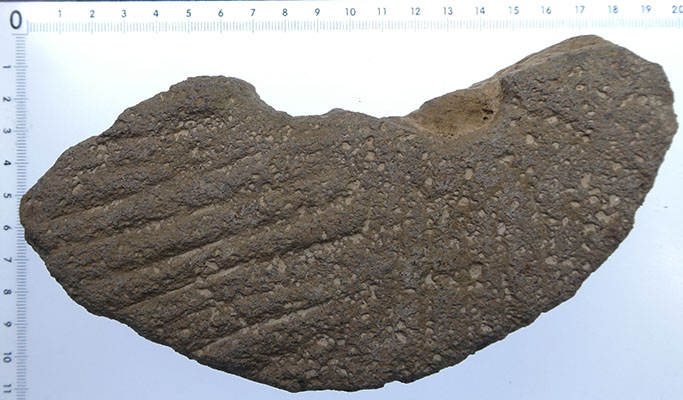
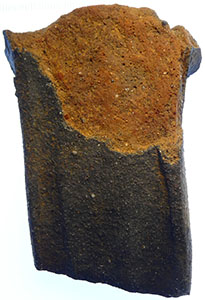
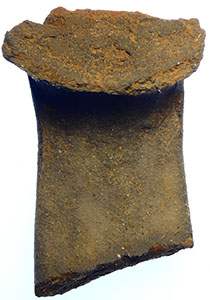
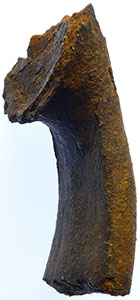
I have been recording any important finds directly onto the National Finds.org database like the mega rare 3000 BC 'Grooved ware' eye ball find below. This is our first ever confirmed Neolithic pottery piece as they are very hard to eyeball on a field and I would not even noticed it myself. All the guys will now keep a keen eye out for this type of pottery on our sites. It is currently voting time for find of the year FOTY by the members, the winner gets a free weeks detecting next season as their prize. By voting the member also gets to enter the new forum competition to win anther free weeks detecting holiday next season. Check out the new forum competition for the rules and have your guess entered.
Record ID: PUBLIC-B0E6BC Broad period: NEOLITHIC
Unique ID: PUBLIC-98ECA9 A complete Medieval lead pilgrim's ampulla dating from around the 13th to 15th century (c. AD 1200-1400).
|
||||||||||||||||||||||||||||||
5th May 2024 - FOTY - Treasure updates and exports
Dated to exactly 1650AD by the museum experts 17thC enamelled gold posy ring-reported as treasure to museum 'I am but a token' 1.73g, 15mm
It is currently voting time for find of the year FOTY by the members, the winner gets a free weeks detecting next season as their prize. By voting the member also gets to enter the new forum competition to win anther free weeks detecting holiday next season. Check out the new forum competition for the rules and have your guess entered. I dropped off more treasures and picked up the disclaimed treasures and hoard coins from the museum last week. I also got some interesting updates on current treasures going through the treasure process. I have entered the details on the hoard and treasure page. I have finished processing all the 2nd half of the season finds and posted the last of the pictures on the 2024 April finds page. Last week I was asked to test the new on-line export license software system. I completed several test export applications on the database and they were successfully approved. I had a follow up team meeting with the software developers to give them my feedback and the system should go live in a few months. It will save a lot of paperwork and improve speed at getting an approved export license issued. I have made a start preparing the export applications for March/April pouches, full finds lists and pictures are posted on the members forum. I have been updating individual pages below with finds from the 2nd half of the season:
|
||||||||||||||||||||||||||||||
17th April - More stunning gold and new 2024 April finds page started
Gold boy's Tom and Dave with their freebie club sweatshirts The new closed members forum is working really well and we now have added a couple of chat rooms where the members can discuss any aspect of the club, ask questions and seek advice. https://colchestertreasurehunting.community.forum The final hunt of the season finished at the weekend and now I have to post the last 10 days worth of finds to the latest finds page. I have created a new finds page 2024 April finds page to speed up the load time of the previous 2024 March finds page. Members have noticed a problem when using non standard Browsers when loading the finds page where they only load half of the pictures . I use MS Edge and Firefox that load perfectly. Crome sometimes paused but a reload will bring up all the pictures. The guys have been making spectacular finds including this stunning intricate gold band. After I reported it as treasure the museum FLO sent me a link of a similar band recorded on PAS which suggests it is Roman. Can Ron also found found a very rare find of a decorated Roman fibular brooch with inlaid coloured stones. I have updated the latest gold finds to the Gold finds page, current total for the season is 41.
Tom's stunning gold band
Spectacularly crafted multi stranded BC gold band - reported to museum as treasure 1.19g, 21.6mm L x 5.83mm W x 1.1 mm T
Stunning 2nd C Roman fibular brooch - inlaid with coloured stones and enamel
Terry crisp Sceat
Primary 600AD Saxon silver sceat 1.27g,12.15mm
2nd Roman trumpet fibular brooch
Mich Dave pops a 1778 George III milled gold half guinea 4.2 g, 20.5mm
Roman enameled disc brooch - looks like a bird facing right outlined in gold
|
||||||||||||||||||||||||||||||
3rd April 2024 New Forum is now workingWhat a relief after 4 days trying to sort this out !!! The complete members forum has now been migrated and upgraded to the latest modern platform. Your existing log on, password and Avatar has also been transfered over with the database. If you have any problems logging on drop me a mail. Meanwhile I have posted loads more great finds including more gold to the latest finds page 2024 March finds page.
|
||||||||||||||||||||||||||||||
29th March 2024 - NOTICE - Forum not workingI have upgraded this site to a super fast server as it was creaking due to its size. Unfortunately is has killed the Colchester members forum that is not compatible. I have the techs working on the problem but I also need to upgrade my SQL forum server. This could take time so meanwhile the forum is down.
|
||||||||||||||||||||||||||||||
25th March 2024 More great gold and a load of fakes
All modern fake coins found in a corner of the field - NOT a funny joke played by a member
Someone and we don't know who thought it was funny to throw out a load of fake coins in an area on one of our fields. Initially the first find was a Roman gold coin and you can imagine how excited they all were. It was followed by another 7 Roman silvers and a 2nd Roman gold. There was also a fake Saxon silver penny and a George III silver shilling we suspected was fake also. To the untrained eye they looked passable until Chicago Ron looked at them all and suspected they were all fakes and sent me pictures. Some were quite good and others obvious. The George III silver shilling fake above is very good, it is missing the reeded edge but there is a very rare one that does not have the reeded edge. What gives it away is the font used on the legend is wrong. Chinese fakes are flooding e-bay and again to the untrained eye are quite passable. If the member who thought this was funny is caught he will be banned from the club.
Meanwhile the guys have been making more amazing finds including a spectacular Cunobelin Biga type Celtic gold stater below. I have been posting loads more great finds to the latest finds page.2024 March finds page. I have also uploaded the latest gold finds to the gold finds all page, pretty decent season so far with 35 total.
I have just received my new set of Michael Dickinson's 3 thick volumns on just 17thC trade tokens. This has been out of print for 50 years so I was very lucky to find a set on e-bay. I have always used the Norweb columns to ID the trade tokens but these now add a huge more info on the subject. When I get time I will try and ID some of our unknowns on the 17thC trade farthing page.
Vig Marg
10-40 AD Cunobelin Celtic gold stater - biga type - reported to museum camvl in garnished tablet on vertical wreath, heart-shaped symbols in quarters, rev. biga left, leaf above, wheel and [cvnobelin] below (ABC 2771; 5.44g, 19.03mm
Ch John
1422 - 61 Henry VI hammered gold qtr noble - London - Lis mint mark Obv hENRIC DEI GRA REX ANGL Rev **REX A ** IV 1.735g, 19.83mm
Can Ron
45 BC to 25BC Addedomarus - Trinovantian tribe - reported to museum Addedomarus (sometimes written Aθθedomarus on coins) was a king of south-eastern Britain in the late 1st century BC. His name is known only from his inscribed coins, the distribution of which seem to indicate that he was the ruler of the Trinovantes. 5.52g, 16.87mm
Ill Tim
45 BC to 25BC Addedomarus - Trinovantian tribe Celtic gold qtr stater - floral type 1.352g, 12.3mm dia
Nh Brian
1717 George 1st milled gold half guinea 4.16g, 20.84mm
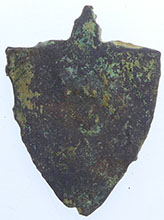
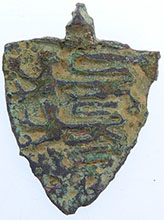
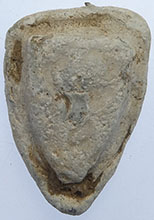
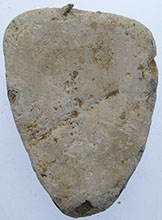
Medieval heraldic lead shield trade weight 41.17mm H x 35.2mm W, 48.8g- 1.7oz
Iron Age Terret Ring 1st Century BC – 1st Century AD The terret is a metal loop found on a horse harness, guiding the reins and preventing them from becoming tangled on the harness.
Great find - Royal Army Ordnance plated belt buckle complete
|
||||||||||||||||||||||||||||||
19th March - First gold of the season
Ct Todd and Terry
45 BC to 25BC Addedomarus Celtic gold stater- Trinovantian tribe - reported to museum 5.52g, 16.84mm Addedomarus (sometimes written Aθθedomarus on coins) was a king of south-eastern Britain in the late 1st century BC. His name is known only from his inscribed coins, the distribution of which seem to indicate that he was the ruler of the Trinovantes.
It took CT Terry just two hours into his hunt to pop the first Celtic gold of the season. Terry wins the freebie Club sweatshirt and the Spinks 'Coins of England' book. I have started a new March 2024 finds page and uploaded some more great relic and coins to it. Tx Scott W found a fascinating medieval gold jewelry item below that I have reported to the museum as treasure. I have bags more finds to upload yet to the latest finds page.
Gordy found this medieval harness pendant and had it cleaned up and a loop added.- great result
Fascinating medieval gold find - reported to museum as treasure 1.38g, 16.17mm L x 12.58 W
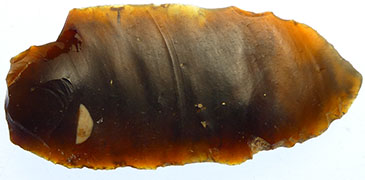
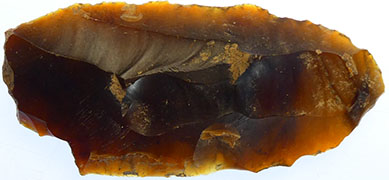
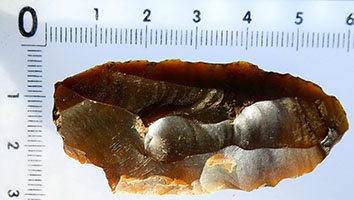
11,000 BC flint scraper
Rare 17thC William Wilkinson of Ipswich hammered copper trade farthing - not in Norweb ref book.
Just had a great ID in from Kai. Just looked in Norweb Volume 5 under Ipswich and it’s not there, and Michael Dickinson doesn’t price it, which generally means it’s a scarcer token. Can only find one example being sold at Noonans/DNW back in 2003, so think it’s fairly scarce. Apologies not more information, as not my specialty (Essex is the county I collect). Hope this is of interest. Kind regards, Kai
Two piece set made up from the grooved base and the small grinding tool 1stC BC to 1stC AD Celtic Woad cosmetic grinder - boat shaped The grinder was used to pulverise vegetable material such as woad in the preparation of dyes. These are also known as perfume or cosmetic grinders. During the Celtic period in Britain a biennial herb called Isatis Tinctoria; was cultivated for the blue dye that could be obtained from it when crushed. This plant is also known as woad. The dye would then be applied to the skin
|
||||||||||||||||||||||||||||||
18th Feb 2024 Kick off in 4 daysI have finally finished all the export applications and the guys will be back shortly to find a load more for me to process !!It takes a very long time to process a guys pouch properly as you have to take a picture of every man made metal find over 50 years old to get an export license. Each find has to be numbered and a full description typed. It is great to be able to record important finds directly on to the PAS national database like the Bronze Age socketed lance head below. Guys never throw away any find so I can check them in their pouch after they leave. I have posted more missed finds to the bottom of the last hunt page. 2023 Oct finds page.
1300 BC Bronze Age socketed lance head 49 mm L x 11mm w 7.49g
Middle Bronze Age gold chain
Wash Tom's crew are the first guys in to kick off the 2nd half of the season on the 22nd Feb. Tom is back picking up his award as last season 'Find of the Year' winner. He found those amazing double 1300 BC BC gold rings above that are currently going through the treasure process. He also gets his freebie weeks detecting prize for this trip and an engraved silver urn award I will present him with.
|
||||||||||||||||||||||||||||||
18th Jan 2024 More great finds
Leaf-shaped sword, 1000-800 BCE. Bronze Age weapons have been discovered across Europe. They show how important warriors were in these early metal-working communities. Weapons have changed over time. At first flat daggers and knives were the most typical. These were followed by dirks and rapiers for stabbing and thrusting. Towards the end of the Bronze Age, the first true slashing swords became the weapons of choice. Bronze spearheads were also used. 3,700 years ago they replaced bows and arrows as the most common projectile weapon. Leaf-shaped, with grooved and beveled edges. The handle-plate is T-shaped and contains two rivet-holes, with one rivet remaining, and a depression for a third hole, but not actually bored. There were to have been two holes in the shoulders, but only the lower has been bored in each case.
Late Bronze Age sword 85.66mm L x 36.89m W x 8.66mm T 76.3g
Updated ID on this Saxon bronze brooch As I process the guys pouches, so I can apply for export applications, there are always finds they never showed me when they are out there searching. Omaha Kathryn had this large chunk of a Bronze Age sword above which I recored on PAS. I have also posted more missed finds to the bottom of the 2023 Oct finds page. The FLO sent me an update of a brooch found that I though was Roman, turns out to be Saxon. 'I noticed a brooch on your website under October 2023 finds which is an early medieval Ansate brooch. Anglo-Saxon finds are not common in Essex so anything that can be confidently identified and closely dated should definitely be recorded. Here’s one from Cambridgeshire I recorded recently: Record ID: ESS-C6B4F1 - EARLY MEDIEVAL brooch (finds.org.uk). You can also read more about them on the brooches guide here: Brooches – Finds Recording Guides. Do you have all the details to be able to record it?' FLO I have updated a load of the individual finds pages below with first half of the seasons finds.
|
||||||||||||||||||||||||||||||
23rd Dec 2023 More exports and updatesJust been busy preparing more export applications for the guys pouches and posting any missed finds to the bottom of the last hunt page.2023 Oct finds page. Mass Robert had a very interesting widget at the bottom of his pouch that looked like a couple of broken bits of rod. On closer inspection the two halves fitted together and had the classic bell shaped end of a small silver Torc. I have reported it as treasure to the museum.
Celtic Torc ended shaped ring - not certain of the material but reporting it as potential treasure The Celtic tribes had gold, silver and bronze examples
I have been updating this season 'Forum Competition' page total with lead items as I process the pouches. I finally managed to get hold of a copy of an out of publication above last printed in 1976. I have been trying to ID the hundreds of our livery button finds with their family name. Livery buttons. Updated the individual pages below with the latest finds.
|
||||||||||||||||||||||||||||||
26th Nov 2023 - More updates and exports
Monster ancient gold ingot - 81.54g,40.82mm L, 21.05mm W, 10.02mm T 'This is the second largest gold ingot found in isolation recorded on the database'
Celtic gold votive offering as ring money - disclaimed Gold ring money- 1st C BC 6.86g, 32mm L
I picked up a huge bag of disclaimed treasures and hoard coins from the museum and have been busy submitting all their export applications. I was surprised to get back both the huge gold ingot and the Celtic gold votive offering finds above. Both the finders paid the landowner this week for their half so they are now set to take them home after next trip once the export licenses are back approved. I have been processing export pouches from the first half of the season and posting missed finds to the bottom of the 2023 Oct finds page. I have also updated the individual finds pages below with the first half of the seasons finds.
|
||||||||||||||||||||||||||||||
5th Nov 2023 - Half season break - great range of silver coinsThe guys left last week to end the first half of the season, the teams are back in March again to continue searching. I have a few more finds to upload yet from last week to the latest finds page. 2023 Oct finds page. A great range of silver coins have been posted. Cal Dave was back,using his free detecting weeks prize after winning the 'Find of the year' silver urn for that mega rare 1300 BC Celtic gold Torc find. He popped the last gold coin before the season break with a sweet 1797 George III gold third guinea. That takes the gold count so far since Sept to a respectable 28 pieces, check out the updated gold page. What is very interesting is our two new plots of land only produced two of those golds and the other 26 from old land. It is now time to process the finds pouches for the guys and apply for export licenses. I have managed to finally ID Ill Mike's Celtic silver unit find that was a crusty lump. I am slowly cleaning it using lemon juice and a tooth pick. It is a brand new tribe for us. Our first ever ECE type. It needs more cleaning to be exact variant but the sun with pellets was the giveaway to the type.
Dave just picked up his 'Find of the year award' for his 1300 BC gold torc find then pops another George gold !!
1797 George III milled gold third guinea 2.76g, 16.85mm
11,000 BC flint spear head
|
||||||||||||||||||||||||||||||
18th Oct 2023 - More fantastic findsThe guys are on fire at the moment making some more amazing discoveries. I have posted hundreds more greart finds onto the 2023 Oct finds page. Ohio Chris had a great day popping a rolled gold ancient sheet and then his next target was a beauty Romn gold coin. These have been reported to museum as potential treasure.
There have also been some rare hammered silver found including a 1552 Mary hammered silver penny, rare as hens teeth. Some beauty lead finds like the medieval vessia seal matrix and pilgrims ampullea. Org Gary found a rare 2000 BC bronze age socketed arrow head. Too many great finds to list so check out the 2023 Oct finds page. I have updated the latest gold finds to our gold page and it now stands as 27 for the season opening. Gold page
Latest Happy gold finders - Michael and Eric
Mo Brandon with his Wayne Otto Club award and Boston Dave (FOTY and POTY winner)
5thC Roman gold coin - 4.36g, 21.03m - sent for ID Constantine looking bust facing right I’m going to need a while on this one. It does look like a solidus. Whether it technically falls within the “Roman” series or the “Byzantine” series I can’t tell at this point. Mark Valentinian III, 425-455 AD.
Gold spoil probably 6th C - reported as treasure to museum 13.7g, 16.09 mm L x 1.39 mm T
Ancient gold strip - reported to museum as treasure 3.01g, 62.4mm L x 4.6mm W x 0.85mm T
Large 13thC heraldic enamelled shield pendant - chequy type -researching owner Azure and Gules colours - some Or Previous PAS record Unique ID: IHS-1CD2A4 Arms: Gatton, de or Warenne, de There appear to be microscopic traces of dark blue in some surface pits, suggesting that the original tinctures were "chequy a metal and azure". Depending on whether the metal was gold or silver, the arms represented may have been those of Gatton or Warenne. Both Hamo de Gatton senior, and his supposed son, Hamo junior, used chequy argent and azure as their arms. Hamo senior, of Gatton in Surrey, served as sheriff of Kent in 1286; he was summoned to serve against the Welsh in 1277 and 1282, dying in 1292. Hamo junior was summoned to serve against the Scots in 1298, and died two years later, leaving a minor, Edmund, as his heir. The second, and perhaps most likely, possibility for the owners of these arms are the Warenne earls of Surrey who used chequy or and azure. The Warennes were arguably the wealthiest landowners in England in the twelfth and thirteenth centuries; their arms are thought to be some of the oldest known. The family's stature and wealth derived, to some degree, from their royal ancestry via one of Geoffrey of Anjou's illegitimate sons; Geoffrey was the father of Henry II, the founder of the Plantagenet dynasty. The Warennes' royal links were reinforced by the marriage of John de Warenne with Alice de Luisgnan, Henry III's half sister. John de Warenne generally served Edward I well: he was summoned to serve against the Welsh in 1277 and 1294, and against the Scots in 1291, 1297 and 1300, becoming 'Keeper of Scotland' in 1291. Warenne died in 1304, leaving a grandson, also John, as his heir.
Roman silver coin - sent for ID - 'cooking' to remove crust 96-117 AD. This is obviously Trajan and very likely a denarius or Provincial drachma It’s not easy to see, but this is another example of the so-called “Capitoline wolf” – the ancient bronze statue of the she-wolf. Self-explanatory to the typical Roman, it didn’t need the pair of suckling twins which added in the renaissance with which it is displayed today (in the Vatican? – not sure where, but it’s a famous museum).
Rare 1553-54 Mary hammered silver penny Obv M.D.ROSA Rev CIVI/TAS/LON/DON - London mint
1891 Victoria milled gold full sovereign 8.0g, 21.92mm
1871 Victoria milled gold half sovereign 3.99g, 19.37mm
10-40 AD Cunobelin Celtic gold qtr stater - reported to museum 1.33g, 10.76mm
Stunning Georgain fob seal
Mint mudlark find
Obv HANS* KRAVWINCKEL GOTESS* Rev *RECHEN*PEENING NVRENBER Four different Krauwinckel makers made “rose and orb” type jettons, including brothers Damianus and Hans (I) Krauwinckel, and Egidius and Hanns (II) Krauwinckel who were the sons of Damianus. Hans Krauwinckel (1562-1586) Hans Krauwinckel II (1586-1635) Hans Lauffer (1611-1632) Hans Schultes The reverse side of the “rose and orb” jettons depicts an imperial orb within a trilobe. The surrounding letters are often various verses from the Bible. Inscribed GOTES SEGEN MACHT REICH (“God’s blessing brings riches”). GETRIVW HANDT KOMBT DURCH ALLE (“Truth succeeds over all”) GLUCK BESCHERT IST VNGEWERT (“Fortune given is not guaranteed”) GOTES REICH BLIBT EWICK (“God’s Kingdom remains eternal”) GOTT ALLEIN DIE EERE SEI (“To God alone the glory”) HEIT ROTT MORGEN DOTT (“Red today, dead tomorrow”) VERBVM DOMINI MANET IN ETERN (“The Word of God remains eternal”)
This is an incomplete socketed arrowhead of Bronze Age date (c.2550-800 BC). 16.74g
|
||||||||||||||||||||||||||||||
4th Oct 2023 More great finds
I have started a new 2023 Oct finds page and uploaded loads more great finds to it. The guys have been making more amazing discoveries including our oldest ever milled gold coin a Charles II half guinea, what a rare find. It was Ct Todd's 2nd gold find of his trip having found that stunning enameled gold posy ring. Cal Mark popped his first ever Celtic gold on new land, a sweet Dubnovellaunos gold qtr stater. There has been some great relics found like the monster sized toy cannon and a Saxon stirrup mount. Check out our other Saxon harness finds here.
1672-84 Charles II milled gold half guinea- 2nd bust - 3.72g, 21.38mm
Dubnovellaunos 25 BC to 5 AD Celtic gold qtr stater 1.35g, 13.19 mm
Huge 18thC toy cannon
c10thC Saxon stirup mount - Type 1 group 1 - Class B The central head has an aperture for its mouth and its sunken eyes and ears give it a curious aspect- Two Fe rivets survive. Ref D Williams 399
Unknown foreign coin - researching it Similar coin ID INDIA BAHAWALPUR NAWAB SADIQ V COPPER COIN 1327
|
||||||||||||||||||||||||||||||
26th Sept 20023 Crazy 2nd week of gold finds
Tx Scott and Tx Josh pop 4 Celtic golds between them The guys have gone crazy out there making some staggeringly beautiful gold finds. Tx Josh had an amazing weeks with three Celtic gold qtr staters. One of the most beautiful gold posy rings I have ever seen dug was popped by Ct Todd, the workmanship is mind blowing. I am so backed up with other great finds to post including Celtic silver and bronze units, seals etc. I have uploaded a few to the latest finds page 2023 Sept finds Keep checking the page for finds as I post them daily.
Medieval gold ring with ruby - reported as treasure to museum 1.835g, 24.29mm
1789 George III milled gold half guinea 4.2g, 20.7mm
Early bevelled plain gold ring - no hallmarks - reported to museum as treasure 1.81g, 18.96mm
Quarter-noble, fourth coinage 1351-77, Treaty period 1361-1369, Tower mint, mintmark cross potent, annulet before Edward-Lis in centre, double satire stops Obv shield quartered with the arms of England and France within a treassure of eight arches Obv +oEDWARD xx DEI xx GRAxxREX xxANGL Rev +EXALTABITAR IN GLORIA 1.92g, 19.6mm
17thC enamelled gold posy ring-reported as treasure to museum 'I am but a token' 1.73g, 15mm
5.56g, 18.62mm 45 BC to 25BCAddedomarus - Trinovantian tribe - reported to museum Addedomarus (sometimes written Aθθedomarus on coins) was a king of south-eastern Britain in the late 1st century BC. His name is known only from his inscribed coins, the distribution of which seem to indicate that he was the ruler of the Trinovantes.
1.33g, 10.57mm Dubnovellaunos 25 BC to 5 AD Celtic gold qtr -reported to museum
A king called Dubnovellaunus succeeded his father Addedomarus as king of the Trinovantes ca. 10-5 BC and ruled for several years before being supplanted by Cunobelinus of the Catuvellauni.
1.26g,12..33mm 70BC uninscribed 'Q' Gold - 'Remi 'Type Celtic gold qtr stater -reported to museum The Remi were a Belgic people of north-eastern Gaul (Gallia Belgica). The Romans regarded them as a civitas, a major and influential polity of Gaul,The Remi occupied the northern Champagne plain, on the southern fringes of the Forest of Ardennes, between the rivers Mosa (Meuse) and Matrona (Marne), and along the river valleys of the Aisne and its tributaries the Aire and the Vesle.
8-13 AD Cunobelin biga type qtr gold stater -reported to museum 1.32g, 12.01mm |
||||||||||||||||||||||||||||||
19th Sept 20023 Beauty gold and relics foundThe guys kicked off the season last week and have made some brilliant finds already. I have started a new hunt page 2023 Sept finds where I have uploaded a few finds. I have real some beauty finds yet to photo including a medieval gold ring with black sapphire stone and Celtic silver and bronzes. The guys have dug the whole range of widgets from 11,000 flint scrapers, 1500 BC Palstave axe, 1300 BC gold ring. 175BC Celtic gold coins. There has also been two rarer gold coins, George II guinea and one we have never found before a William IV gold sovereign. I have ton of other great silver coins and widgets to upload yet so check out the 2023 Sept finds page link regularily. |
||||||||||||||||||||||||||||||
17th August 2023 - More exports and updates - 4000 greenies now upJust three more weeks until the kick off for the new season and the weather has been brilliant. Lots of rain with the odd day of sun means the ground is soft and moist, not baked like a bastard like last season. Last Sept the ground was in the worse condition I have ever seen in 20 years with guys trying to chisel out their finds, however the still guys did amazingly well considering the challenging conditions. I am still busy processing export license applications and adding this season copper coin count to the forum competition page. I am amazed that we have now passed the 4000 mark with 4046 logged so far. It only leaves 4 guys that are in with a chance to win the free week trip as the prize. Forum Competition Page. I picked up a huge batch of disclaimed treasure and hoard coins from the museum and have applied for more export licenses so they can take their finds home. Details posted on members forum. I have updated the hoard and treasure page. Wash Tom has now received the curators report below for his stunning FOTY Bronze gold rings below. I have added more missed finds to the bottom on the last hunt page 2023 April finds page.
Middle Bronze Age gold chain
Canadian Bill has made a great ID on this badge we found
United States Army Army Warrant Officer Branch Insignia - Officer Gold U.S. Army Branch Insignia Badges represent a service member's specific field of service. Each soldier - both enlisted and officer - wear their branch insignia badge on their Class A or Army dress blue uniforms denoting their particular skill set. Army branch insignia badges differ from Army qualification badges. Qualification badges require completion of a training course or school, while branch insignia badges are issued to a service member upon being assigned to a particular area of the Army. Enlisted soldiers wear the branch insignia on the left coat lapel, opposite the "U.S." insignia disk, whereas, officers wear the insignia on the lower half of both lapels beneath the "U.S." insignia. Branch insignia were first worn prior to the Civil War in the 1850s by Army personnel.
|
||||||||||||||||||||||||||||||
16th July 2023 Find of the year and BBC report
1300BC gold Torc
I am still busy producing export applications for the guys pouches from April. It is a long old process as every item over 50 years old has to be photo'd and itemised on the application. I am still posting missed finds to the bottom of the last finds page 2023 April finds page. I have another meeting with the museum this week as there are load of disclaimed treasures and hoard coins being returned. There are still some old Treasure cases that had not been resolved but one of our biggest has just been reported on the front of the Daily Mail and BBC site. It has just been declared treasure by the Chelmsford Coroner and will go forward to the valuation committee to suggest a reward to finder and landowner. By law the finds valuation is split 50/50 between them. 'Mind-blowing' 3,000-year-old piece of gold jewellery discovered buried in an Essex field found to be rare Bronze Age neck ring from 1300BC
https://www.dailymail.co.uk/news/art...sex-field.html 'Bronze Age gold torc discovered in field near Mistley'
https://www.bbc.co.uk/news/uk-england-essex-66189465 The members have had their yearly vote for their favourite 'find of the year'. Wash Tom's 1300 BC gold armlet rings below won by a landslide with the 2nd place going to Dave's rare medieval hammered gold Noble. Tom's wins the free weeks trip next season and the engrave silver urn trophy. I have been updating this seasons free competition total as I have been processing the export pouches. The number of copper coins found so far this season stands at 3496 and only 8 guys are left in the running to win the free trip prize. Check out your guess.
Complete unit at the British museum
Stunning pair of solid gold 1300 BC armlet rings - reported to museum as treasure 16.42g - 16mm dia
|
||||||||||||||||||||||||||||||
10th June 2023 More PAS updates and exports
I am now up to speed with recording our finds directly on to the PAS National database. I picked a selection of our finds above to re- photo into the correct format for the database. A lot of information has to be added to each find and it is then forwarded for the FLO who checks my data and issues it live on the system. I am still busy processing the guys export pouches from the 2nd half of the season and posting any missed finds to the bottom of the 2023 April finds page. I have been updating the 'free forum competition' numbers total as I process the export pouches, and so far over 3000 copper coin finds have been logged. Check out your entry on the Forum Competition Page. Voting by members for their favourite "Find of the Year' is progressing well which gives you entry into this years competition to win a frees weeks detecting holiday next year. I am still updating all the individual finds pages below with the finds from the 2nd half of the season. I completed a massive update on the lead tokens page putting them all into their individual categories using the Powell system. Roman to 17thC lead tokens
|
||||||||||||||||||||||||||||||
13th May 2023 PAS training completed - more updatesI am now busy processing the guys export pouches from the 2nd half of the season and posting missed finds to the bottom of the 2023 April finds page Some very interesting relics found like the La Tene Roman brooch below that Cal George had in his bag. I always post the complete export pouches with the attached pictures and detailed ID lists onto the closed members forum. Check them out.
Early 1st Century BC into 1st Century AD Roman brooch Fascinating fibular brooch - similar to Greek type or La Tene III
This week I finally completed my Portable Antiquities Scheme training course and can now record our finds directly onto the National database. Great news for Ill Tim as he gets his huge gold ingot find below returned as the museum has now disclaimed it. 'This is the second largest gold ingot found in isolation recorded on the database' ,'the ingot conforms in weight to one quarter of a Roman pound (c. 327.45g)'. I have liaised with both the landowner and Ill Tim the finder and he is buying his half off her at a mutually accepted price. Once it is returned from the museum I will be applying for an export license.
Monster ancient gold ingot - 81.54g,40.82mm L, 21.05mm W, 10.02mm T 'This is the second largest gold ingot found in isolation recorded on the database' Treasure Case: 2018 T901
Gold Ingot from LB
PAS reference: ESS-D8C598
I received the latest club awards back engraved from our Trophy guy. He has now completed the 'I survived the COVID tour 2020' gold medallions for the only team to make it from the USA during the beginning of the COVIS wave. That season was a washout due to the pandemic restrictions. Other 'missed' medallions have also been made to present to the guys. Currently members are voting for there favourite 'find of the year', winner gets a free weeks detecting trip and the engraved silver urn trophy. Loads of pages below updated with finds from the 2nd half of the season.
|
||||||||||||||||||||||||||||||
23rd April 2023 - Last team of the season leavesI have created a new 2023 April finds page to speed up load times 2023Aprilfinds. I have posted loads of great silver and relics to the new finds page and updated the gold total for the season on the gold page. What a totally weird season that just finished. I still have another weeks worth of finds to photograph yet and I will upload them onto the latest finds page shortly.
Ill Tom and Fl Dan with their freebie club sweatshirts for their beauty gold finds
1.81g, 20.1mm
Picture from the field This coin is a mule with two dies series B&E
Edward III (1351-61), Quarter-Noble, 1, fourth coinage, Pre-Treaty period, series B/E mule, mm. cross 1, edwar’ r[ ] angl’ z franc’ d hyber, royal arms on shield, pellet below, rev. + exaltabitvr in ghloria, annulet stops, floriate cross,, trefoil and lion in each angle, eight-arc double tressure Mint mark Cross 1 Obv +EDWAR o R oANGL Z FRANC o D o hYB ER
18thC George III milled gold qtr guinea 0.79g, 15.1mm
11.03g, 54.16mm L
6.17g, 28.3mm L Interesting chunks of gold or brass ? Gold testing kit does not show 22,18, or 9 carat gold. However it reacts for base gold with high zinc content - White vinegar does not react as it should do on brass. Taking it to the museum for their views.
1761-1780 18thC decorated silver clog fastener Hester Bateman First recorded English woman silversmith London Assay office
Rachel lost the solid gold watch on her land 50 years ago and it was a present from her Auntie. Nj Joe while searching her sheep pasture found it and then presented it back to her.
Beauty 4thC Roman silver coin sent for ID A couple things made (and still make) this hard to pin down - but my best guess is below. My best guess would be:
Kiev style Knobbed Mace - c. 12th - 13th century This mace is of a form found across Russia, Ukraine, Moldova, Romania, Hungary, Bulgaria and the former Yugoslavia. Known as the Kirpichnikov Type IV, it originated in Kievan metal foundries and was based on a local adaptation of the Khazar mace type shown above - the Kirpichnikov Type I. The four upper and four lower corners of the Type I’s cube have extended outwards forming smaller knobs giving the Type IV twelve knobs (four large and eight small). These maces were first produced, mostly in bronze, in Kiev and other southern Rus cities. Many existing Kievan bronze examples are highly decorated with rings, lines and dots. Bronze maces were first exported and later copied (in both bronze and iron) throughout much of Europe. Examples are known from the Baltics, Hungary, Romania, Bulgaria, the Western Balkans, Germany, Sweden and England.
These maces are heavy and deadly and would be effective against not only against unarmoured or lightly armoured foes but against any armour of the time (c. 1100-1300). The Turkic peoples of this time usually wore lamellar armour of leather, horn, bronze or iron. This mace is 5.3 cm in diameter and 2.2 cm high. The hole is 17mm in diameter. It has 12 pyramidal knobs in three rows of four - four four-sided knobs and eight three-sided knobs (half knobs). It is hollow cast and is roughly 3mm thick at the edges. The knobs are solid. It is 0.235 kg ). Monster sized chuck of worked bronze - Traces of iron in the hole There is another reference to a knobbed mace found in Hungary below Small Hungarian Knobbed Mace - c. 12th-13th century This small mace head comes from Hungary or its environs. I have found no exact parallel to this style although it is obviously a variation of the Kievan style of knobbed mace head seen above. The bronze construction and high quality imply that it could be an import from the Kiev area. This small mace is 6cm in diameter and 2.9cm high. The hole is 2.6cm in diameter. It has 12 pyramidal knobs in two rows of six. It is hollow cast and is roughly 3mm thick at the edges. The knobs are not hollow. It is only 0.16kg (0.35 lbs). It is made of bronze.
Massive medieval iron key
19thC gold tooth plate 0.6g, 19.1 mm
|
||||||||||||||||||||||||||||||
1st April 2023 - More great finds and disclaimed hoardsI have uploaded a huge number of more great finds to the latest finds page 2023 March finds page.
I picked up the first part of our disclaimed Saxon silver sceat hoard from the museum last week and have applied for all the export licenses. I also picked up 3 of our disclaimed Celtic gold hoard addendum coins, the guys will now get to take their ponies home after export approval. I have also been granted access to record our finds and locations directly onto the PAS database, this will enable me to record a lot more important discoveries quickly. I have to complete a training course in May before I can start entering finds. I have another meeting planned with the museum next week to pick up more disclaimed treasures and drop off the latest finds to start the treasure process. Updated the latestt gold finds to our gold finds all page.
Ron hands Fl Paul his freebie club sweatshirt
1.35g, 11.49mm 8-13 AD Celtic gold Cunobelin qtr stater- Bigga type- reported to museum
2nd Roman silver coin - sent for ID
"AUGUSTUS. 27 BC-14 AD. AR Denarius, Lugdunum (Lyon) mint. Struck 2 BC-4 AD. Laureate head right / Gaius and Lucius standing, facing; shield and spears between them; simpulum and lituus above. RIC I 207; RSC 43
Gold wrist Torc fragment ? reported as treasure to museum 8.1g, 35mm L x 4.9mm dia
1stC BC to 1stC AD Celtic Woad cosmetic grinder - boat shaped The grinder was used to pulverise vegetable material such as woad in the preparation of dyes. These are also known as perfume or cosmetic grinders. During the Celtic period in Britain a biennial herb called Isatis Tinctoria; was cultivated for the blue dye that could be obtained from it when crushed. This plant is also known as woad. The dye would then be applied to the skin
Gold casting waste - 2.94g, 16mm L
1640's Civil war iron cannon ball 1/2lb - 40mm dia - Robinet
1850 Birmingham mint - 22 carat gold ring - star mark
|
||||||||||||||||||||||||||||||
23 March 2023 New finds page and more beauty gold
Fl Paul I have created a new 2023 Finds page to speed up load times. There has been more stonking gold finds and rare Roman silvers, check out the new page for all the recent finds 2023 March finds page. I have not picked up the gold yet to take proper pictures so I have posted the pictures guys sent me from the fields.
|
||||||||||||||||||||||||||||||
15th March 2023 - Great age spread of gold finds
Great start to 2023 with a monster pair of 1300 BC gold armlet rings found by Wash Tom. These suckers are two and a half times as heavy as our previous ones that are currently on display at Colchester museum. The construction is solid gold rings as opposed to the concave rings on the others. Oki Jim popped a pretty Roman gold earing that is marked 9 carat made in Italy LOL. Ch John made a rare discovery of a solid gold pretty Georgian buckle with flower and leaf design. Not as old as his mega rare Celtic silver Cunobelin 'flower' type unit classed as extremely rare in Chris Rudd's book. First Celtic gold coin find was a rarer 'Wadden Chase' full stater type beautifully centrally stuck horse found by Ny Jay. Next was a very crisp Cunobelin qtr stater off new land by a newbie hunter Tx Rob. Ct Terry then popped a beauty 17thC gold posy ring inscribed 'A true friends gift'. The museum are trying to find the date of it by the maker's mark. Check out our Celtic gold coin page for more info Celtic Gold I have a new 2023Feb finds page and uploaded more great finds including someone playing a silly joke with 2 mint modern Roman silver coin forgeries found. I had a meeting at the museum and finally picked up the first 11 of our 19 disclaimed Saxon silver sceat hoard coins and several disclaimed Celtic gold hoard addendum coins that I will report on the next update.
Our previous armlet ring finds on display at Colchester museum
Wash Tom
Stunning pair of solid gold 1300 BC armlet rings - reported to museum as treasure 16.42g - 16mm dia
Roman gold Gold earing marked 9 carat gold Italy LOL 4.06g, 51.56mm L
Gold boys with their freebie Colchester club sweatshirt for their great finds
10-40 AD Cunobelin Celtic gold qtr stater- reported to museum 1.424g, 11.04mm Linear type - Corn ear with central stalk- CA to L,MV to R Horse with ladder mane, branch above Classed as rare ABC2810
5.47g,18.21mm 50 BC Middle Whaddon Chase stater Celtic gold full stater Obv cross of 3 plain & 2 pellet lines with 2 opposed crescents b in centre
Ct Terry
C17thC - reported as potential treasure 'A true friends gift' No hallmark - marker mark ?EM 2.87g, 17.53mm
Georgian gold shoe buckle
10 to 40 AD Cunobelin Celtic silver unit - needs a good 'cook' to remove crust Flower type - Classed as Extremely rare - Chris Rudd 54.78, VA 2049, ABC 2885
|
||||||||||||||||||||||||||||||
22nd Feb 2023 Two new sites and forum comp totalThe new menu system has been updated again ready for the Feb 24th kick off in a couple of days, a new 2023 Feb page has been created ready for the new finds they make. I have still got to do a massive update to all the other page with this addition. All the export pouches have now been processed so the total count for post medieval coppers found so far this season is an impressive 2511. The free forum competition this year is to win a free weeks detecting trip and 80% of the guys entries have already been knocked out. Check out you entry to see if you are still in the running.
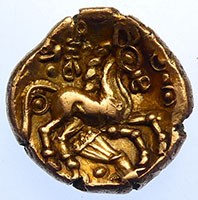 
The local museum has now recruited a new Finds liaison Officer (FLO) and I had a meeting on Monday and picked up loads of disclaimed treasures and hoards. I have produced a laminated map of the new land I signed the contracts on last week, it is a go from the 24th Feb. I was also contacted by another landowner on Friday and I saw their land yesterday, only a 10 acre plot but worth a sniff as it is close to the Roman chariot track in Colchester.
I have produced a new page of happy members pics going back 20 years, like a trip down memory lane.
|
||||||||||||||||||||||||||||||
7th Feb 2022 - 20th year anniversary more New land - New pages/updates and exports
While updating all the pages on our site I revised lots of old pages and noticed that we started the club in 2003 making this our 20 year anniversary as a club, amazing. Never in a million years would I have expected the level of mouth watering finds we have made over the years. Big thanks to all the Senior members to still be continuing to come here after such a long time. I have added more new individual pages to the site to reduce page sizes and add background history, check out the Finds Index page to view.
I have updated all the history pages, Sutton Hoo, Beaker people etc, added our new King Charles III to the Kings and Queens page. I received an e-mail from a new landowner offering us a new site located to the west of Colchester in an area we have never searched. I went and had a meeting and looked at the fields on offer and it is a beautiful historical spot. We have completed the contracts so we can can start searching on the 24th Feb when the first team arrives. Several other adjacent farmers have voiced interest in us also searching their land so this should be very interesting. The members on the forum have already started researching the history of the area and it steeped in history.
|
||||||||||||||||||||||||||||||
18th Jan 2022 New pages/updates and exports90% of this website has been updated with the new menu system that is now mobile friendly. Lots of the pages below have been updated with the latest finds and more history added. I have created a new page with all the busts, figurines and animals in one place. Lots more approved export licenses have been returned and the lists posted on the closed members form.
|
||||||||||||||||||||||||||||||
14th Dec 2022 More massive page updates and exportsI have been adding the new menu system as I update individual finds pages below. I have also been adding more history and info onto each page as I go. Lots more export pouch applications have been posted on to the closed members forum as I process them. Any missed finds during the process have been posted to the bottom of the Vig Phil had a crusty Saxon silver sceat below in his pouch that I just got ID'd and recorded with the Fitzswilliam Museum EMC database.
600 AD Saxon silver sceat - sent for recording and ID 1.265g,11.53mm Thanks for this find, which I have recorded as EMC 2022.0447. The punched hole is unusual. This is Series C2. The attached adjusted images show the coin in its correct orientation, with a bust facing right and the standard on the reverse. Best regards, Martin
|
||||||||||||||||||||||||||||||
19th Nov 2022 - Updates and exportsI have archived a lot of this news page to speed up loading times, links for previous news pages at the bottom of this page. I am now processing all the export paperwork for pouches from the 1st half of the season and posting full find lists and pictures to the members forum. I have started to update the individual finds pages below with the latest coins and relic finds. As I update each page I am replacing the old menu system with the new mobile and tablet friendly version. I have updated the holiday availability page with the planned dates for the 2nd half of the season in all the hotel and Barn types.
|
||||||||||||||||||||||||||||||
1st Nov 2022 New top menu - more rare findsThe top menu to this website is now working with mobiles and tablets properly after being reprogrammed. I have still not updated all the other pages on this site yet. The last hunt, before the first half of the season break, left last week and made more amazingly rare finds. The ground was still as dry as a bone right up until they left so they did unexpectedly well with no moisture or compression on the fields. Mo Dan found a copper coin I had never seen before and it turns out to be a mega rare Indian Peace medal, it is in great shape and his research shows there are only 13 known. Ark Jeff popped an early BC Roman silver which again turned out to be a mega rare coin. Mark Lehman's write and ID below is fascinating. Id Mike managed to find two of the gold coins below in his weeks hunt, the 50 BC Added Celtic gold stater and the very crisp Victorian gold guinea. Boston Heidi managed to find our first Celtic gold coin on new site we just started hot spotting, a 50BC Clacton type 1/4 stater. I have posted a whole bunch of old relics and silver coins to the latest finds page and have loads more finds from last week to post yet.
Medal Great Britain George II Indian Peace 1757 Obverse with laureate armored bust left, GEORGIVS II DG MAG BR FR ET HIB REX around. Reverse with Native American hunting scene in forest, deer running with archer's arrow in mid-air. This is an amazing discovery - Original medal (13 known) 'Wow! Search under peace medal. It is one of the earliest made for Indian trade in America.' Dan
Stunning BC Roman silver coin sent for ID - mega rare ID Roman Republican/Imperatorial AR denarius
If I had a $ for every common coin I’ve heard touted as “rare”, “extremely rare” etc, I think I could afford to buy this denarius – it’s really rare and sought-after. Mark Lehman
10-40 AD Cunobelin Celtic gold stater - reported to museum 5.36g, 19mm
Great relic find - Templar badge still in the mould
Previous trimmed versions Medieval badges Ref Mitchiner p244 939 - 941
Heidi with her 2nd pony
Trinovantes British G “Clacton” quarter, Hobbs 192 Celtic gold 1/4 stater 50BC - reported to museum Chris Rudd 23.41 Clacton de Jersey - Classed as scarce 1.34g,15.1mm
Id Mike's double gold finds
50 BC Addedomarus Celtic gold stater - reported to museum Addedomarus (sometimes written Aθθedomarus on coins) was a king of south-eastern Britain in the late 1st century BC. 5.52g,16.65mm
1885 Victoria milled gold half sovereign 3.99g,19.2mm
20thC gold denture plate and single tooth
Medieval heraldic shield pendant John de Warenne (June 1286 - June 1347), 7th Earl of Surrey, was the last Warenne earl of Surrey.
Small 850 BC Bronze Age axe
Gilded silver ring - no hall marks - - museum feedback is it is 16thC - now reported as treasure
|
||||||||||||||||||||||||||||||
12th Oct 2022 Messed up the web site top menu - More great finds - New finds pageI have managed to completely mess up the web site menu on these 'Latest news and finds pages', the rest of the site top menu is OK as I have not updated those pages. I have a web designer working on fixing them. Meanwhile we continue to get no rain and the ground is completely dry. However it has not stopped the guys making amazing discoveries with more beauty Celtic, milled and hammered gold finds. I have created a new 2022 Oct finds page to speed up load times, tons of great coins and finds posted onto it.
First ever true gold nugget found, all the rest have been gold ingots Gold nugget 0.302g, 10mm L
Gold boys
50 BC Gallo Belgic Celtic gold stater - reported to museum 6.11g,18.0 mm
Ancient 1st to 2nd C gold foil necklace
Gold bead - no idea of date yet - sent to museum for their views 1.1g,10mm L
1797 George III milled gold third guinea 2.72g, 16.3mm
Fresh pictures from the field, interesting gold ring
Stunning Saxon pin - However the PAS database shows it as both Saxon and Roman and my Roman books ID it as Roman ?? A copper alloy Early Medieval polyhedral pin of Anglo-Saxon association dating from AD 700 - 870. It has a polyhedral head in the form of a cuboid with the corners faceted creating 13 faces. The top facet is decorated. The four main faces are decorated with a ring and dot motif, as are each of the four smaller faces below and four smaller faces above the main faces. The lower part is extended and tapers to a very small collar and then the tapering pointed pin shaft. The end of the pin is missing, but this Cf. PAS database records: FAKL-1AAFBB and SWYOR-31E63.
11,000 BC flint axe head
A deep circular hollow in the back of the head is for the attachment of a handle and the break at the neck is where the head would have been soldered to the side of the vessel
Medieval bronze vessel handle mount
1604-5 James 1st hammered gold Britain crown - Lis mint mark 2.43g, 20.85mm
1st to 4th C Roman key
Saxon animal headed implement - possible small knife handle Classic black enamel inlay
Religious figurine - researching it Krishna as the Divine Child on a Banyan Leaf ?https://www.sahapedia.org/krishna-divine-child-banyan-leaf-vatapatrasayi
|
||||||||||||||||||||||||||||||
30th Sept 2022 - Crap conditions continue but more great finds
Medieval Papal Bullae. A lead Papal Bullae of Pope This bulla has the name of Pope Clement III 1187 -1191 AD Obverse shows the heads of the apostles Peter and Paul, the founders of the Church of Rome with SPASPE (Sanctus PAulus and Sanctus PEtrus) above Rev CLE/MENS/PP. III http://historymedren.about.com/library/who/blwwpopelist.htm http://www.newadvent.org/cathen/12272b.htm The reverse (verso) of the bulla shows the name of the Pope, which is written in the nominative, with his abbreviated title. It reads 'CLE / MENS / PP • III' within a beaded border. The 'PP' has an 'Ω' above.
Mass Rob with his freebie club sweatshirt and mug for his honking gold find
10-40 AD Cunobelin Celtic gold stater - reported to museum 5.5g, 17.97mm No rain other than the odd shower have made the land as dry as a bone. The farmers are still managing to plough and roll new fields so we have lots of land to search but we are getting no depth. Mass Rob however popped our first Celtic gold from a brand new site and a neat gold nugget was also found on another new site. Can Bill searching one of our oldest sites near a medieval Abbey found the very early mint 12th C Papal badge. He also got the little and large medieval hammered silvers during his trip and I posted a comparison picture below. I have uploaded loads more relics and coins to the latest finds page, I still have a weeks finds to post yet to that page.
Ancient gold nugget - reported as treasure to museum 0.61g, 7.70 mm L
Fascinating gold find - what looked initially like a Georgian bezel when blown up looks a lot earlier in date - sent to museum for their views 1.2g, 20.82mm
1422-27 AD Henry VI hammered silver Groat ( 4 pence) -Inital mark incurved pierced cross Annulet issue - Annulets by the neck and two sets of opposing pellets on reverse obv hENRIC DI GRA REX ANGLIE Z FRANCE Rev VIL/LAx/CALI/SIEx/ - Calais mint
1300-10 Edward II hammered silver farthing- new issue with inner circles both sides - oval flan - Type 28f Obv +EDWA****EX AN Rev CIVI/TASLON/DON - London mint
Size comparison - medieval groat and farthing
|
||||||||||||||||||||||||||||||
15th Sept 2022 - Crap conditions but what a great start
Dave, Tim and Ron It is the worse September land conditions I have seen for 20 years being so dry and rock hard. However, luckily some of our landowners have managed to plough and roll a number of their fields so we can at least get our shovels in the ground. Most of our sites have at least a couple of fields ready although some they have worked you would need a chisel to get below 3 inches. The members are making the best of it and finding some stonking coins and relics where they can. Boston 'FOTY' Dave winner last year is walking around with a horse shoe up his arse. He not only found our first ever Henry VI hammered gold full noble then the next day popped a beauty Victoria milled gold half sovereign. Minnesota Mindy continued her reign of terror on the land and popped her 14th gold coin, a mint Cunobelin Celtic qtr gold stater. Saxon sceats have been appearing from both old and new land. I have created a new Sept 2022 finds page and uploaded loads more relics and coins to it.
Henry VI (First reign, 1422-1461), Annulet issue, Noble, London, mm. lis on rev. only, annulet by wrist Medieval hammered gold noble 6.999g,32.91mm Gold noble - annulet issue - trefoil stops Obv hENRIC DI GRA REX ANGL Z FRANC DNS *hYB Rev PERo MEDIVM o ILLORV o IBAT + *** BAAo
1865 Victoria milled gold half sovereign 3.9g,19.3mm
10-40 AD Cunobelin Celtic gold qtr stater - sent to museum for recording 1.3g,11.12mm
600 AD Saxon silver sceat - sent for recording and ID to the Early medieval corpus 1.025g,9.94mm Many thanks for this new find, which I have recorded as EMC 2022.0295. This is Series D (Type 2c). All the best, Martin
600 AD Saxon silver sceat - sent for recording and ID to the Early medieval corpus 1.095g,12.13mm
600 AD Saxon silver sceat - sent for recording and ID to the Early medieval corpus 1.104g, 11.1mm
Roman silver coin - sent for ID Julius Caesar AR Denarius. Uncertain mint, 46 BC. Head of Ceres to right, wearing grain ear wreath; COS•TERT downwards behind, DICT•ITER upwards before / Emblems of the augurate and pontificate: simpulum, aspergillum, capis, and lituus; D to right, AVGVR above, PONT•MAX below. Crawford 467/1a; CRI 57; Sydenham 1023; RBW 1637; RSC 4a Culullus, aspergillum, jug and lituus, in outer field right, D and below, PONT MAX (Crawford 467/1a / Sydenham 1023 / FFC 3) Splendid & desirable denarius of Julius Caesar by whom it was struck to pay his veterans: the 'D' on the back stands for donativum = extra donation to soldiers often paid from war booty. The legend on the obverse of this denarius honors the functions Julius Caesar held in the year of his victory over the Pompeian forces. His titles on the obverse are functional: consul for the third time and dictator for the second time, while the image on the reverse is strictly religious and refers to his previous status as one of the augurs and as pontifex maximus. The image of Ceres on the obverse may refer to the greater certainty about the Roman supply of grain that must have arisen after the defeat of the Pompeiians at the Battle of Thapsus (April 6, 46 BC) in North Africa.
East India Company Double C monogram 0.84g,7.66mm
c8thC Saxon hooked fastener used on their leg bindings
|
||||||||||||||||||||||||||||||
17th August 2022 - FOTY winner - Lots of disclaimed treasures and hoards
Mega rare American coin - only 20 known Commemorative issue The members voted for their favourite 'Find of the Year' and for the first time a non British find won, 2nd was the diamond Roman fibular brooch and in 3rd place my personal favourite, the 800 BC bronze sickle. It is the mega rare USA coin above that obviously the members really wanted. I have finally finished all the latest export applications for finds from the 2nd half of the season. It is a long old process as every single find has to be photographed, numbered with detailed description. The new electronic version of application process is so much easier and approved exports come back quite quickly in most cases. Members now get a PDF copy of both of the documents sent to them by e-mail as the application is made. I have also been receiving a lot of disclaimed treasures and hoard notifications from the British Museum which is great for the guys. I can preempt their pick up from the museum by sending off an export license application to speed up the process. The two gold Cunobelin Celtic qtr staters below were found very close together on a new field so with a replough this coming Sept it could produce more from that area. Other Celtic golds below, from hoard addendum's, have also been disclaimed and even the 600AD Saxon silver sceat hoard is coming back to the German team. So far we have found 19 of the beauty little silver suckers. It is just two weeks to the kick off for the start of the season, ground is as dry as a bone but we have just had a couple of days of light rain. Hopefully we can have some heavy shows or the guys will be chiseling the finds out of the ground !!!
Celtic gold qtr stater - 11.11 mm,1.32g - Sent to museum for recording looks like a Northern Gold 'Linear type' - pellet over M Obv corn ear,to 1 CA, to r.MV Rev horse r ., pellet, leaf q & pellet, below CVN, pellet boarder va
Celtic gold qtr stater - 9.45 mm,1.26g - Sent to museum for recording Cunobelin wild type quarter, VA 1935, ABC 2813
Dear Mr Brookes,
25 BC Clacton Cross type, ABC 2356, the companion quarter to British F, the Late Clacton stater, ABC 2332. In ABC it's illustrated as a 'three men in a boat' design but the obverse is probably a degraded boar ; at the moment there are around 30 known, mostly from Essex and Suffolk so it's a definite Trinovantian type. Martin Reported to museum and CCI - now disclaimed 1.41g,13.88mm Iron Age Gold Quarter Stater
45 BC to 25BC Addedomarus Celtic gold stater - Trinovantian tribe 5.52g, 18.37mm
45 BC to 25BC Addedomarus Celtic gold stater - Trinovantian tribe 5.43g, 19mm dia Addedomarus (sometimes written Aθθedomarus on coins) was a king of south-eastern Britain in the late 1st century BC.
Dear Mr Brookes,
'Saxon' boys - From left to right Andreas, Wolfgang, Max and Thomas Dear Mr Brookes, Treasure Act 1996: 2020 T1030 Early Medieval coin hoard (5) from Beaumont, Essex Finder: Wolfgang, Andreas, Maximilian , Thomas On behalf of the Secretary of State for Digital, Culture, Media and Sport, I am writing to inform you that the Crown’s interest in this find has been disclaimed. As anticipated by the Treasure Act 1996 Code of Practice (paragraph 48), it will not normally be necessary in these circumstances to proceed with an inquest. I therefore enclose a copy of the Treasure Receipt for this find, and a copy of the curator’s report, to complete your file. I confirm that the find is currently in the care of Lisa Pitt-Jones, Finds Liaison Assistant for Essex. Please could you contact the owner of the find site, stating that the find is to be returned to the finder, unless objections are submitted within 28 days of your letter, in line with paragraphs 48-51 from the Treasure Act 1996 Code of Practice (revised). I would be grateful if you could inform Lisa Pitt-Jones and me at the conclusion of the notice period as to whether or not the find may be released to the finder. The finder is reminded to keep a copy of this letter with the find, and to advise any purchaser of the find to do the same, as it constitutes formal evidence that the find has been considered under the Treasure Act 1996.
Yours sincerely,
Daria Kwarta
|
||||||||||||||||||||||||||||||
6th July 2022 - More exports and treasures
I am still busy compiling all the export applications for the guys finds pouches found in the 2nd half of the season. Full pictures and detailed finds lists are posted onto the closed members forum. I am also updating the individual finds pages on our site with the 2nd half of the seasons finds, links below. I have now received back all the approved export applications for the disclaimed treasures and hoard coins I picked up from the museum. Individual finders have been e-mailed.
|
||||||||||||||||||||||||||||||
29th May 2022 FOTY voting and gold ingot curator reportI am currently busy compiling all the export applications for the guys find pouches found in the 2nd half of the season. Full pictures and detailed finds lists are posted onto the closed members forum. I am also updating the individual finds pages on our site with 2nd half finds, links below.
Members are now voting for their 'favourite find of the year' and the winner gets the engraved silver urn trophy to keep and a few weeks detecting holiday as the prize. Each member gets a guess at the 'Forum Competition' to win another free weeks trip. Details and rules of the competition and logged guesses are posted on the ForumCompPage. This seasons competition is to try and guess the number of copper coins found during the season. Good luck. I just got an e-mail from the British museum and they have finally tested and written the curators report on the huge gold ingot below found in 2018 by Wis Tim. It is an amazing report showing that the ingot it is 95% ancient gold and the 2nd largest ever recorded. Tim won FOTY for this find and I expect the museum will try and acquire this find.
Monster ancient gold ingot - 81.54g,40.82mm L, 21.05mm W, 10.02mm T 'This is the second largest gold ingot found in isolation recorded on the database' Treasure Case: 2018 T901
Gold Ingot from LB
PAS reference: ESS-D8C598
|
||||||||||||||||||||||||||||||
7th May End of the season - Returned treasures
Ashley gets her Wayne Otto award for detectorist with the 'best attributes' cup before COVD hit. She is also pictured with her freebie Club sweatshirt and mug for her beauty AGR Celtic gold find
Ashley's team
Agr- AD 35-43 Celtic gold qtr stater. Corn ear without central stalk, CAM to L,CVN to R, , Horse rearing r, dashes to main, branch above, cross below, A in ex. 12.36mm, 1.245g
Louisiana Ashley's Barn team always finish off the season with a late hunt in April even though they have restricted field choices due to the crops shooting up. It did not stop them having another blinding hunt with 75 silver coins dug, including Saxon and Roman and some great relics. Ashley managed to find her first ever Celtic gold coin with a supper rare AGM qtr stater, another new field for us now with Celtic gold. I have posted tons of their finds onto the latest finds page and have loads more to upload yet from their pouches. I have split the finds pages into two to help with loading times. New 2022 April finds page2022 March finds pageI had a meeting with the museum last week to drop of the recent treasure and hoard finds to start the Treasure process. I was amazed that I got back 25 disclaimed items to return to the finders. They included multiple Celtic gold coin finds, posted below, that were reported as hoard addendum coins.
1977 gold ring with stone - London hall mark 0.375 Maker JWF 2.0g, 17.4mm
Unusual Plumed Bird Primary Saxon silver sceat 600- 700 AD -sent to EMC for recording and ID 0.875g,11.76mm
I have recorded this as EMC 2022.0187. This is the Runic Æthiliraed type (Type 105), which has the runes for Æthili-raed in two lines. In the 19th century it was suggested that this is Æthelred of Mercia (674-704), but a moneyer's name is another possibility. Best regards, Martin
Medieval Knights Templar finger ring Founded in Jerusalem in 1118 by Hugo de Payns and eight other French knights, with the name of Poor Knights of Christ. Their mission was to protect pilgrims who came to the Holy Places. Later, the king of Jerusalem, Baldwin II, installed them in the near the ancient temple of Solomon palace, so they changed their name to the Knights Templar. During the time of the Crusades, the Templars actively participated in the defense of Palestine, which had many strengths. At the same time they acted as bankers pilgrims, so they obtained great wealth. Being expelled the Christians of Palestine, the Templars retreated to Cyprus. In the Iberian peninsula they were established during the twelfth century; first in Catalonia, Aragon and Navarra. They were responsible for the defense of the borders and participated in numerous expeditions against the Muslims (conquest of Lleida, Tortosa, Valencia, Mallorca, etc.). On the death of Alfonso the Battler were named heirs, along with other military orders, the kingdom of Aragon; in exchange for his resignation inheritance received various strengths. All this contributed to the economic and social dominance of the Templars were ever increasing, so that in the thirteenth and fourteenth centuries owned large estates in the eastern part of the peninsula. In the castellanoleonés kingdom they were established shortly after Aragon, also collaborating in the task of Recapture. Alfonso VII gave them the strength of Calatrava; They collaborated in making Cuenca, in the famous battle of Las Navas de Tolosa (1212) and the conquest of Seville. In France, the Templars had become bankers of kings. Philip IV the Fair, dedicated to seize their property, convinced Pope Clement V that initiate a process against the Templars, accusing them of impiety (1307). The Grand Master of the Order, Jacques de Molay, and 140 members were arrested. Presumed innocent at the Council of Vienne (1311), Clement V dissolved the order and created a commission to reeprendió the process. They were sentenced to prison, but the royal council of Philip IV sentenced to death by relapses. The king seized their chattels and gave his possessions to the hospital. In the other European countries did not prosper the allegations but, following the dissolution of the order, the Templars were dispersed and their property passed to the Crown (Castilla), other orders new foundation (Montesa in Valencia and Jesus Christ in Portugal).
Georgian silver collar studd - looks like a tree design behind a clear rock crystal
16th C Tudor gilded silver pin head - reported as treasure to museum 4.89g, 12.17mm dia
1679 Charles II milled silver four pence
1859 Silver pendant with 1842 Victoria milled silver four pence coin sandwiched between the glass Maker JS - Birmingham assay mark Jesse Sargeant 1835
Picked up disclaimed hoard coins from the museum to be returned to the finders
|
||||||||||||||||||||||||||||||
5th April 2022 More gold and interesting relicsWhat a great range of widgets being dug and I have already posted tons more onto the latest finds page 2022 March finds. The guys left today so I have a weeks worth of their finds to post yet to that page. I have a nice break for a couple of weeks now until the last team of the season comes in on the 23rd April. Louisiana Ashley's team always do a late hunt every season and have managed to win 'team of the year' for the last 4 years running. It will be amazing if they can repeat it again.
Nj Joe, on his first trip here, popped a mint Dubnovellaunos Celtic gold qtr stater last week and got his freebie Club sweatshirt and Club mug as a bonus for such a beauty find. Nh Dean managed to find a mint Queen Anne milled silver four pence, first we have ever found and also a mint undamaged Victorian silver spoon on pastureland near an old church. I have posted a picture below of an ancient silver coin that so far I have been unable to find in any of my reference books. If you recognise it please mail me with an ID as I am stumped. I have also posted an unknown Edward hammered silver penny of the Bristol mint with a curious mark in the centre of the reverse cross. My reference books show no Bristol mint coins with any mark ? If you have any info on this coin can you drop me an e-mail with details please.
Our first ever 1709 Anne milled silver four pence
Nj Joe with his goodies
c. 20 BC-AD 10 Eastern uninscribed Celtic gold qtr stater of Dubnovellaunos sent to museum for recording 12.19mm,1.34g Dubnovellaunos in Essex quarter, VA 1660, BMC 2442, ABC 2395
Beauty 14th C seal matrix
Ancient silver coin |
||||||||||||||||||||||||||||||
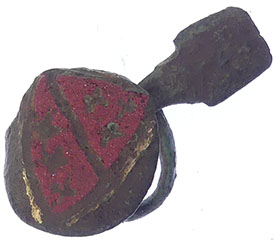

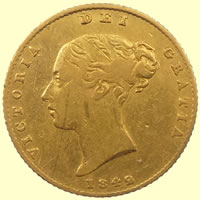
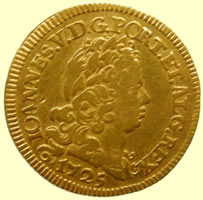
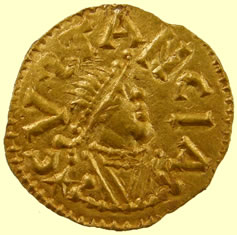

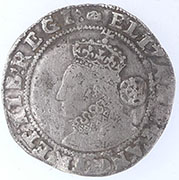

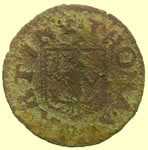
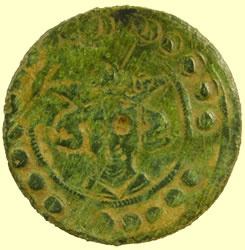

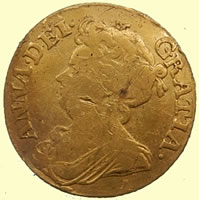
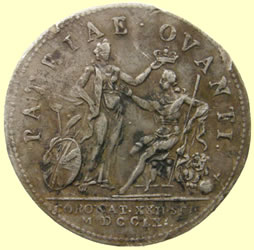
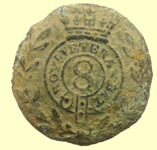

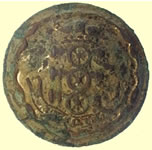

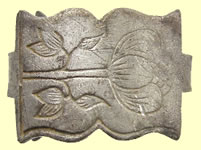

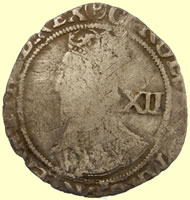


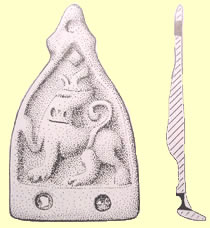


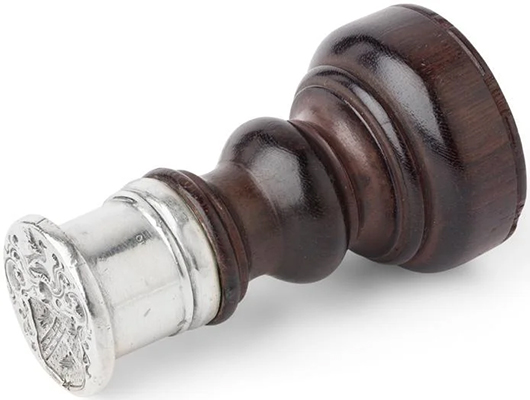


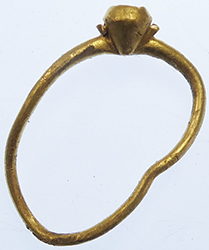
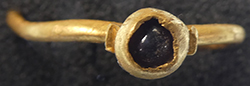
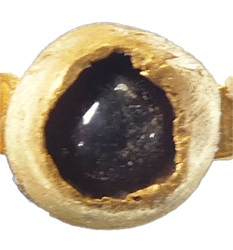



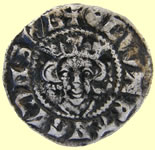
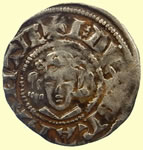
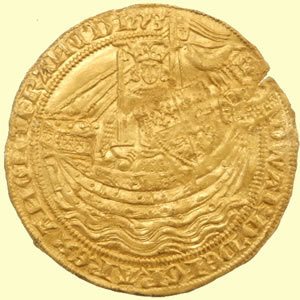
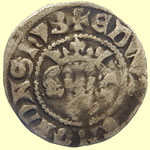
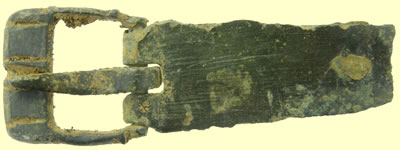
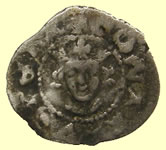
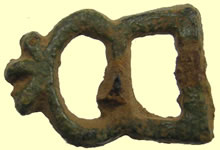
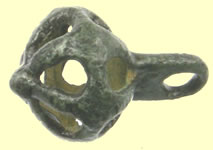
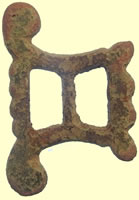

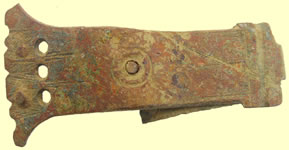
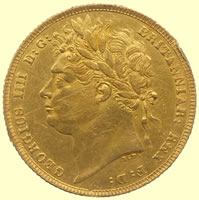

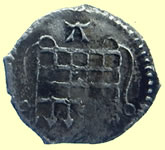
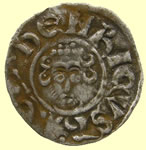
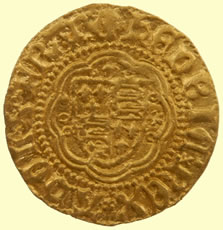
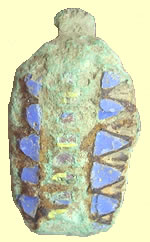
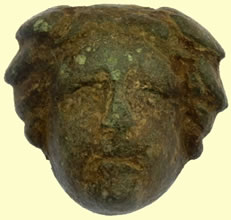
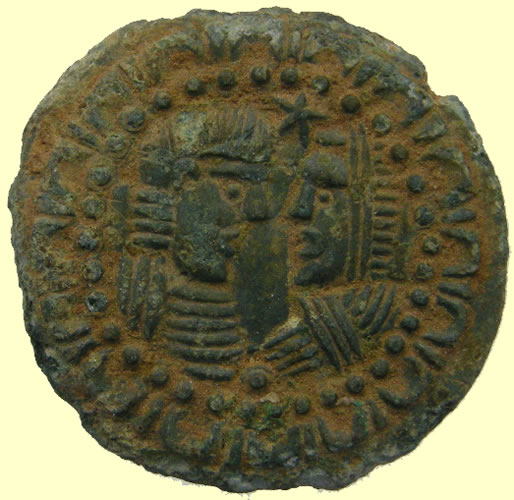
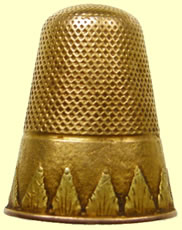

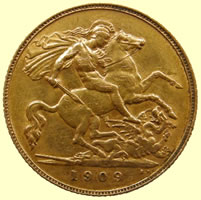
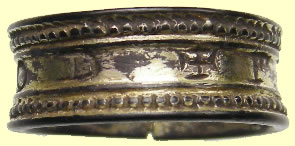
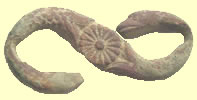
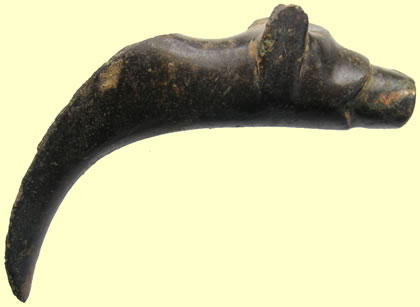
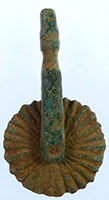
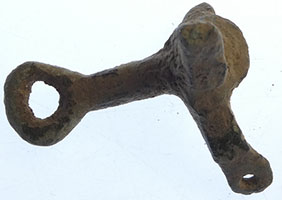
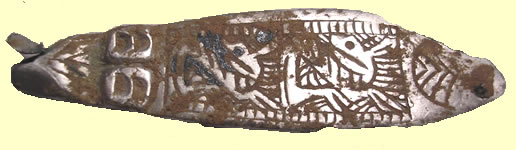
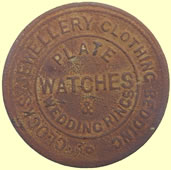
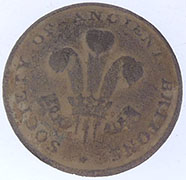
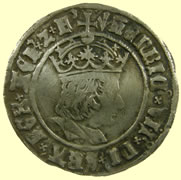
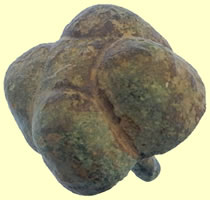
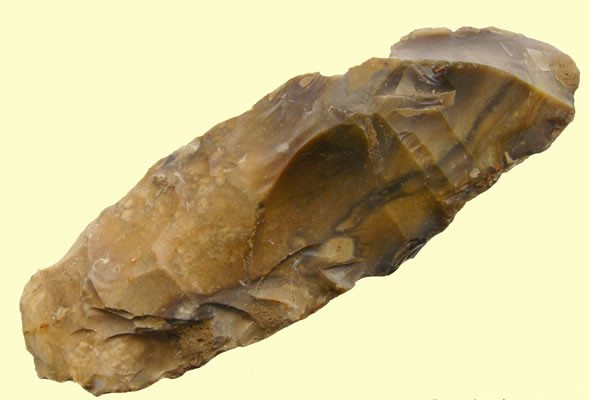
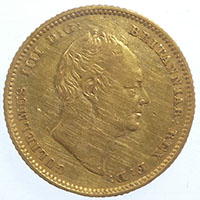


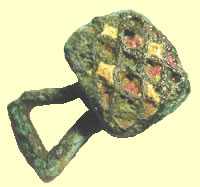
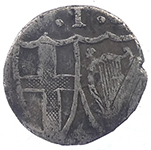
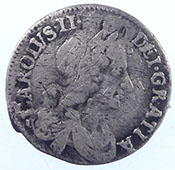

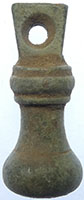



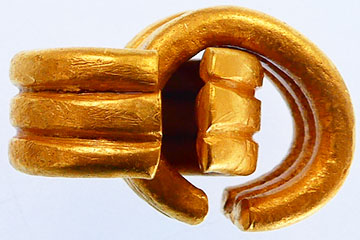
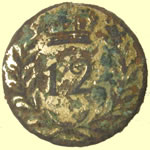

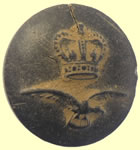
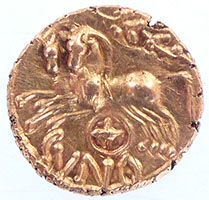


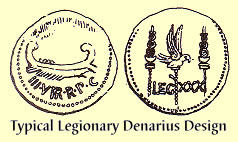


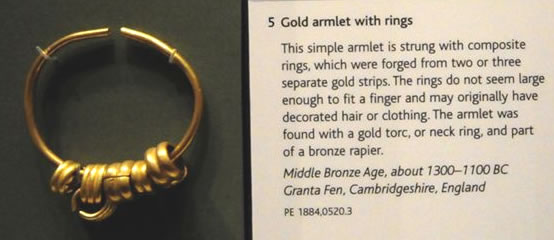







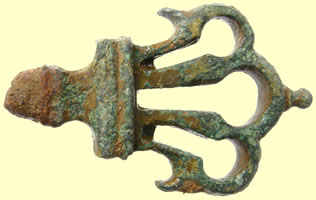

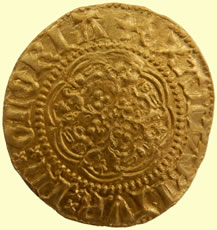

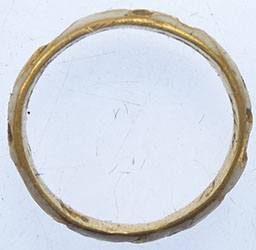
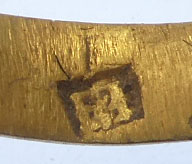
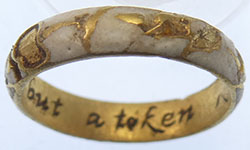
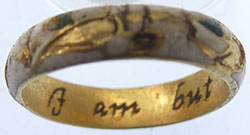
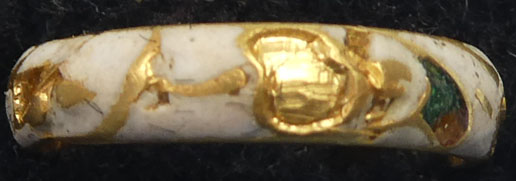
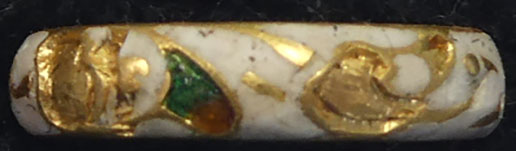
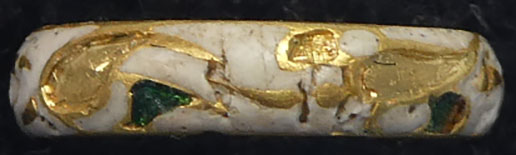
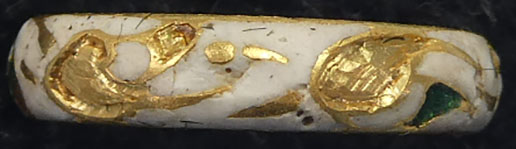
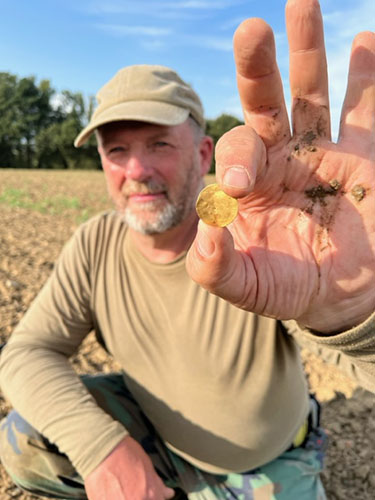
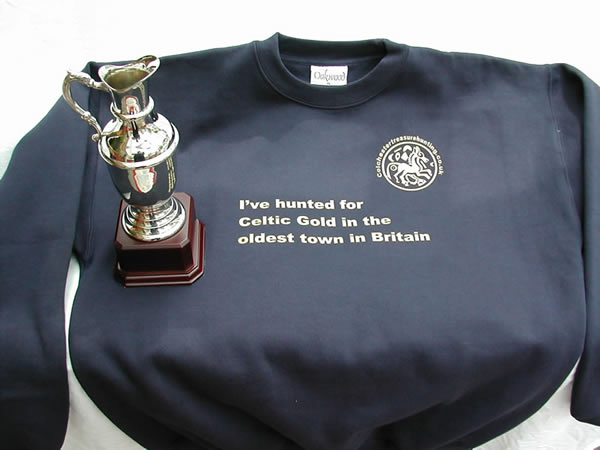
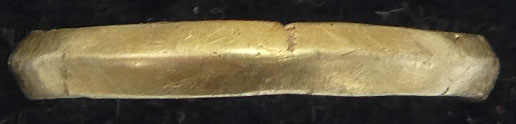
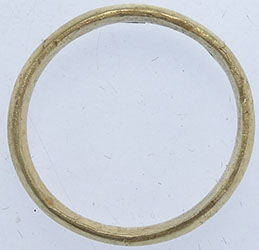
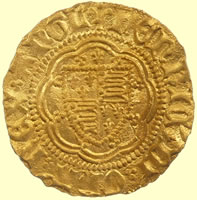
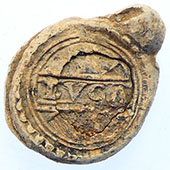
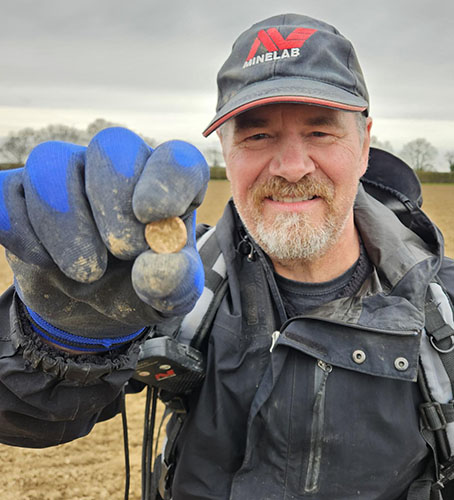
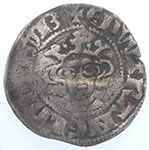
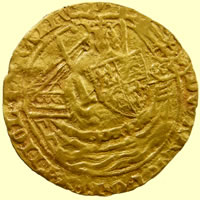
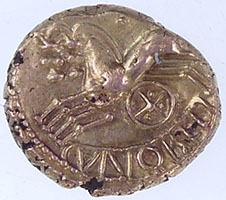
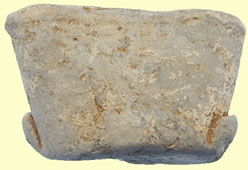
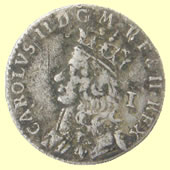
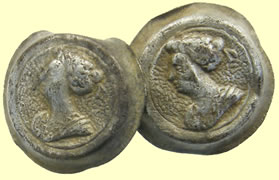

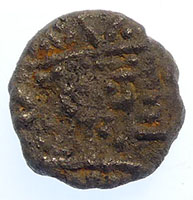


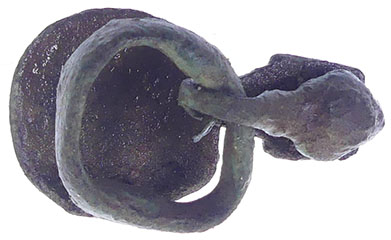


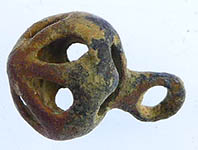
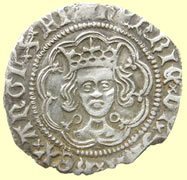
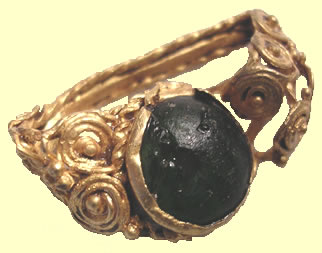
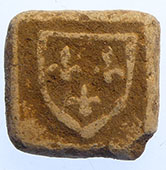
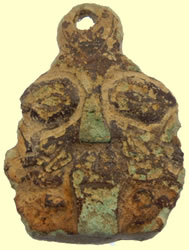
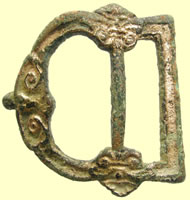

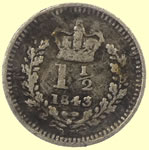
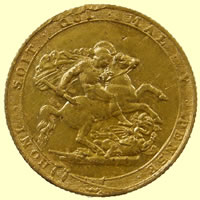
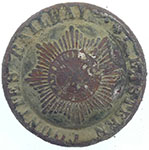


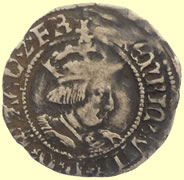
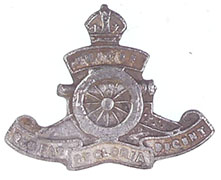
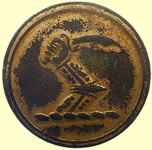

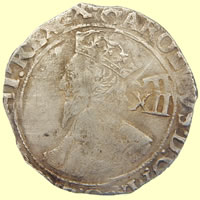

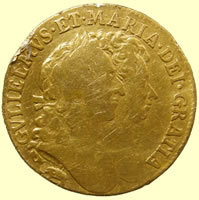
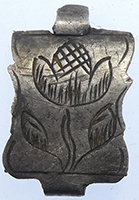
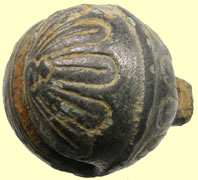
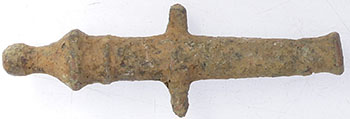

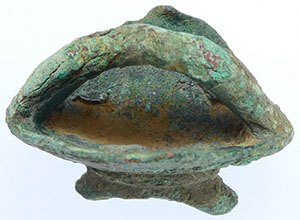
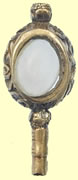
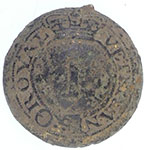
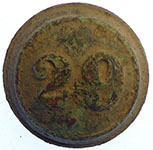
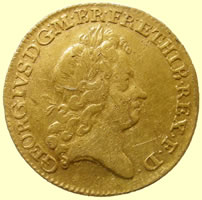

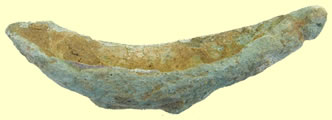
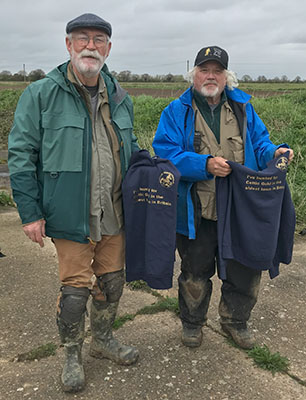
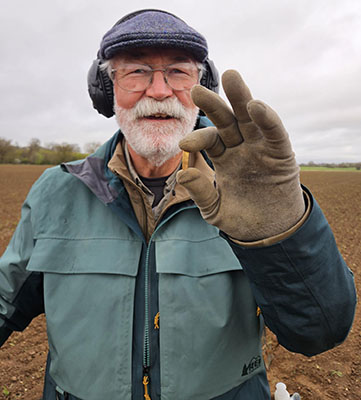
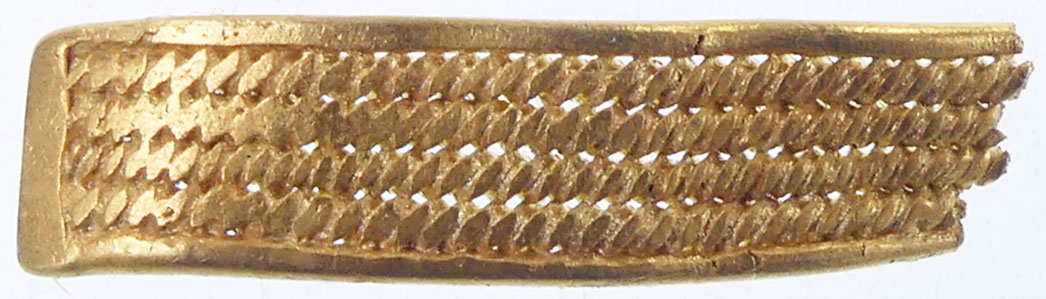
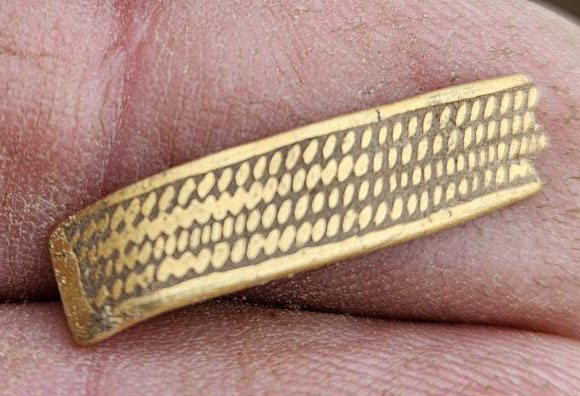

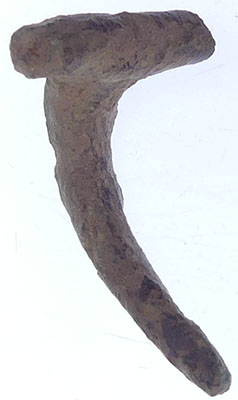
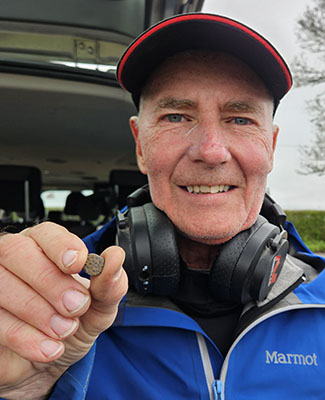
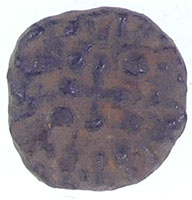
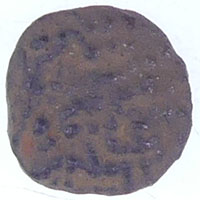
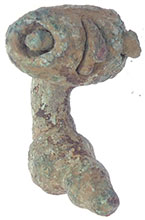
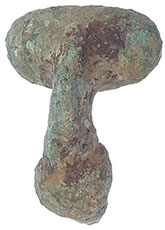
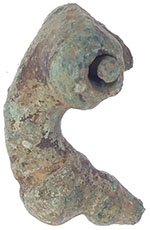
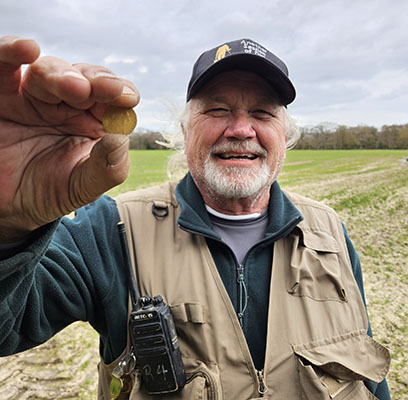
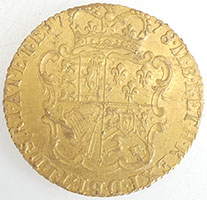
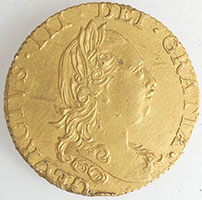
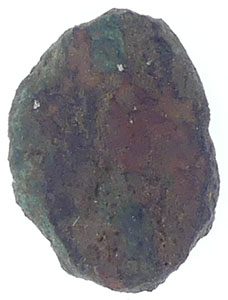
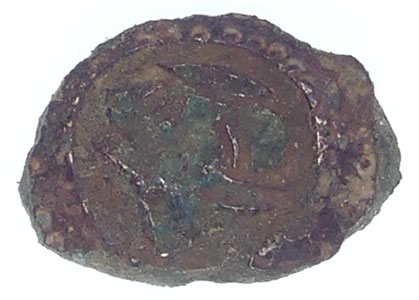
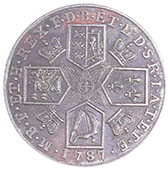
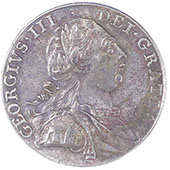
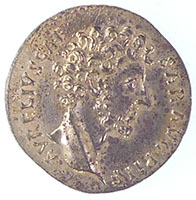
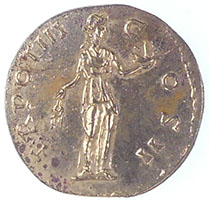
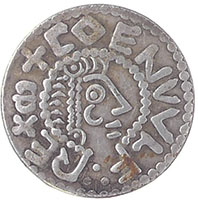

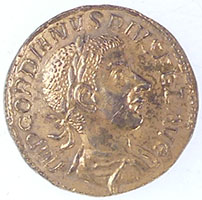
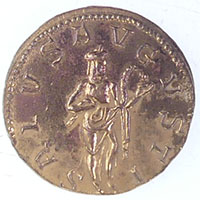
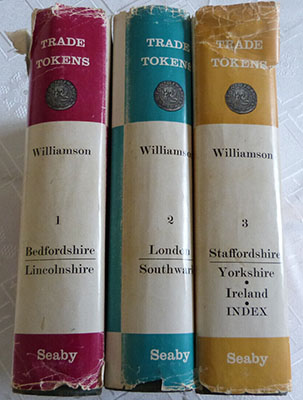
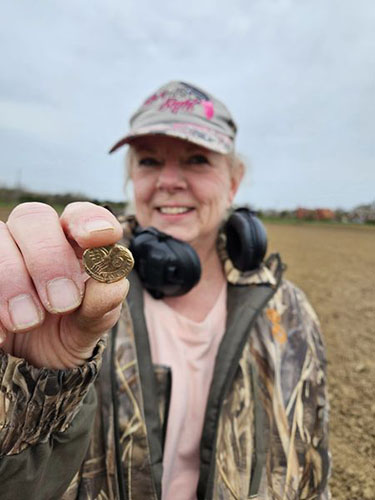
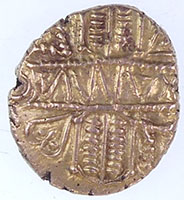
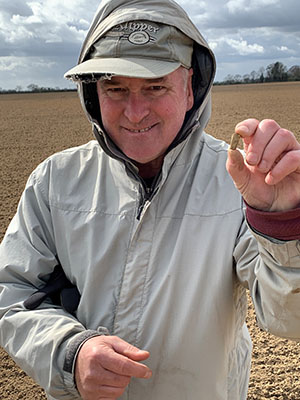
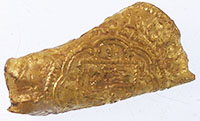
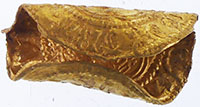
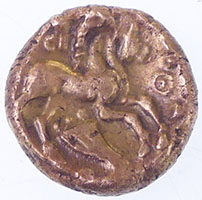
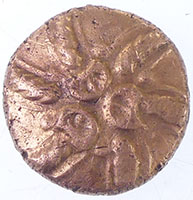
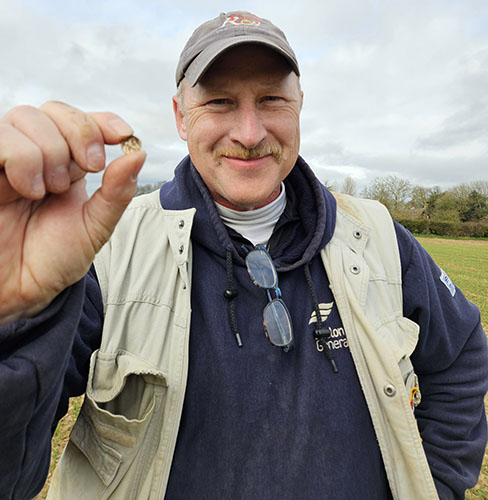
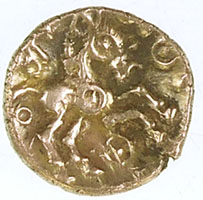
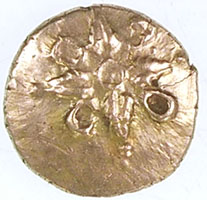
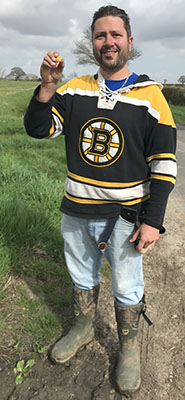
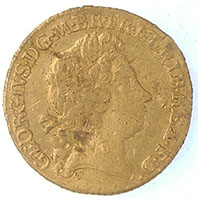

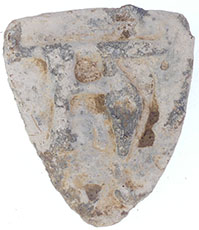
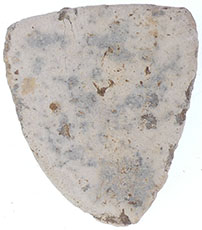
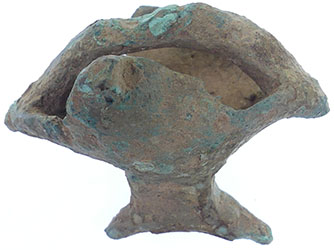
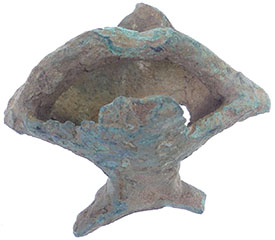
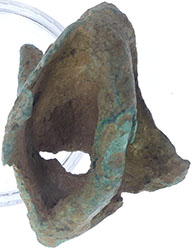
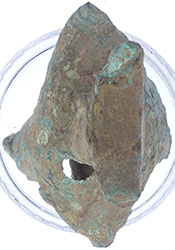
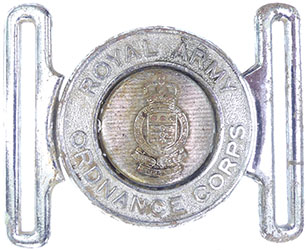
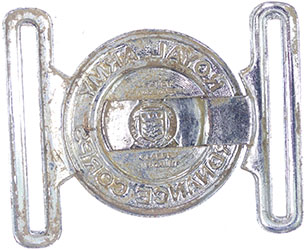
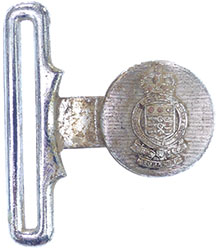
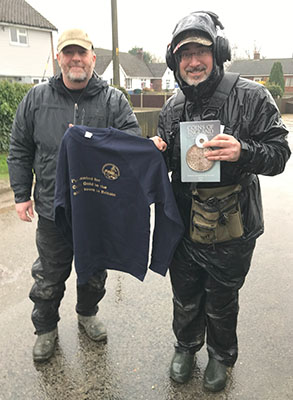
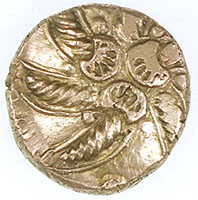
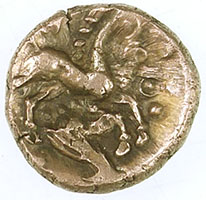
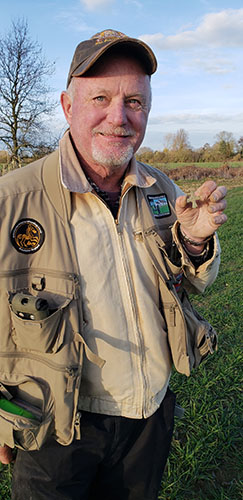
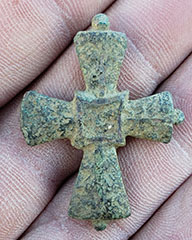
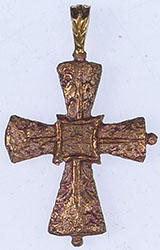
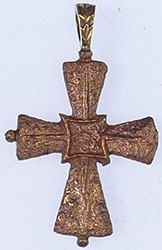
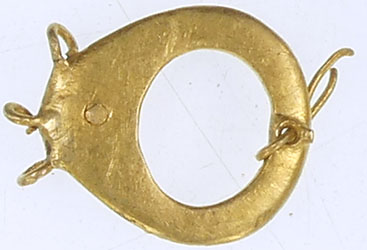
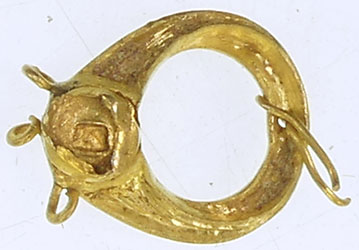
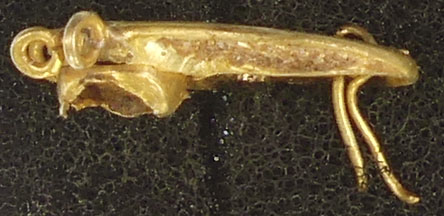
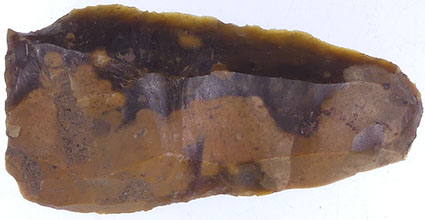
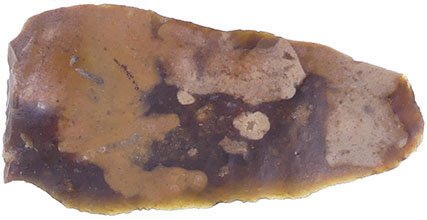


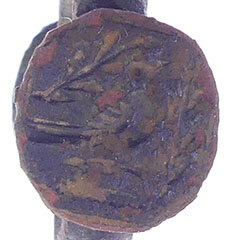
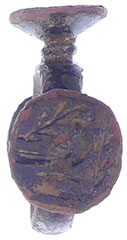
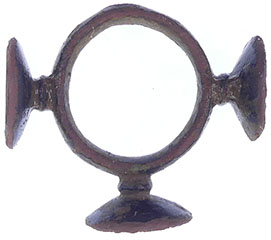

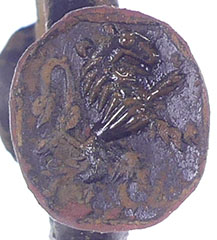

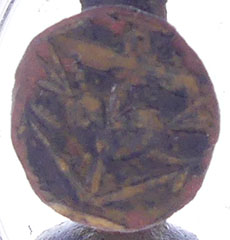
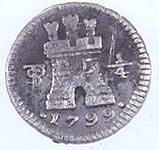
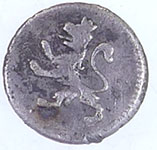
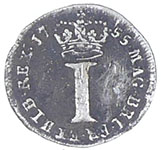
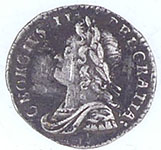
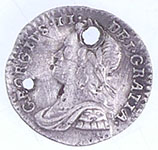

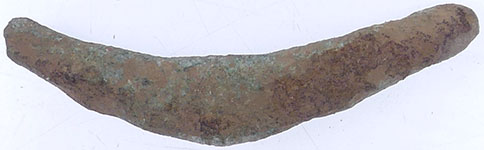
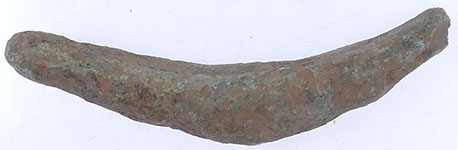
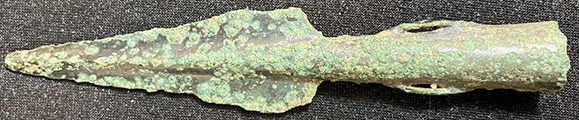
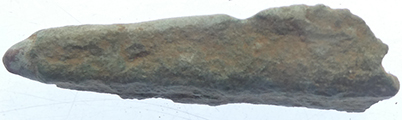

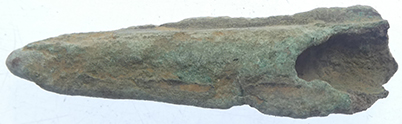


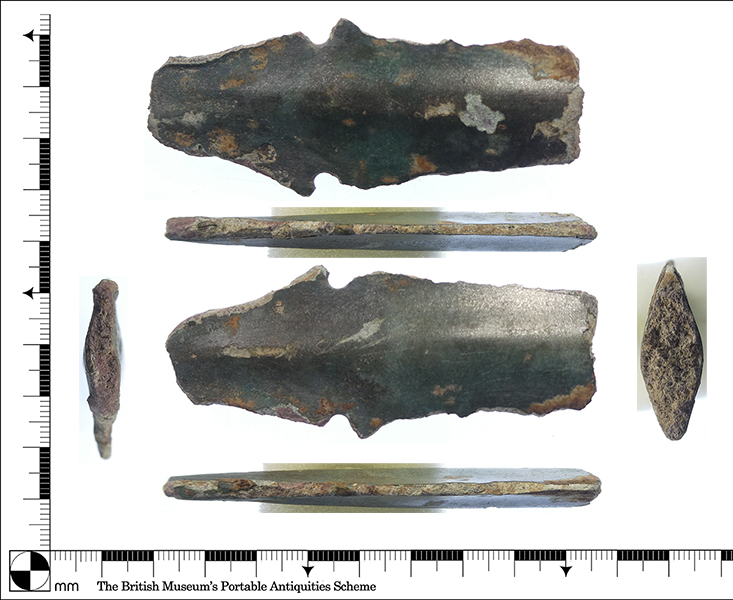
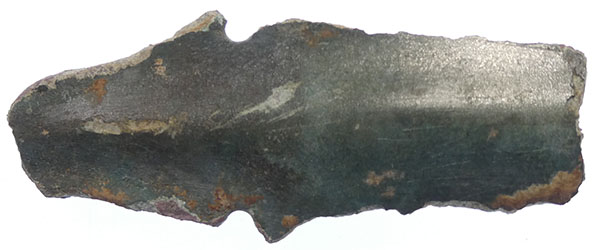



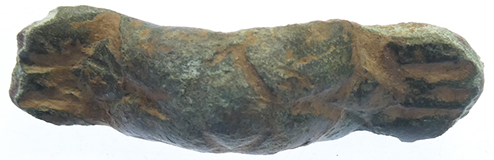
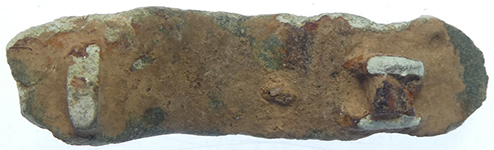
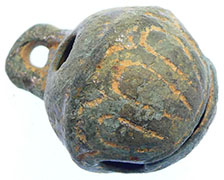
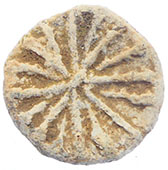
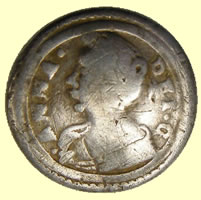
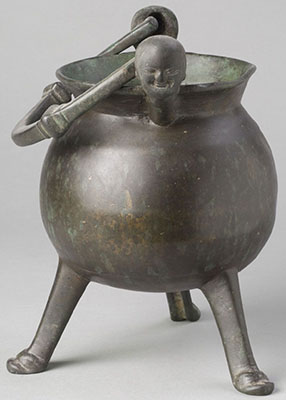
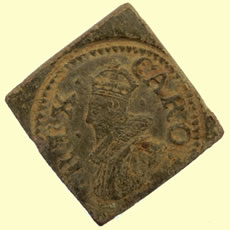
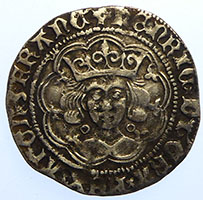
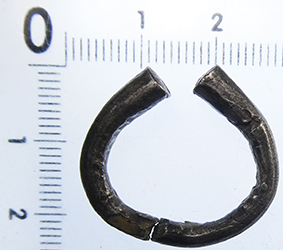
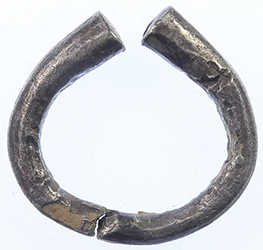
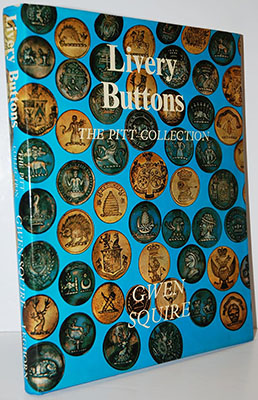
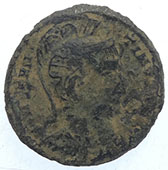
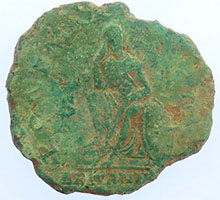
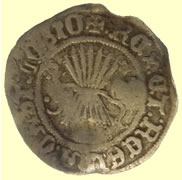
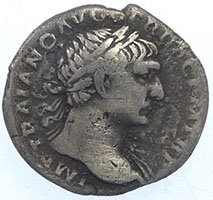
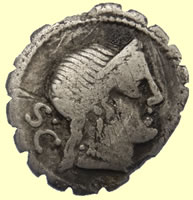
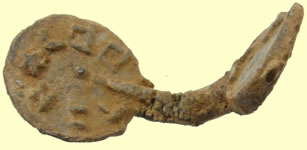
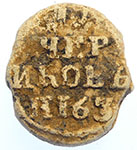
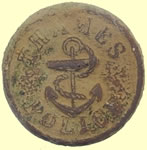
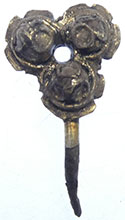
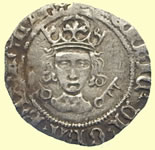
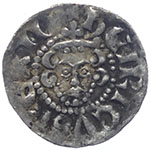
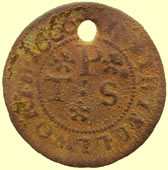
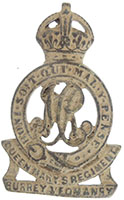
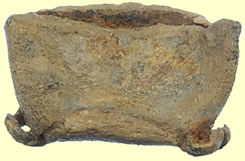
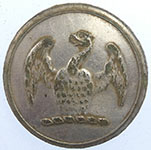
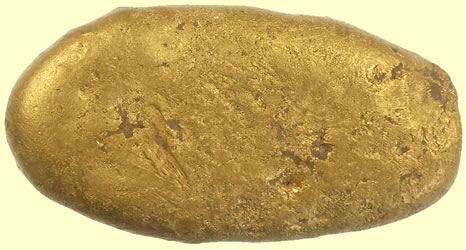
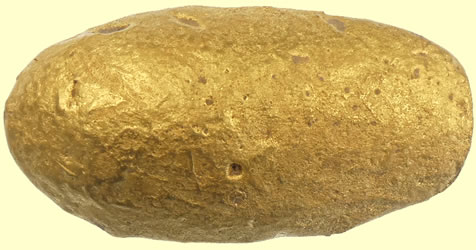
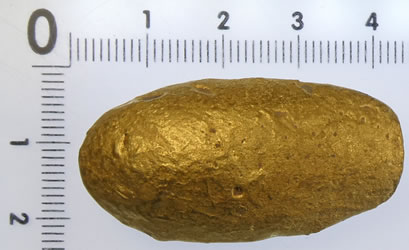
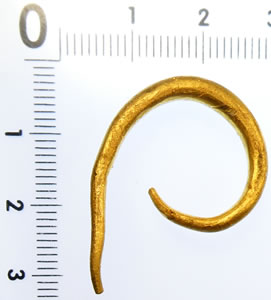
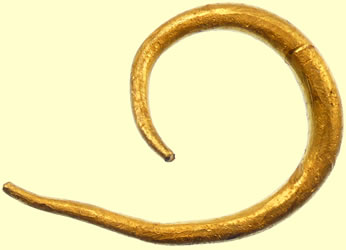
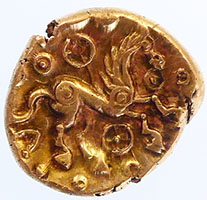
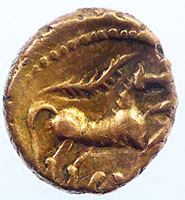
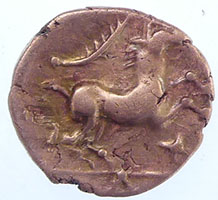
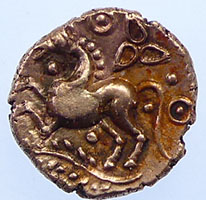
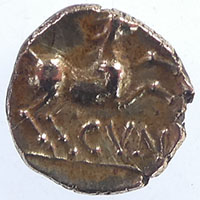
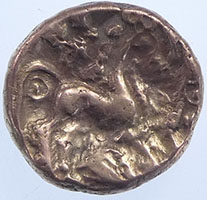
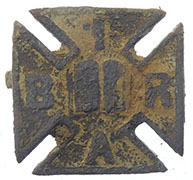
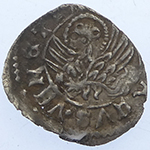
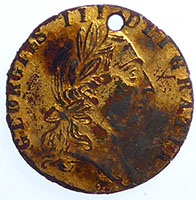
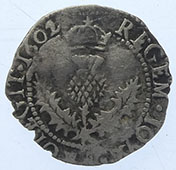
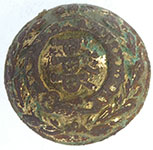
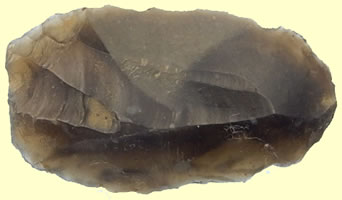
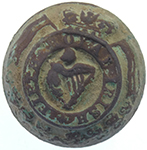
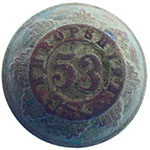
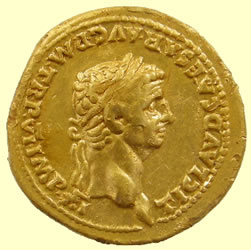
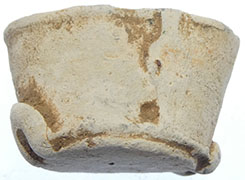
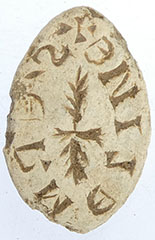
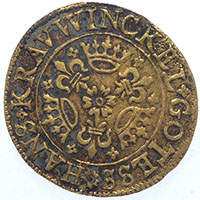
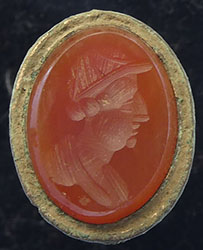
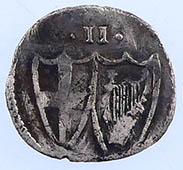
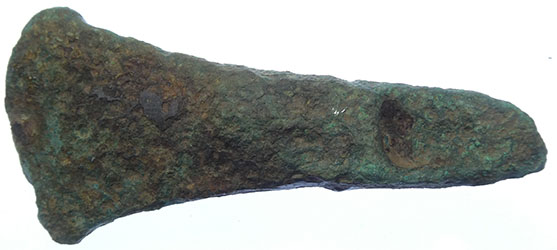
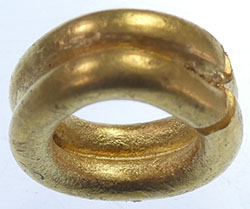
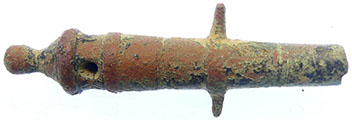
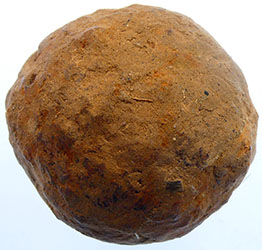
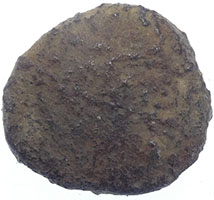
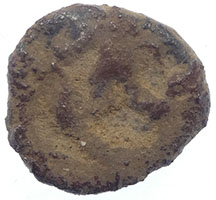
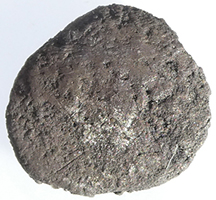
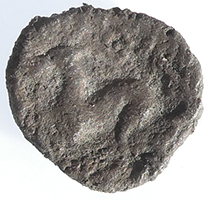
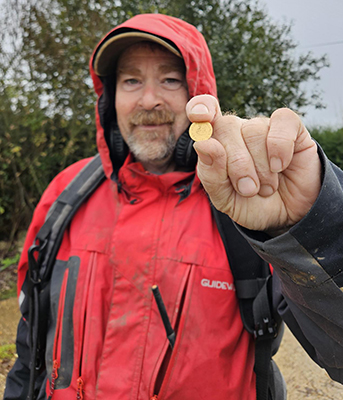
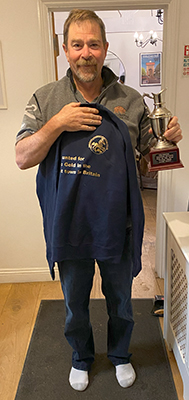
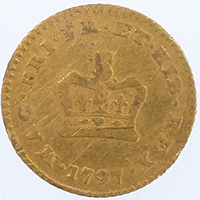
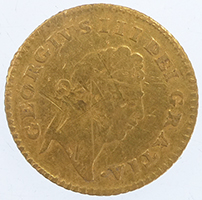
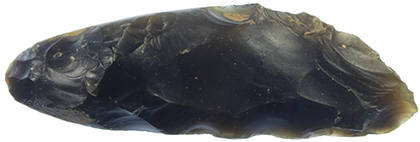
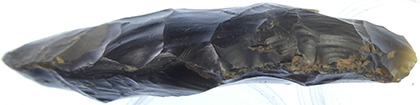
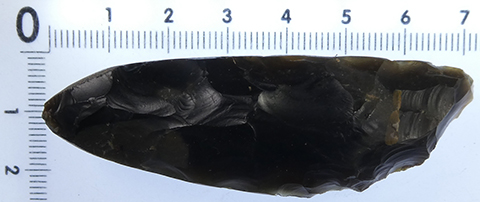
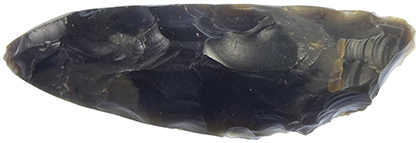
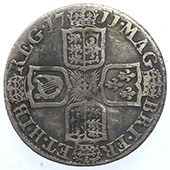
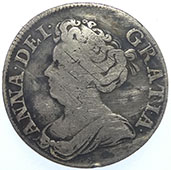
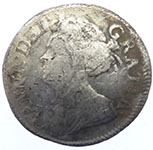
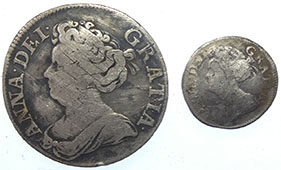
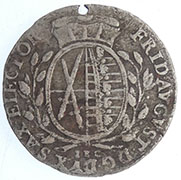
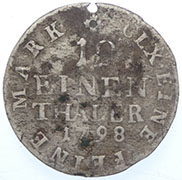
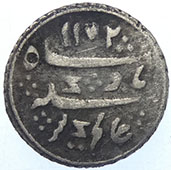
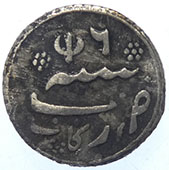
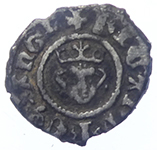
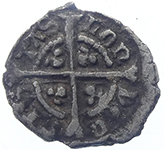
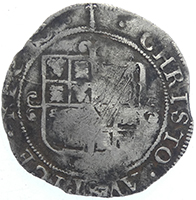
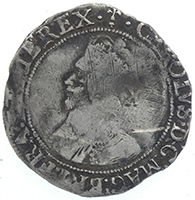
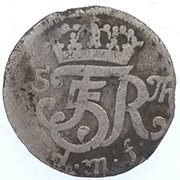
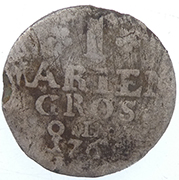
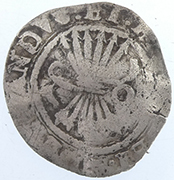
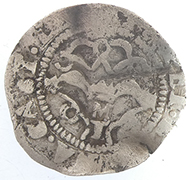
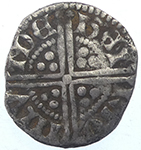
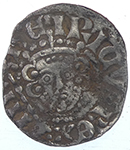
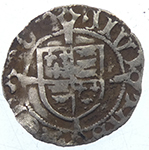
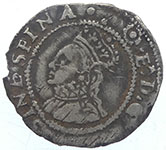
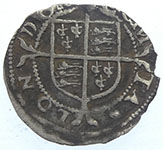
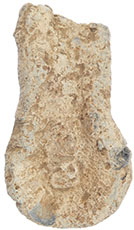
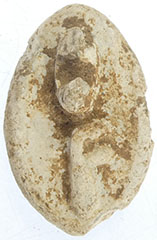
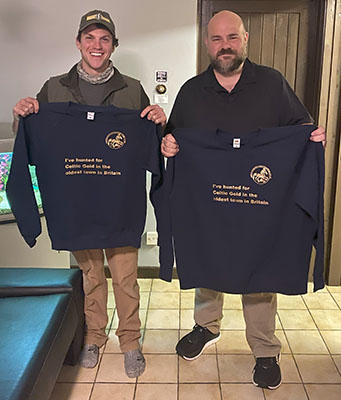
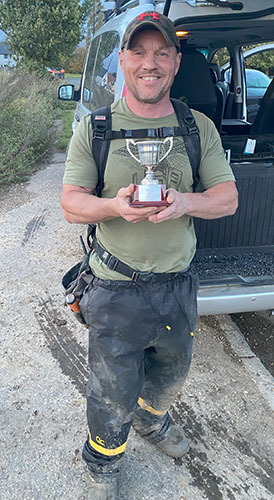
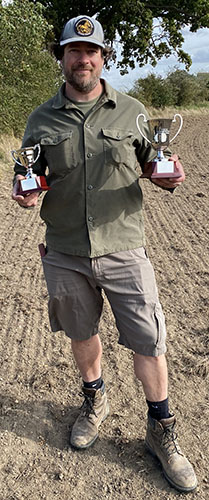
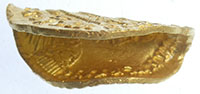
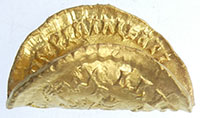
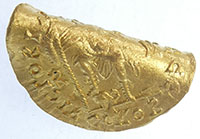

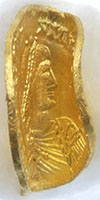

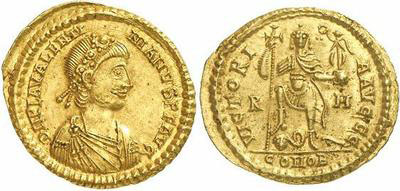
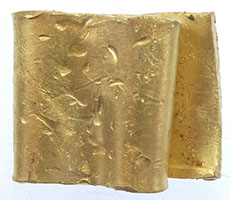
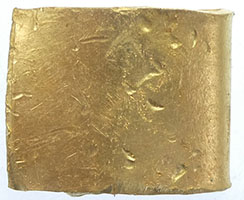
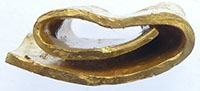
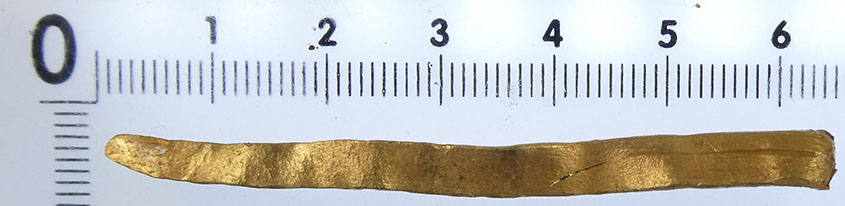



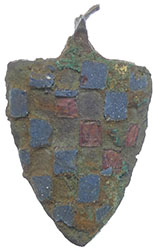

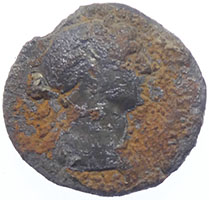
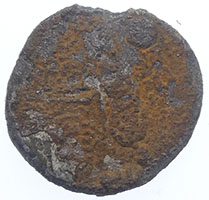
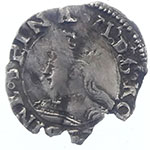
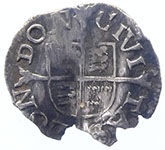

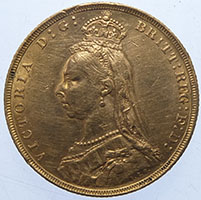

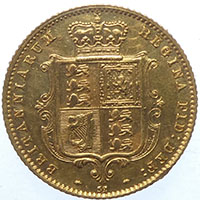
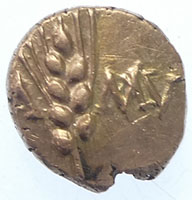
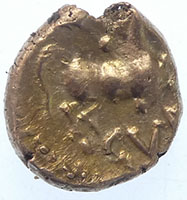
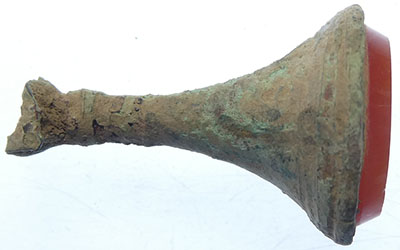
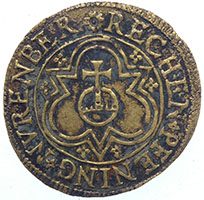
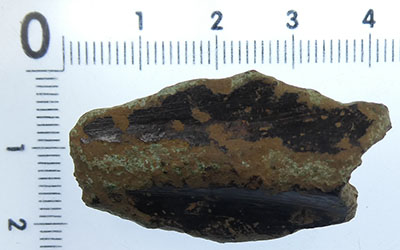
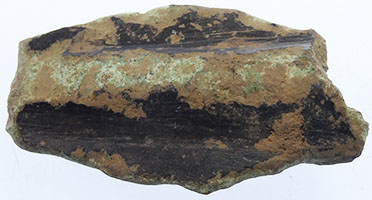
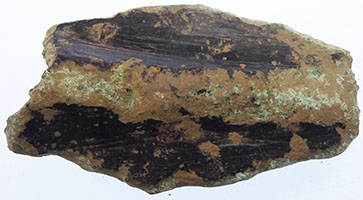
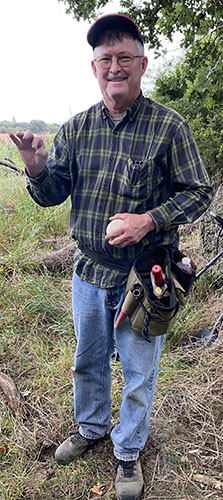
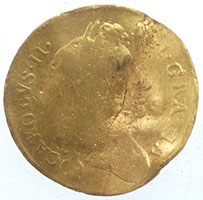
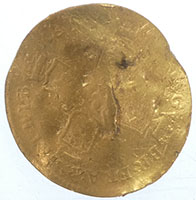
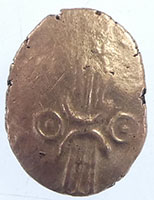
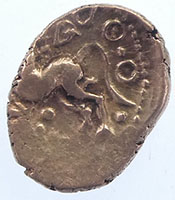
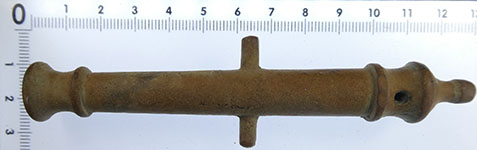
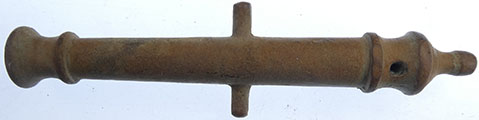
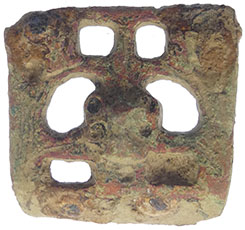
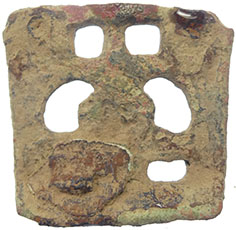
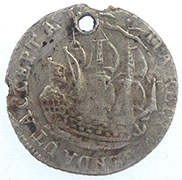
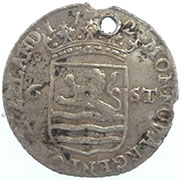
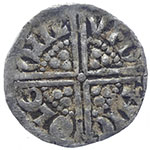
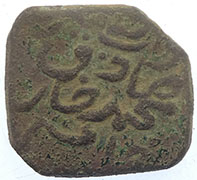

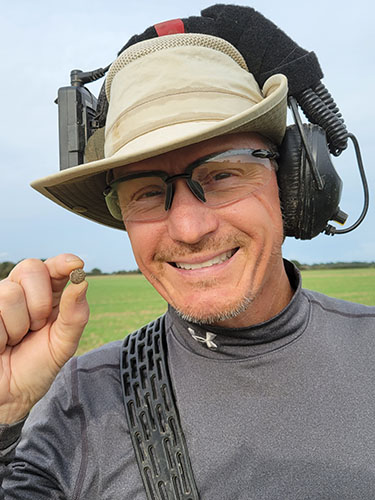


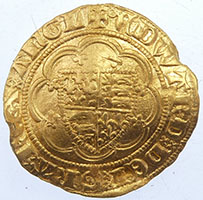
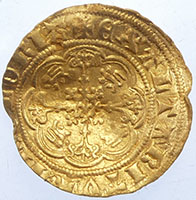
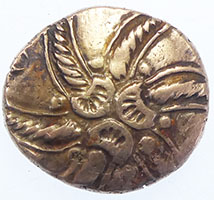
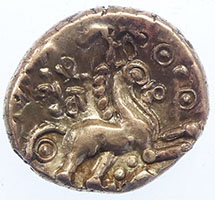
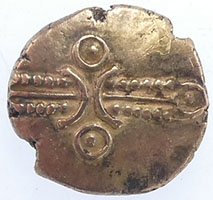
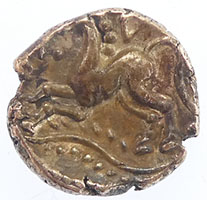
 Dubnovellaunus is the name of a king who, based on coin distribution, appears to have ruled over Kent east of the River Medway. He was the first king of the Cantiaci to issue inscribed coins: some of his coins appear to date from as early as 40-30 BC. Towards the end of the 1st century BC he seems to have been succeeded by a king called Vodenos or Vosenios, although it is possible the two kings' reigns were contemporary or overlapped.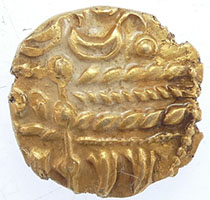
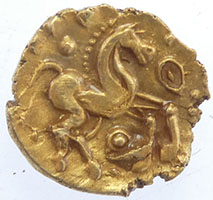
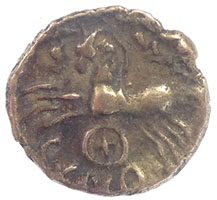

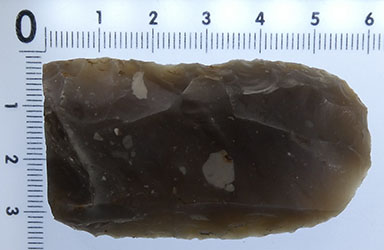
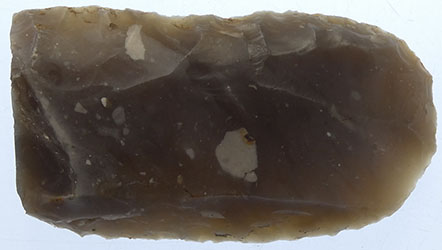
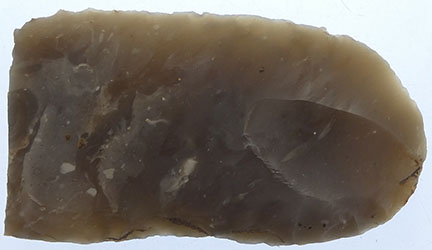
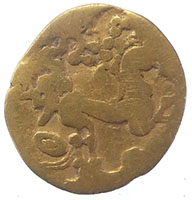
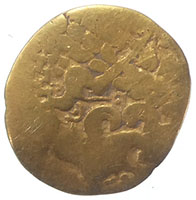
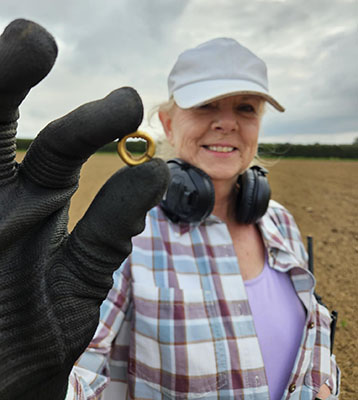
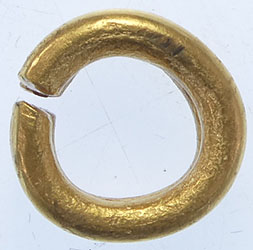
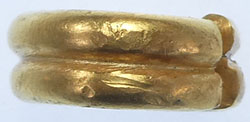
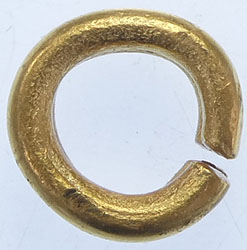
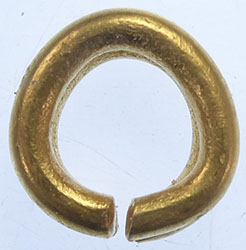
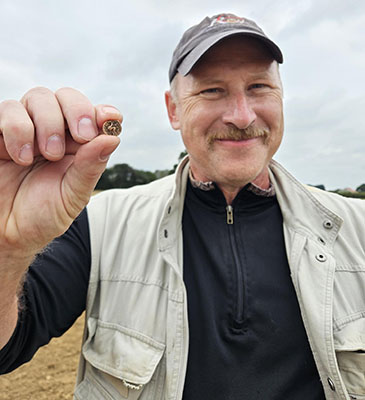
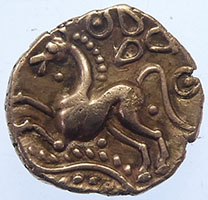
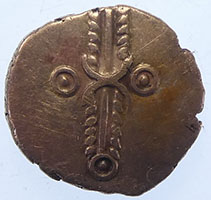
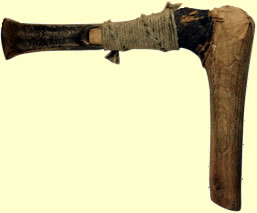

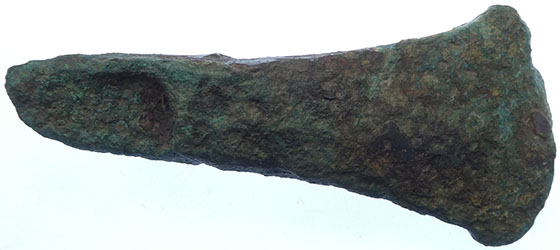

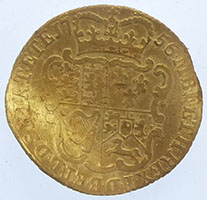
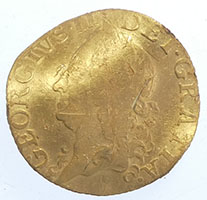
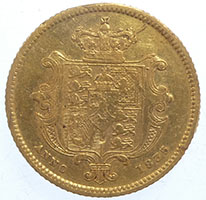
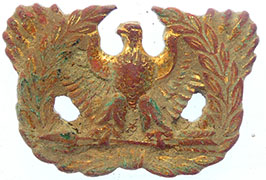
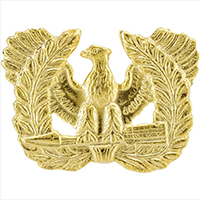

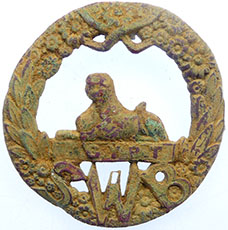
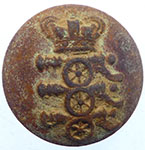
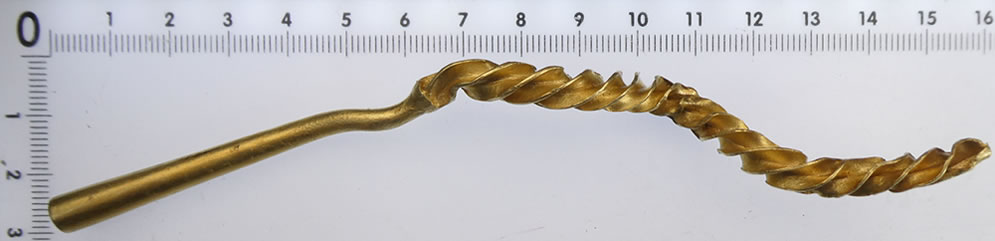

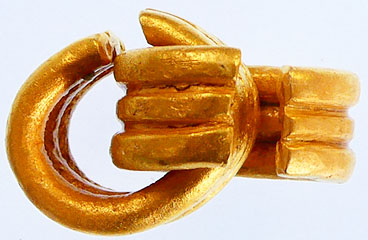
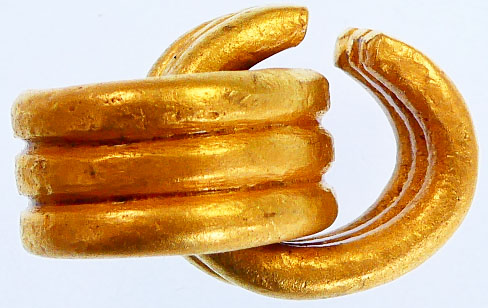
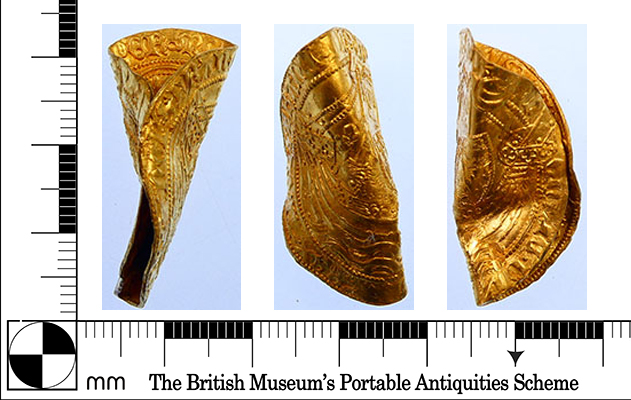
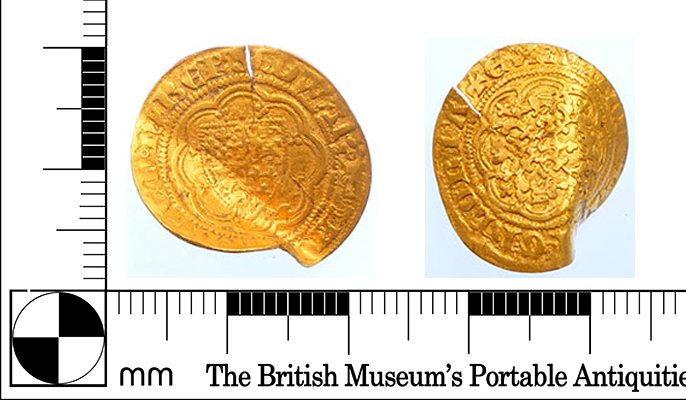
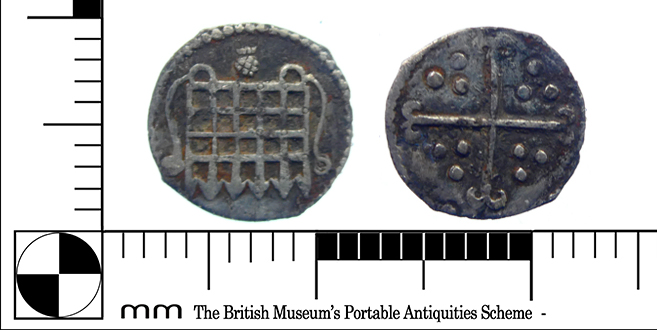
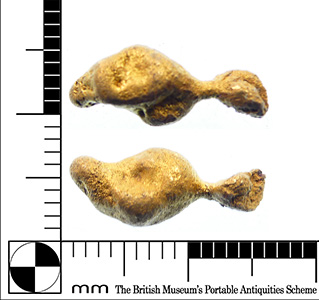
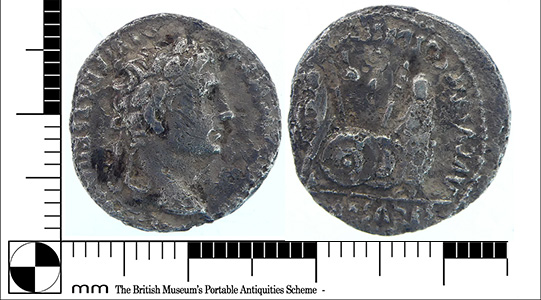
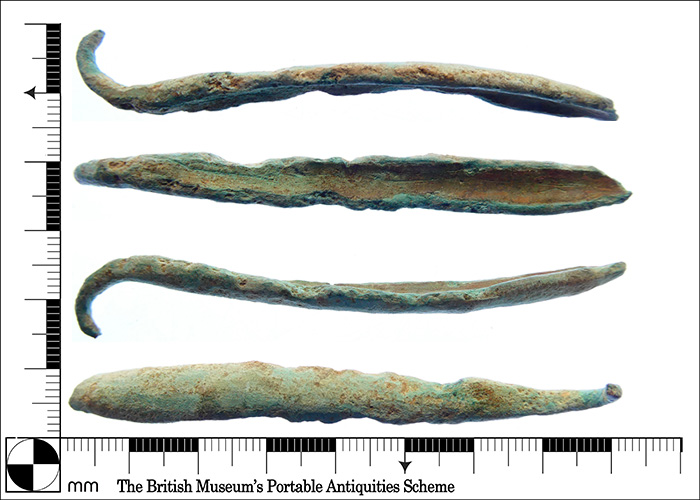
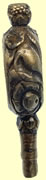
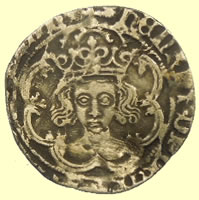

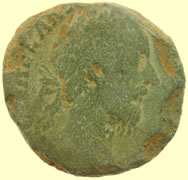
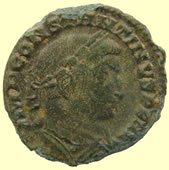
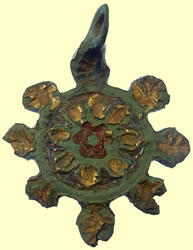
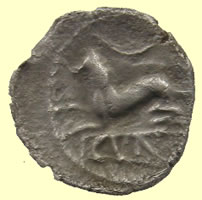
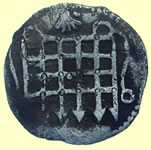
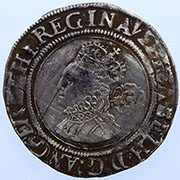
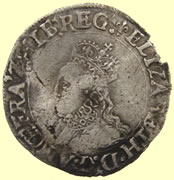
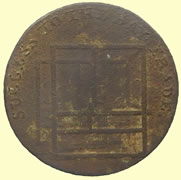
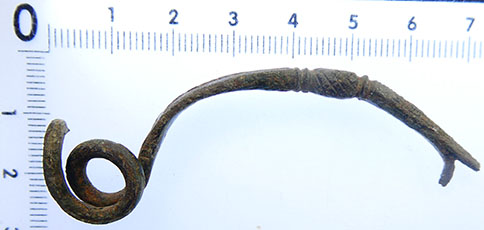


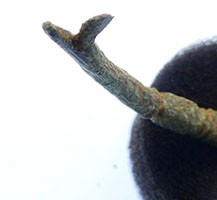
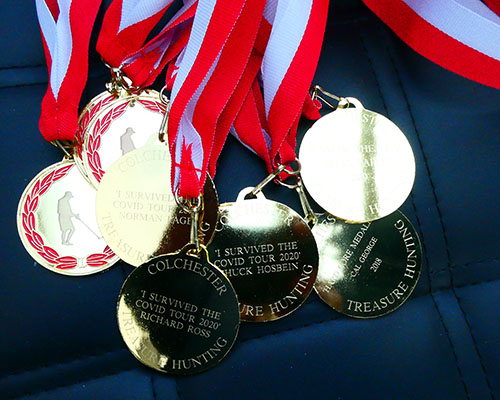
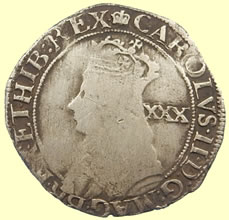
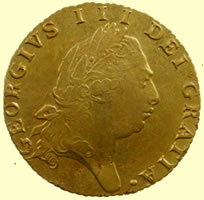
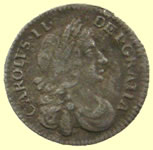
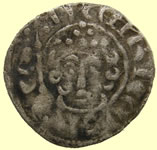
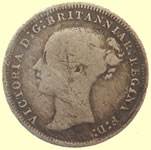
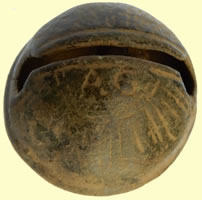
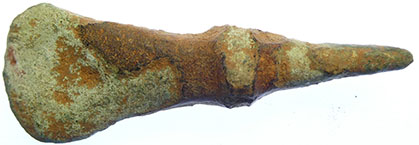
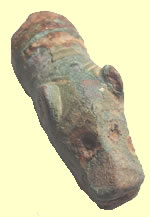
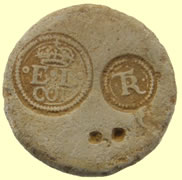
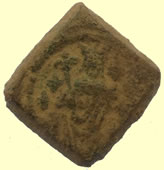
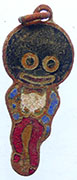
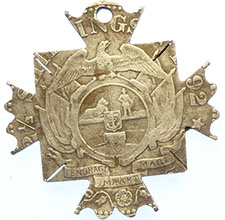
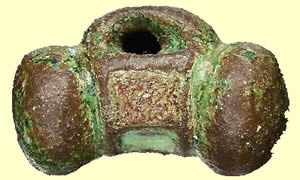
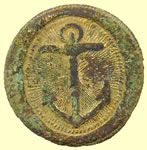

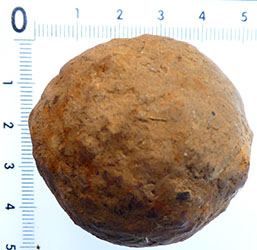
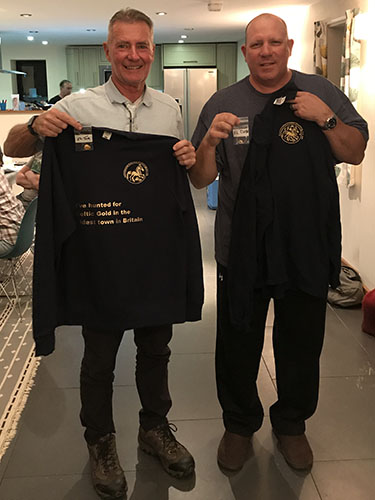
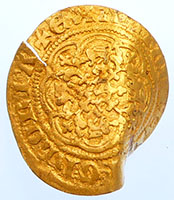
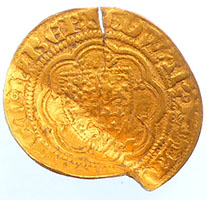
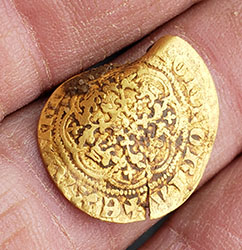
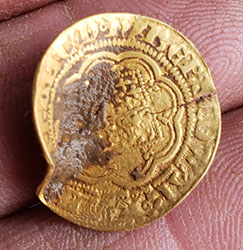
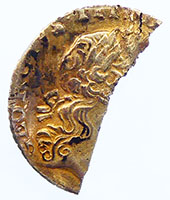
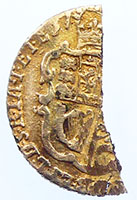
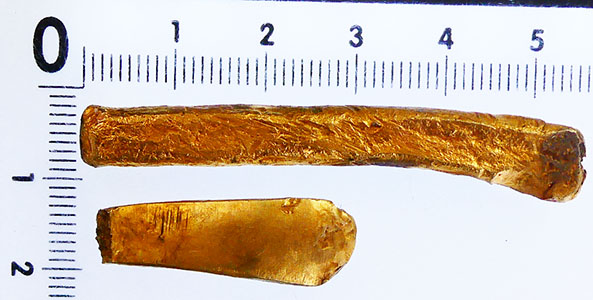
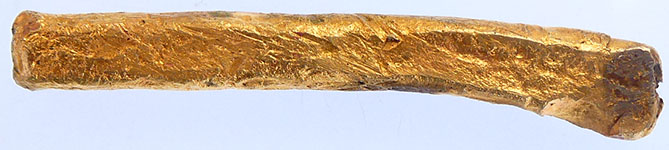

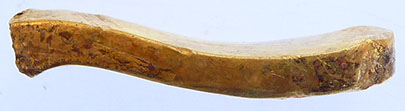

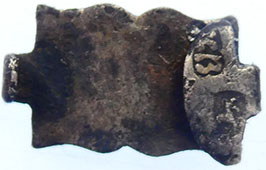
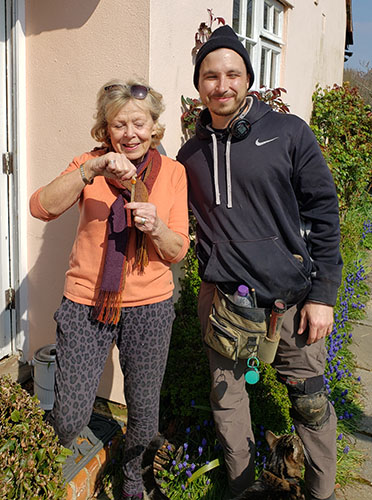
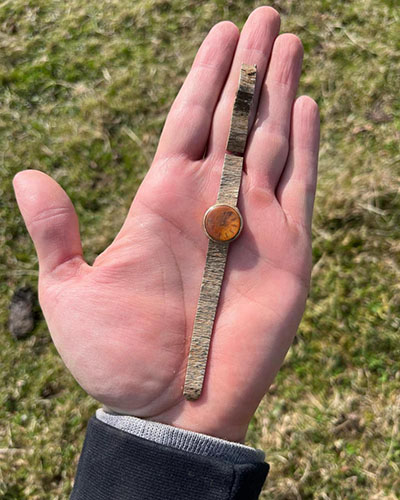
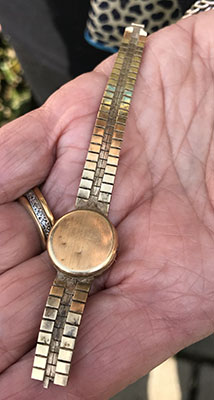
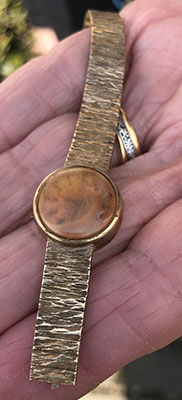
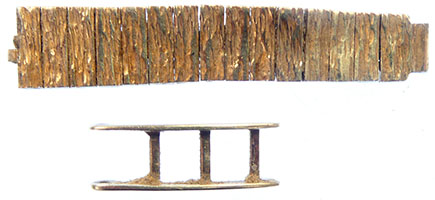
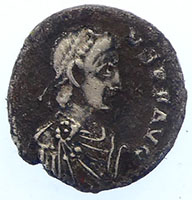
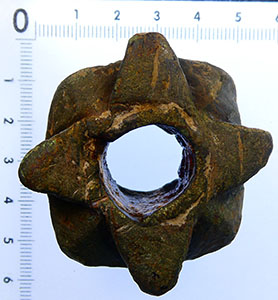
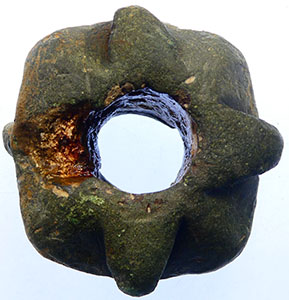
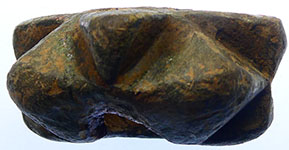
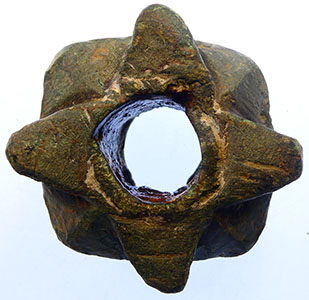
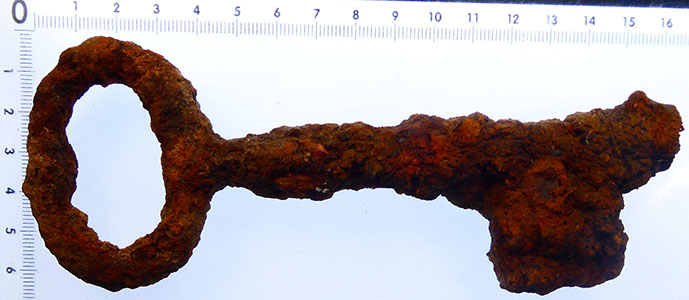
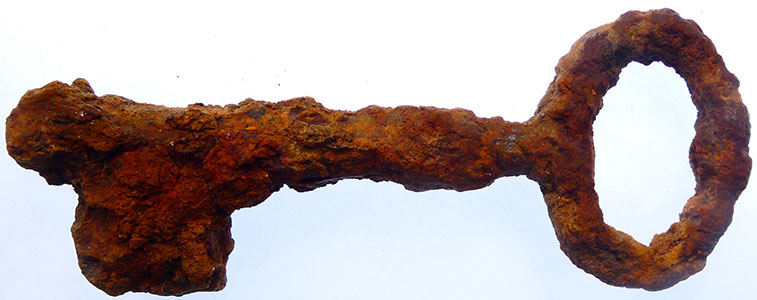
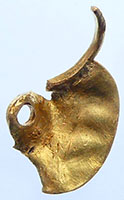
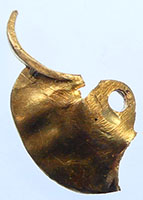
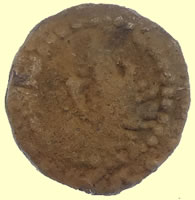
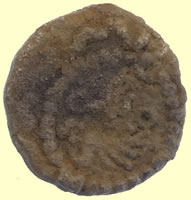
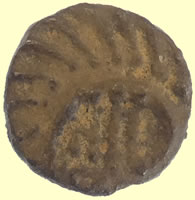

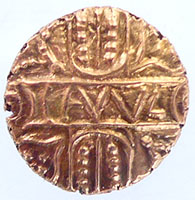
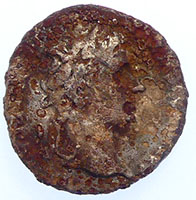
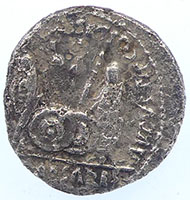
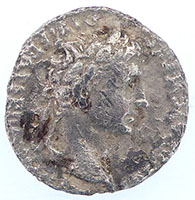
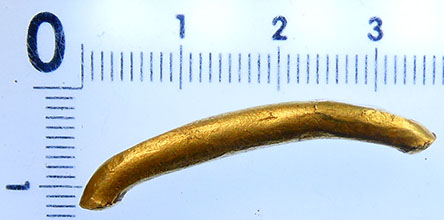
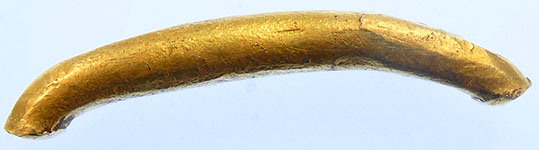
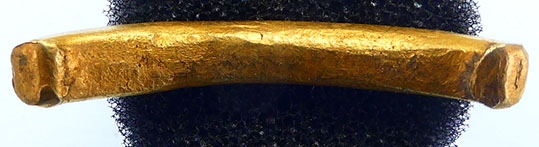
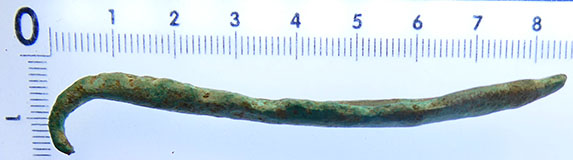


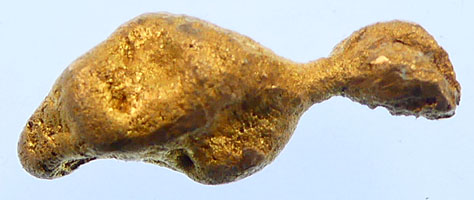
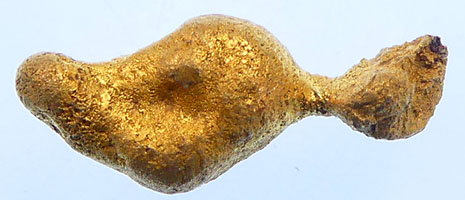

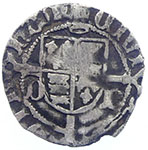
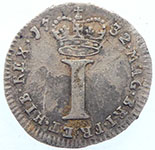
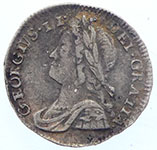

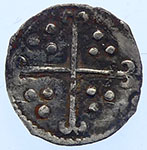
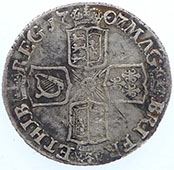
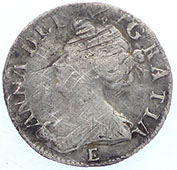

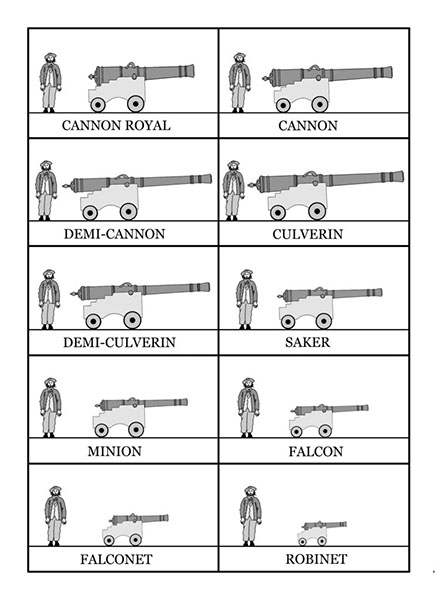
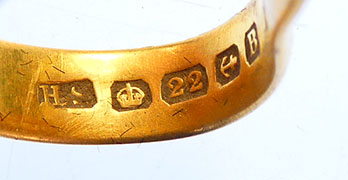
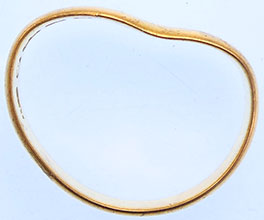
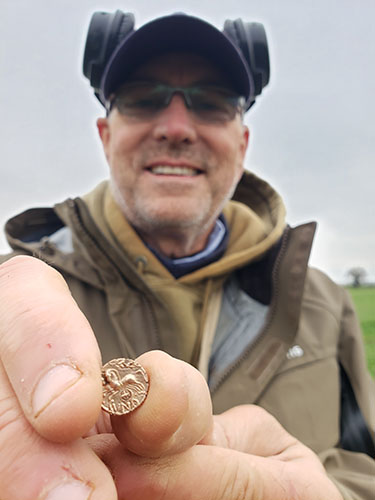
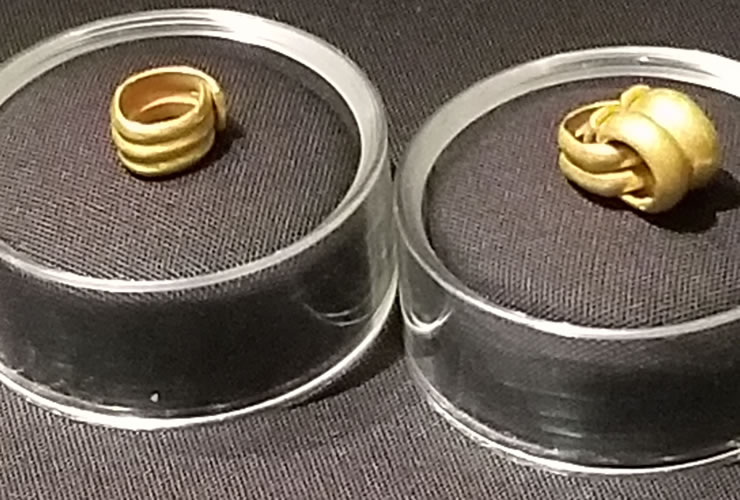


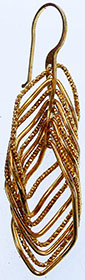
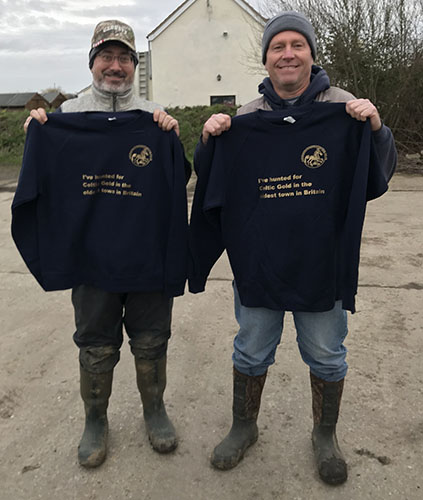
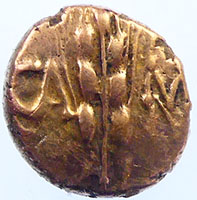
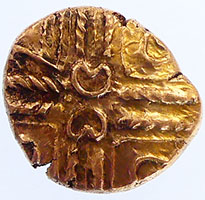
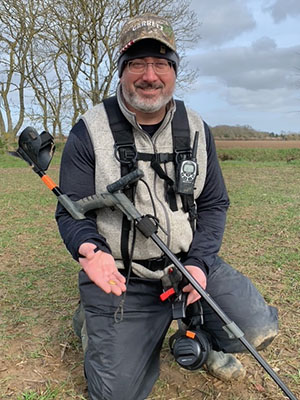
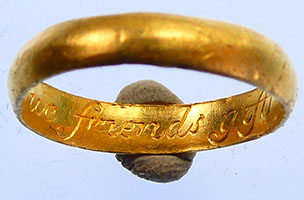
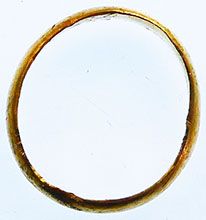
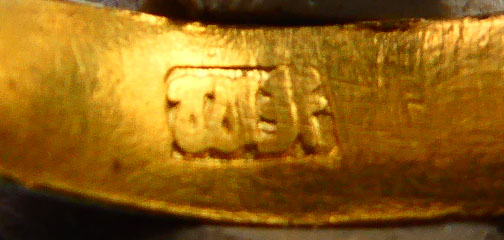
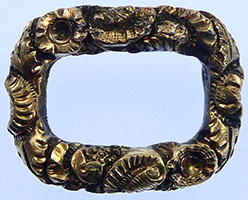

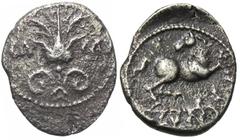
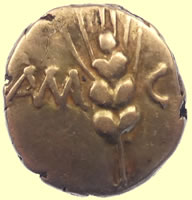
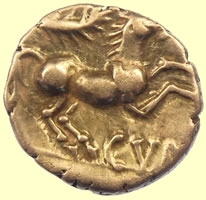
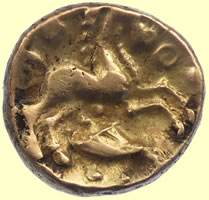
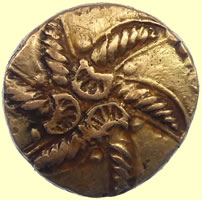
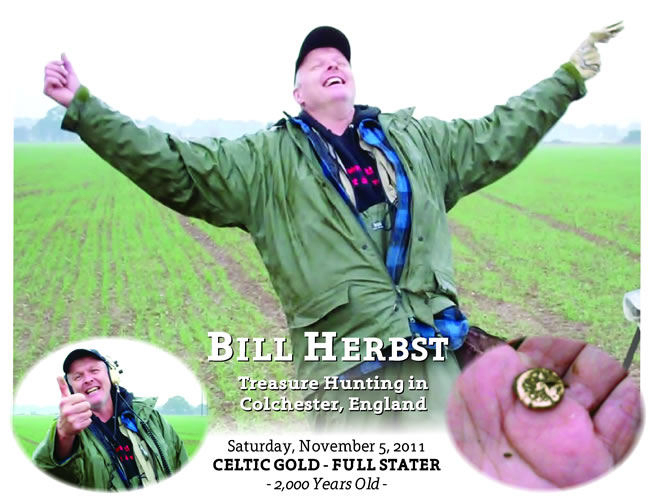
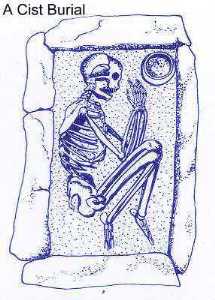
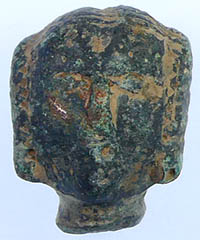

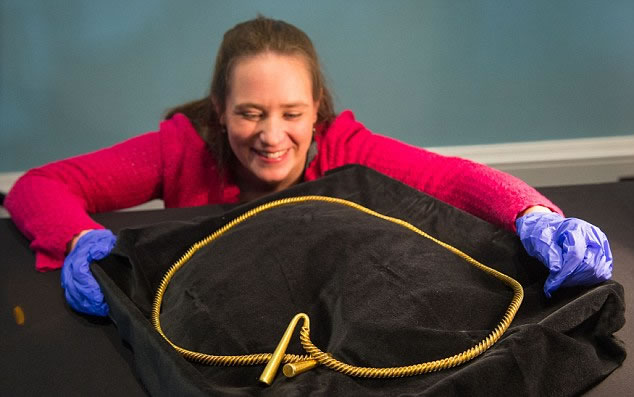
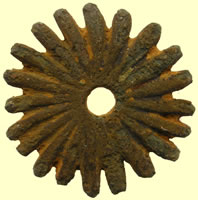
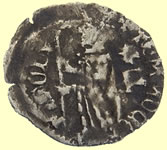


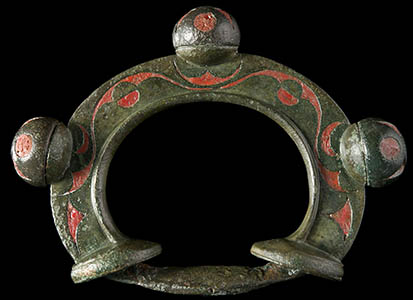

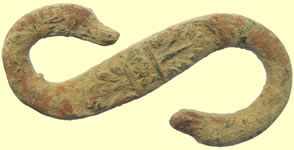

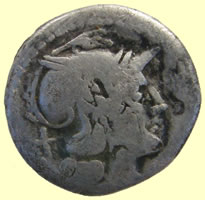
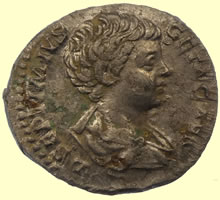


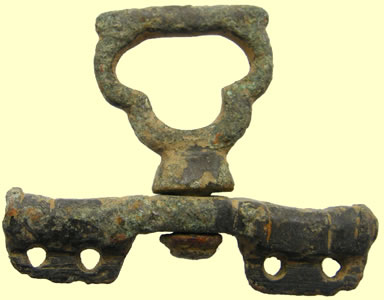
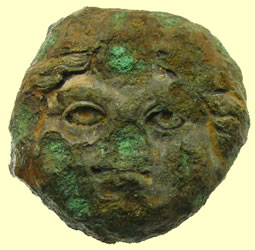
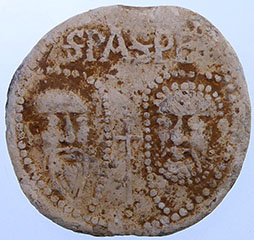
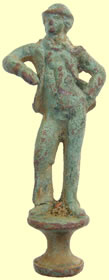
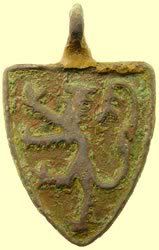
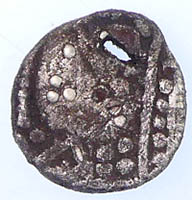
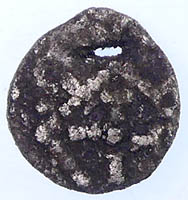
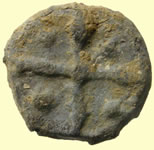
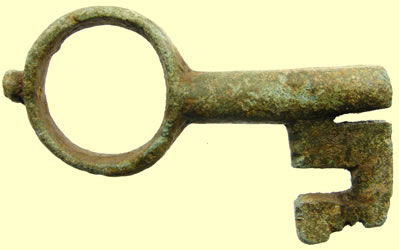

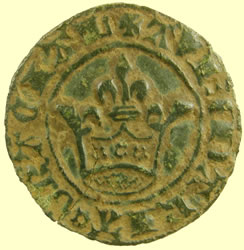

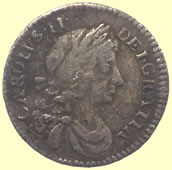

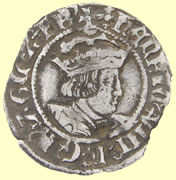
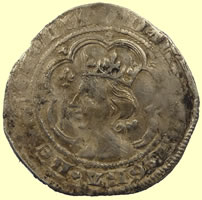
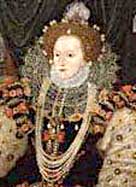
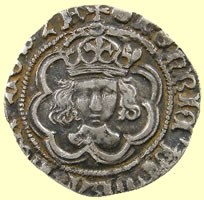
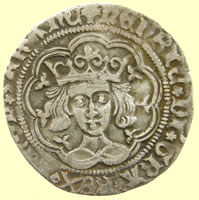



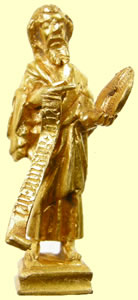

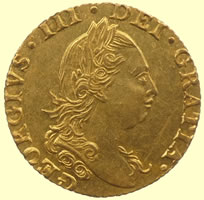

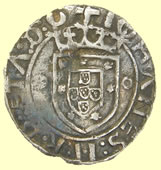
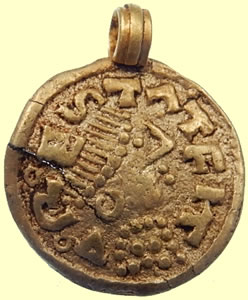

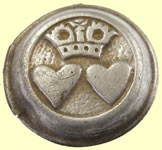
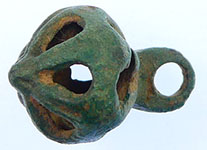
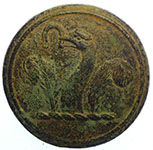
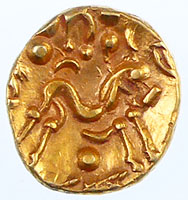

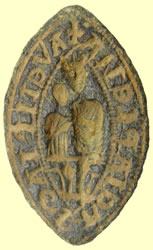
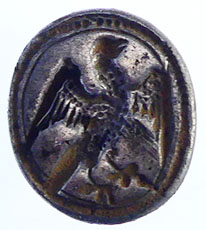
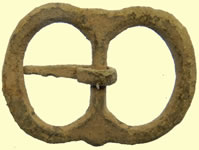
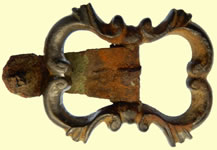
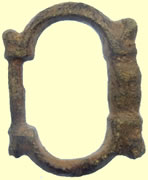
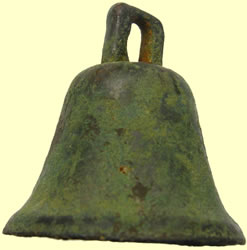
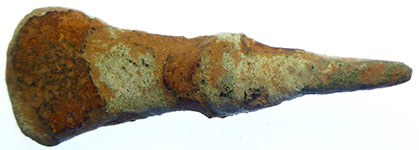
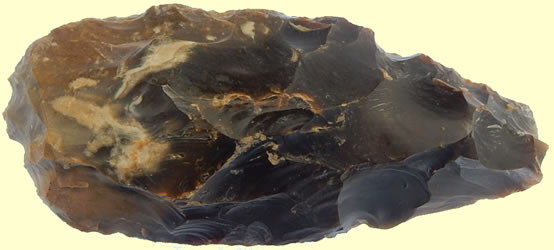
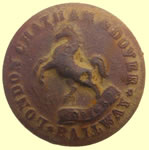
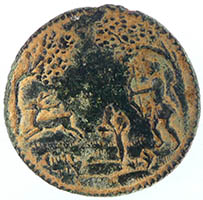
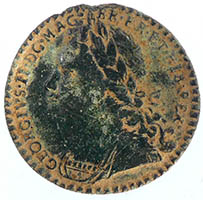

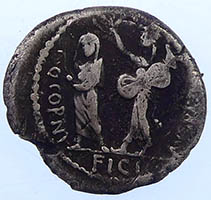
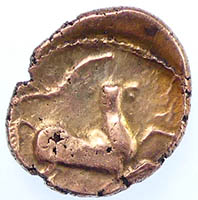

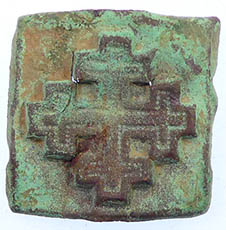
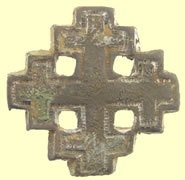
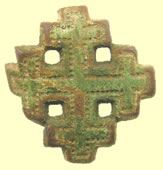
 'A badge for a Knight of the Order of the Holy Sepulchre in bronze and dating somewhere around C13/14th possibly very slightly later . This is a very scarce item and it relates to The Equestrian Order of the Holy Sepulchre of Jerusalem being a Catholic chivalric order of Knighthood that traces its roots to Godfrey of Bouillon, principal leader of the First Crusade. According to reliable sources in the Vatican and Jerusalem, it began in historical reality as a mixed clerical and lay confraternity (association) of pilgrims which gradually grew around the most central of the Christian holy places in the Middle East, the Holy Sepulchre or the tomb of Jesus Christ.This would have been a pin for a member of the order , there is a mark on the reverse where the original pin would have been fixed '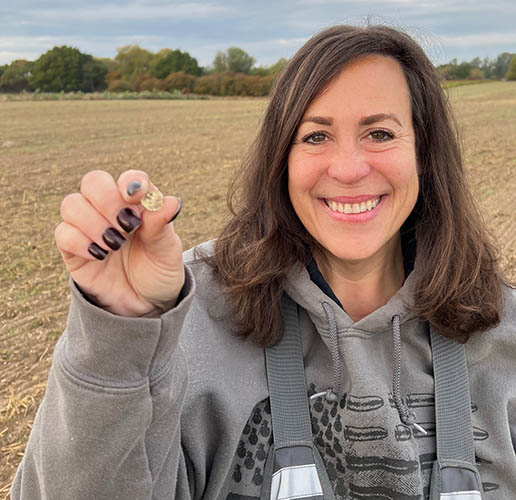
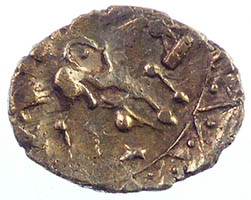
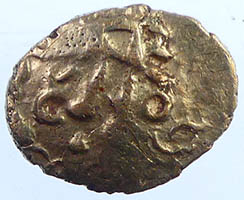
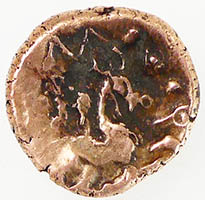
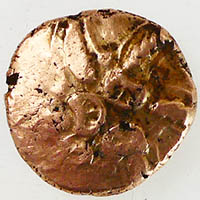
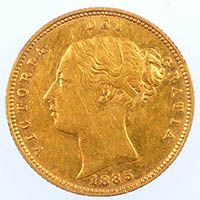
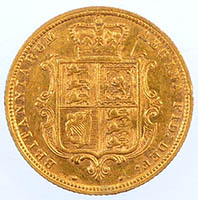
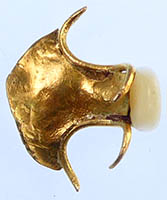
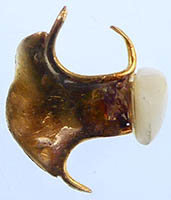
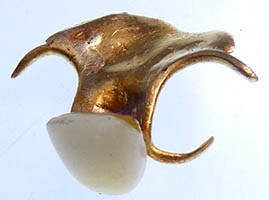

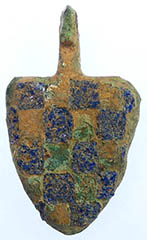
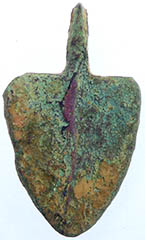
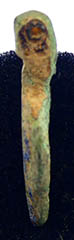
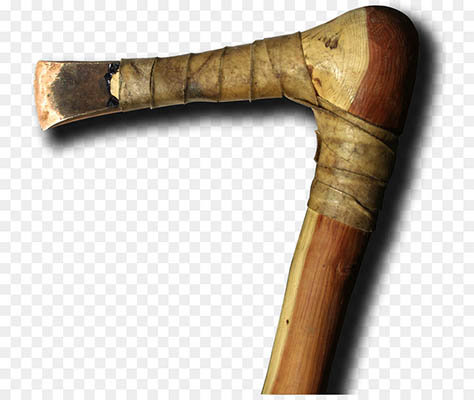
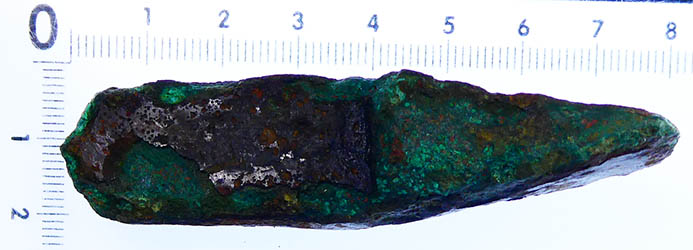
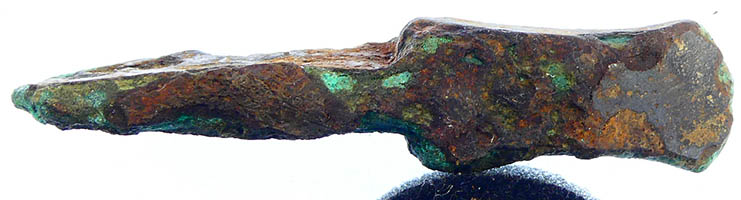
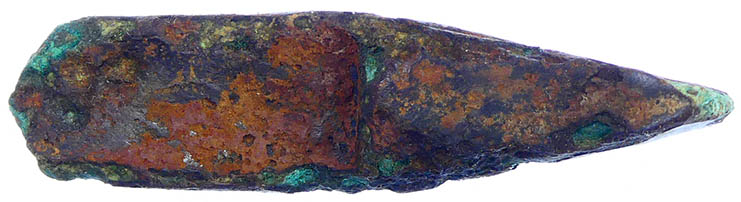
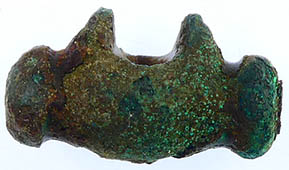

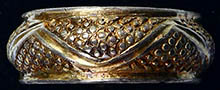
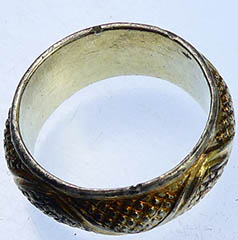
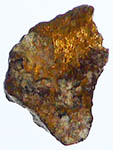

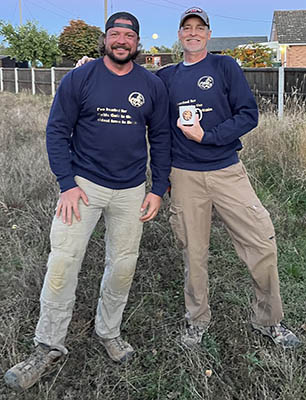
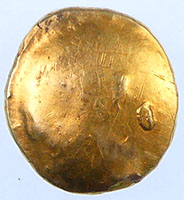
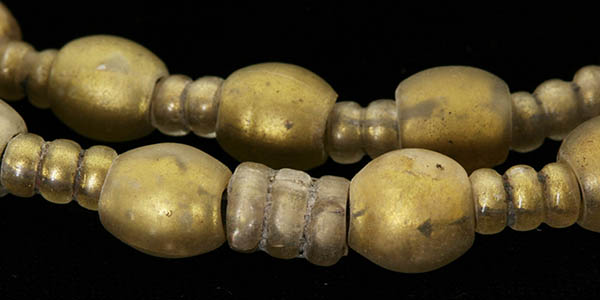
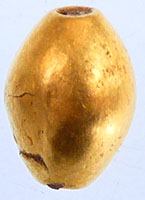
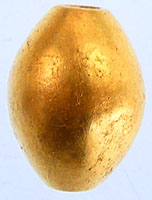
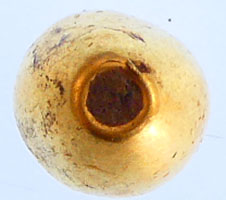
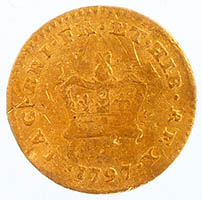
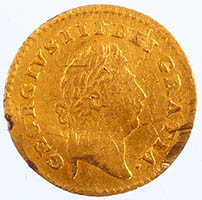
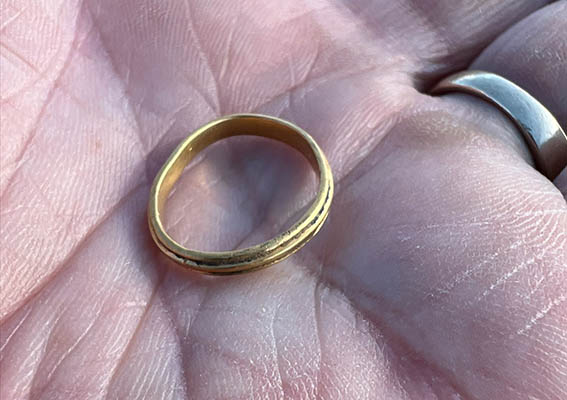
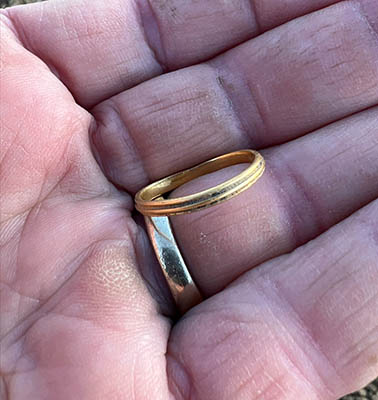
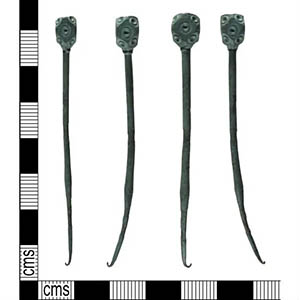
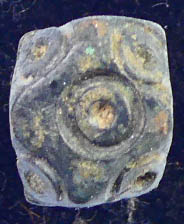
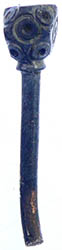
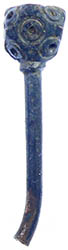
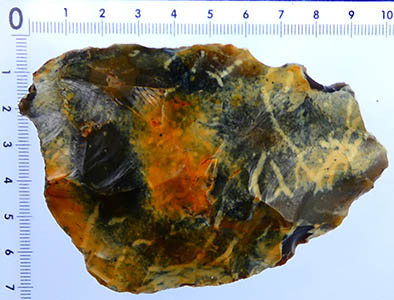
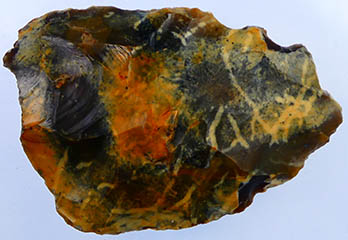
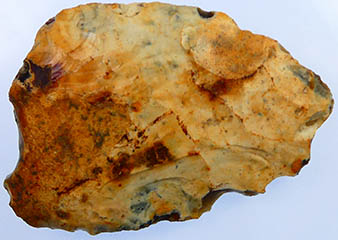
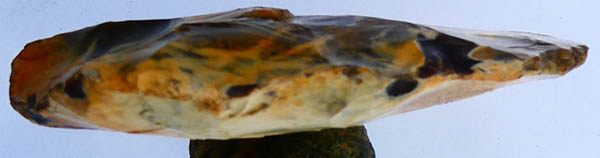
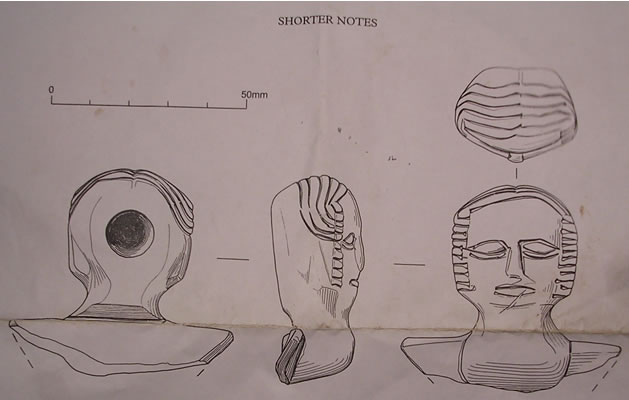
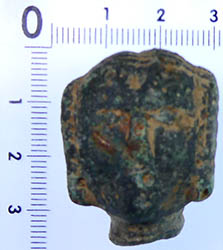
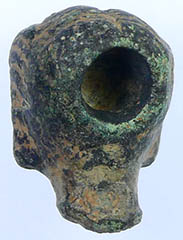
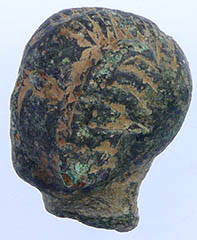

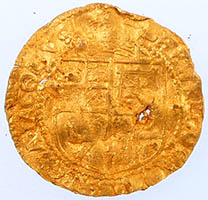
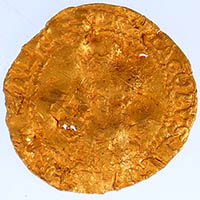
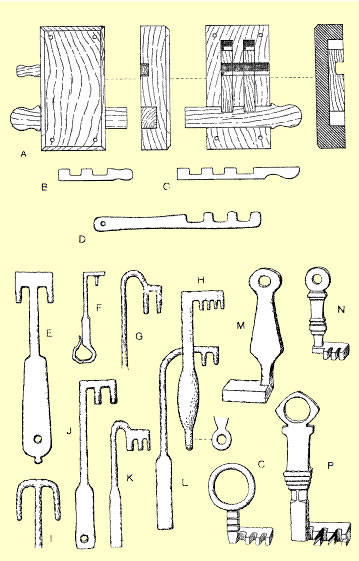
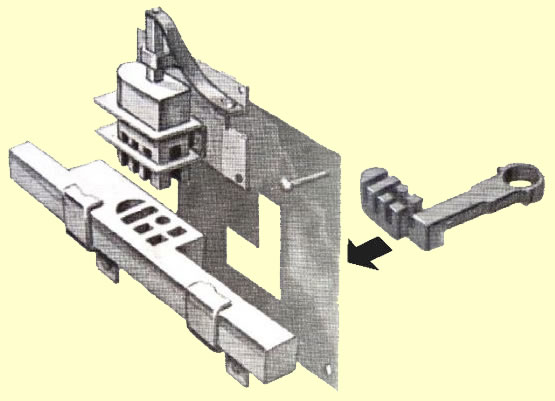
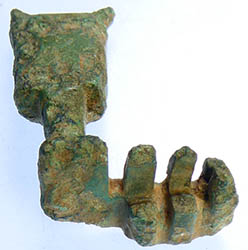
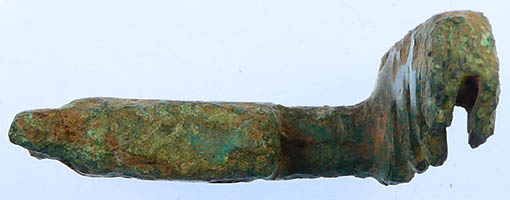

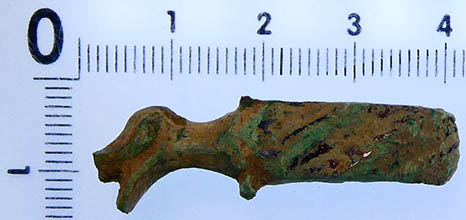
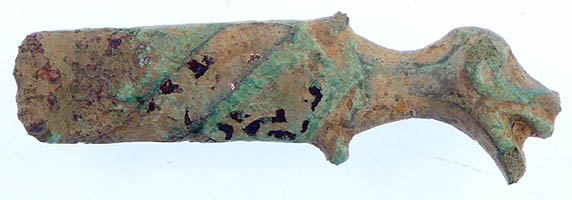
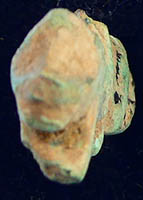


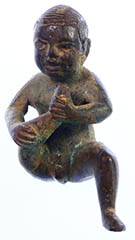
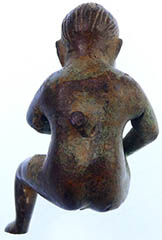
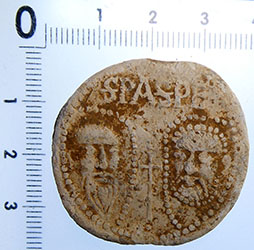

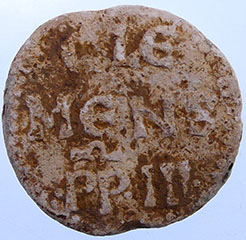
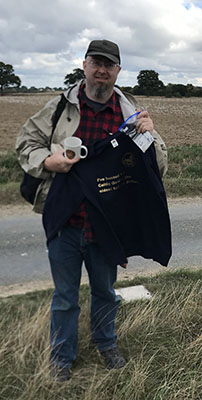
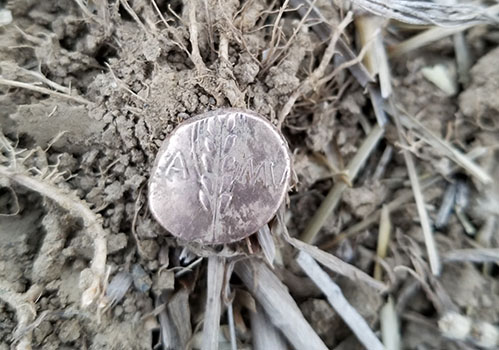
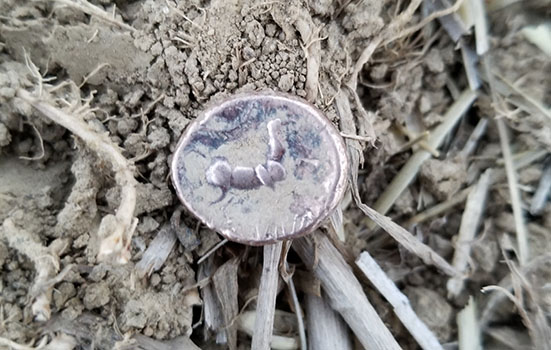
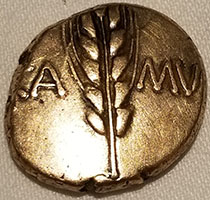

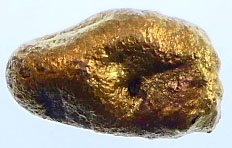
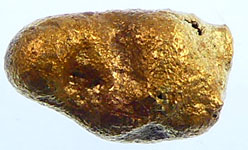
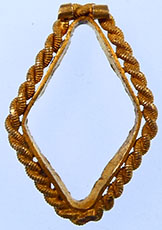
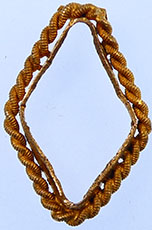
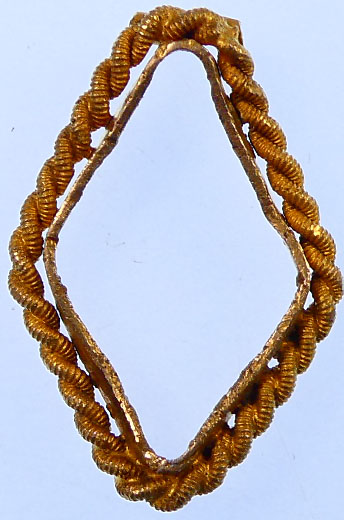
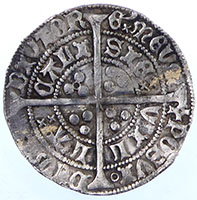
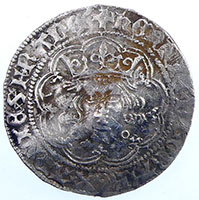
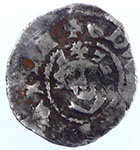

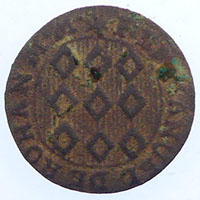

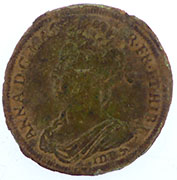
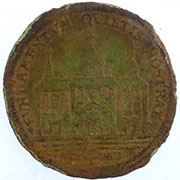
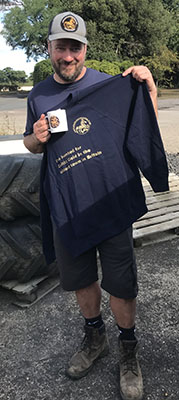
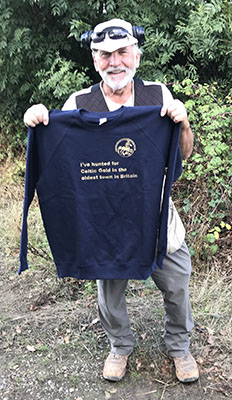
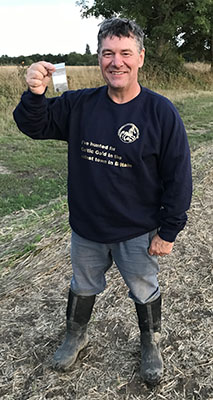
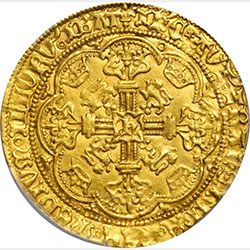
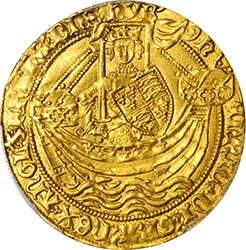

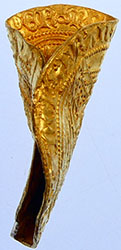
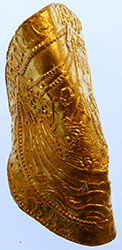
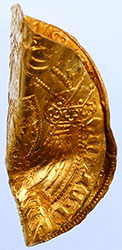
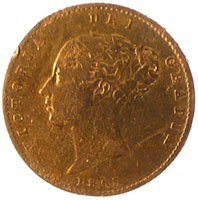
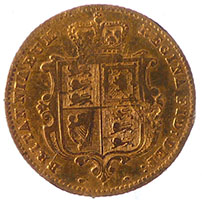
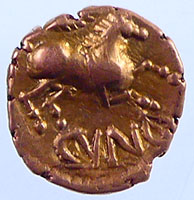
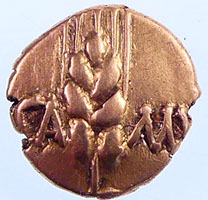
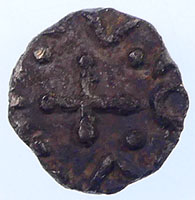
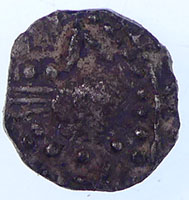
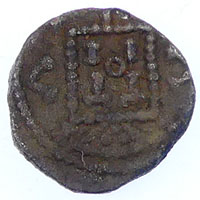
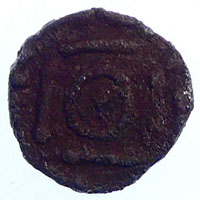

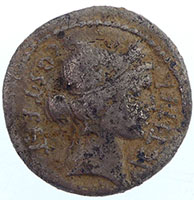
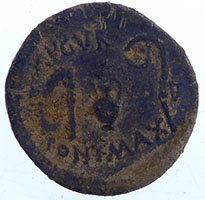
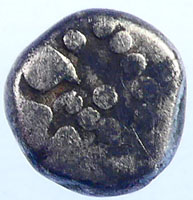
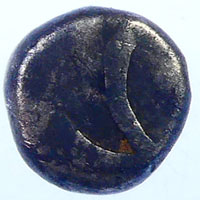
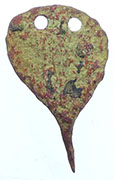
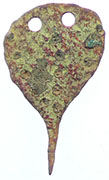
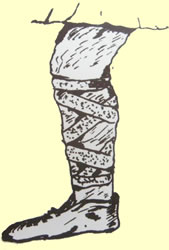
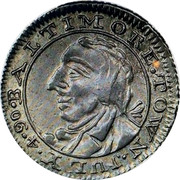
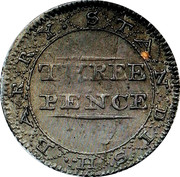
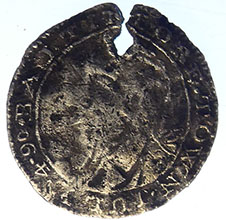
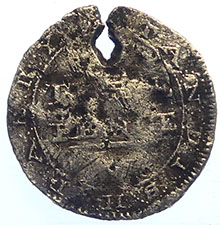
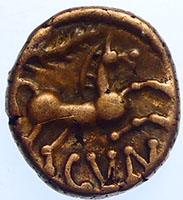
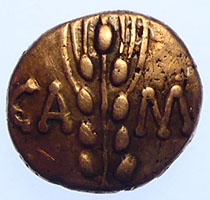
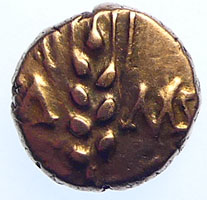
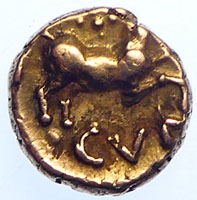
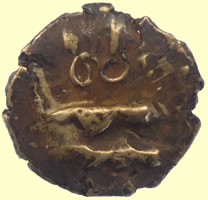
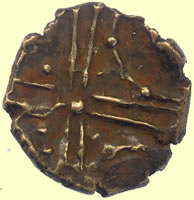
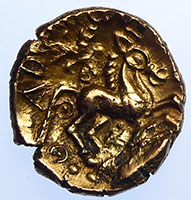
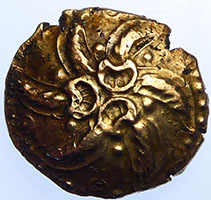
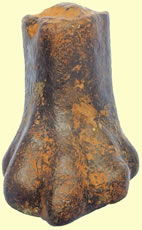
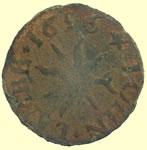
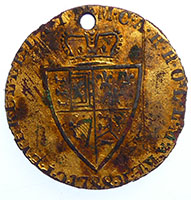

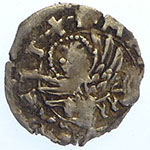
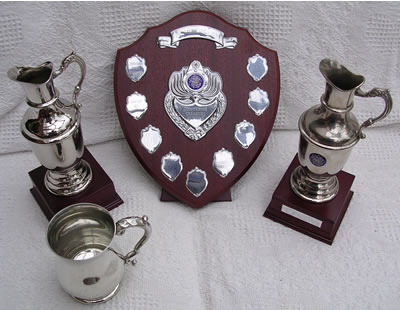
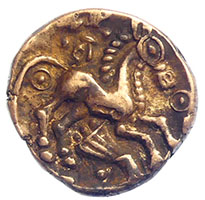
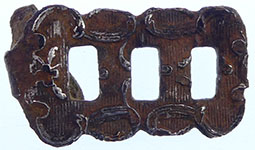
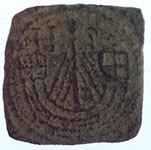
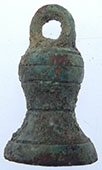
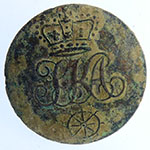
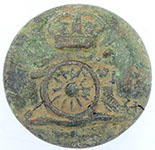
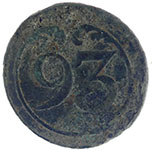
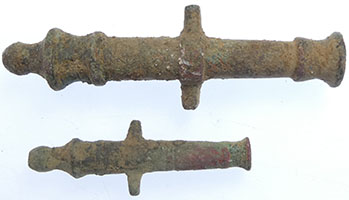
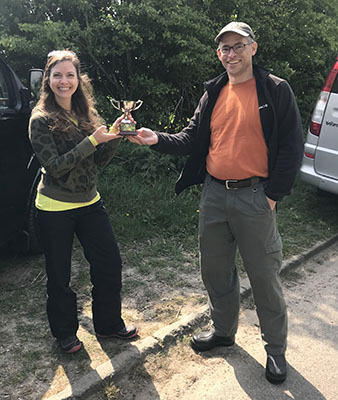
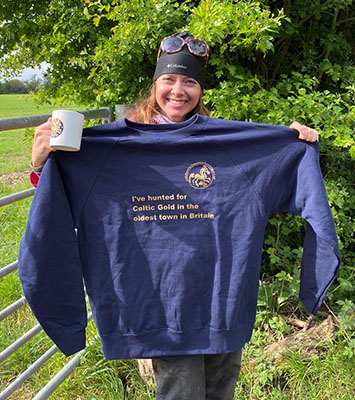
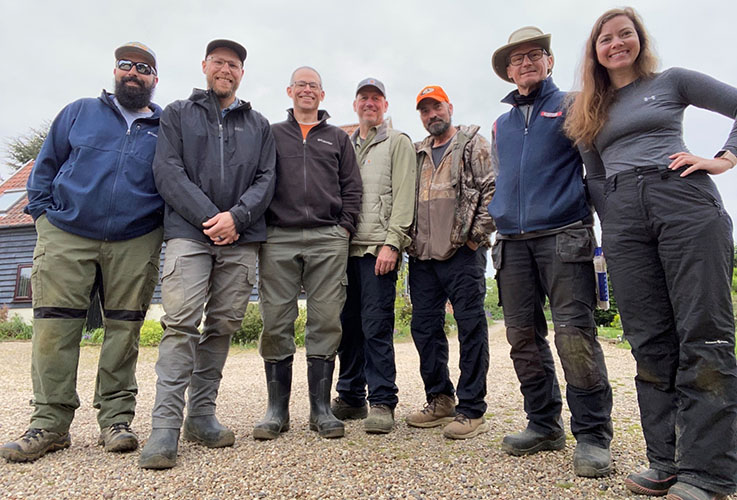

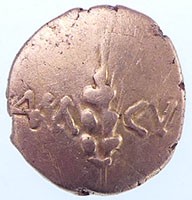

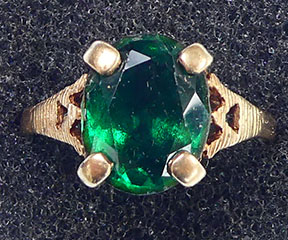

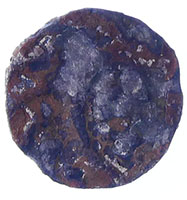
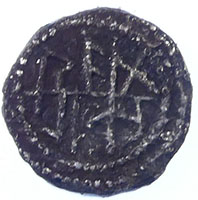
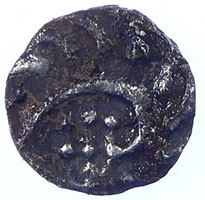
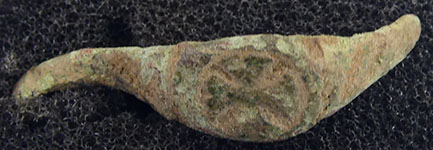
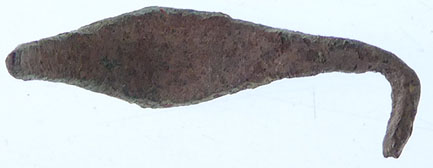
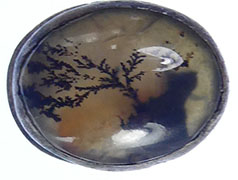
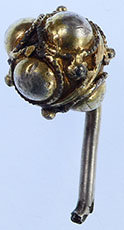
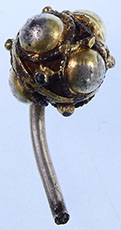
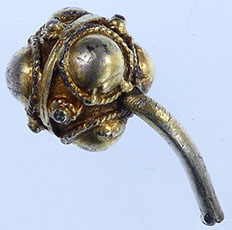
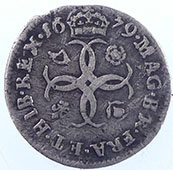
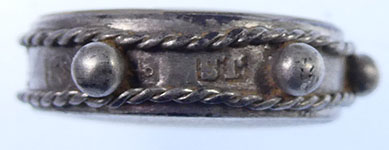
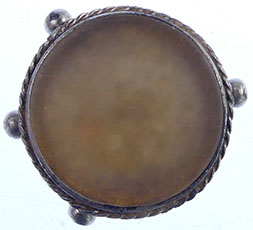
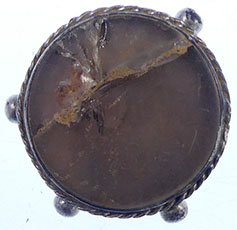
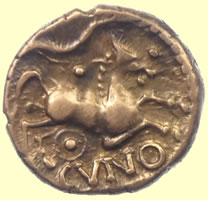
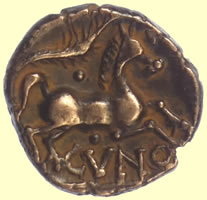
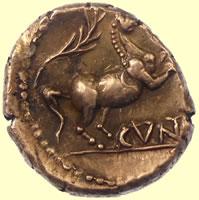
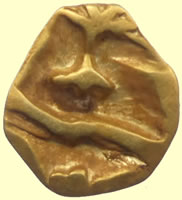
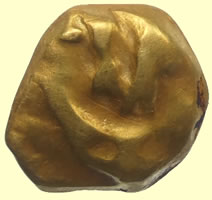
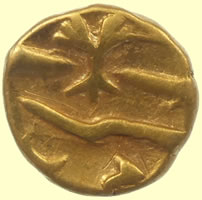
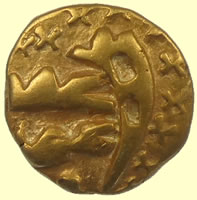
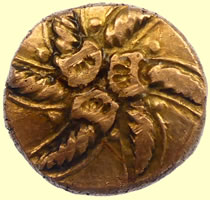
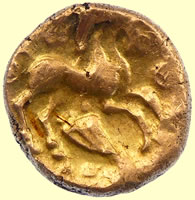

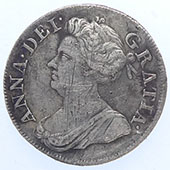
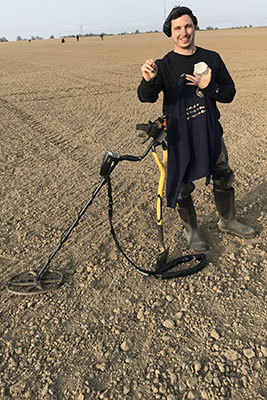
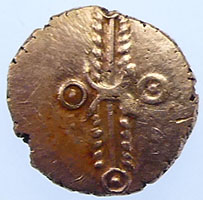

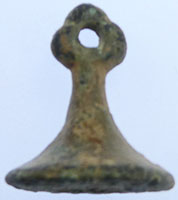
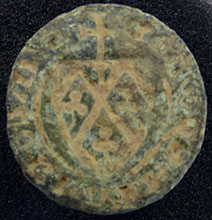

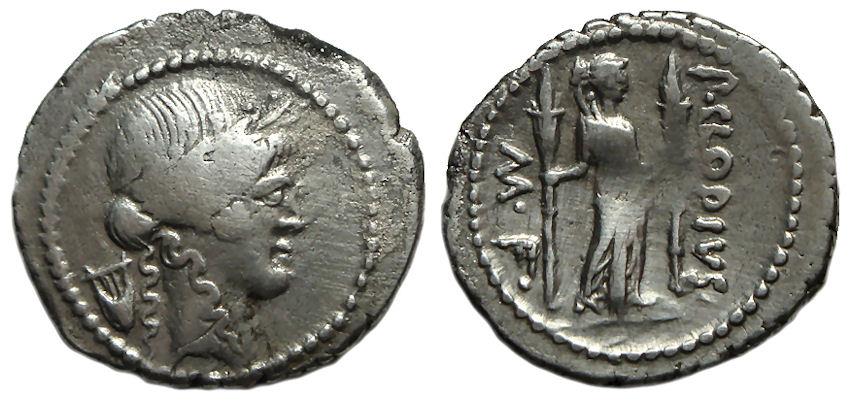
P. Clodius M.f. Turrinus ; AR Denarius ;42 BC. Rome mintOx: Laureate head of Apollo right; lyre behind
Rx: P.CLODIVS·M·F· Diana standing facing, with bow and quiver over shoulder, holding lighted torch in each hand
16th C stone cannon ball
c14th C Medieval heraldic shield pendant The shield bears the arms of England before c.1340 (Three Lions)
Roman protected loop terret 'Protected loop terrets are usually considered to be Roman and dating to the late first and second centuries AD'
Unknown ancient coin - I am not certain if this is Celtic as I cannot find it in any of my books. It looks similar to a South Western Uninscribed Hobbs 2795 but it is not the right weight or material. Sent for ID 3.44g, 18.66mm
Large Continent milled silver coin - researching it 6 Stuivers "Rijderschelling"
ObverseDate above crowned arms (eagle) dividing value Lettering: Translation: Silver money of the city of Deventer ReverseKnight on a striding horse Lettering: Concordia res parvae crescunt Translation:
Rare find c12thC Medieval heraldic shield type lead trade weight - hammer symbol
Mint silver spoon dug on pastureland - gilded bowl still exists 1873 Victoria silver spoon with full set of hall marks -London mint - Queens bust duty paid bust Maker SS - Sarah Snatt
1889 dated pendant - ATA Crookshank Cross for six month's abstinence Army Temperance Association (ATA) in 1893, which soon had over 70,000 members. The ATA also adopted the Soldiers’ Total Abstinence Association's motto of ‘Watch and Be Sober’. It provided temperance institutes for its members, sponsored a wide range of sporting activities and promoted regimental campaigns towards sobriety. It continued awarding medals, such as that for three years' temperance
Unknown mark at centre of reverse cross - No Bristol minted coins have any mark !! 1279 Edward 1st hammered silver penny Obv +EDWR ANGLE DNS hYB Rev CIVI/TAS/EBO/RACI - Bristol mint
|
||||||||||||||||
24th March 2022 More gold and monster relicsLoads more Celtic gold being found on old land and monster relics like the Bronze Age sickle below being found on new land. Chicago Ron found his 23rd gold coin, the 50BC Clacton type and then the Bronze Age sickle which is a mega rare find, very few are recorded on PAS and our first. Finding a Celtic silver coin is a lot rarer find around Colchester especially as the one found below is classed as 'Unique' in Ref ABC Chris Rudd 32.78. I have uploaded tons of other great silver and relic pictures to the latest finds page 2022 March finds
Trinovantes British G “Clacton” quarter, Hobbs 192 Celtic gold 1/4 stater 50BC - reported to museum Chris Rudd 23.41 Clacton de Jersey - Classed as scarce 1.053g,13.75mm
10-40 AD Cunobelin Celtic gold qtr stater - reported to museum Wild type - Corn ear without central stork CA to l, MV to r. Horse r, dashes for mane, branch above, CVN below VA2015 Classed as Scarce 1.366g, 10.89mm
45BC Addedomaros Celtic gold stater - reported to museum 5.5g, 16.67mm
10-40 AD Cunobelin Celtic silver unit - 0.69g - 13.9mm - sent to CCI for recording Bitch and snake CVN within wreath./Bitch r.,clutching snake in paws,CVN in ex. Classed as Unique in Ref ABC Chris Rudd 32.78 Previous CCI 03.0568
Great eyeball find - Roman mill stone
c 800 BC Incredibly rare Bronze Age socketed sickle
Unique ID: BERK-AC4A08
Medieval dagger pommel 35.8g, 25mm sq x 19.5mm H This late 13th/early 14th-century bronze dagger pommel is of the “crown style” in shape with a central incision for the tang.
|
||||||||||||||||
14th March 2022 - Hunts start and the first Celtic gold
Missouri Brandon holding his goodies. The guys have kicked off the 2nd half of the season with a bang. Mis Brandon popped a mint Celtic gold stater on his first day so he wins one of the Colchester Club sweatshirts and mug. He also picked up his silver cup for winning a 'pouch of the year' previous award before COVID. Can Rudy and Min Mindy also won a club sweatshirt for two beauty huge 1696 William III milled silver half crowns, these are rare as hens teeth to find. The guy are roaming around both old and new land with mixed results.One of our existing landowners was chatting to us out in the field and has offered us two new farms he owns for next Sept, not got the maps yet so don't know of their sizes.
Rudy and Mindy
New land gave up its first Saxon silver penny, Coenwulf 796 AD King of Mercia and a beauty Roman animal headed bronze fork. Old land gave up a couple of milled gold and the guys are digging some really cool buttons and seal matrix's. I have started a new finds page 2022 March finds and have uploaded a ton of great finds. I have a weeks worth of finds to upload yet.
45BC Addedomaros Celtic gold stater - reported to museum 4.84G,17.38mm
Roman 'animal faced 'socketed bronze fork - multiple holes in socket for rivets to attach wood handle
1853 Victoria milled gold half sovereign
Coenwulf 796 AD King of Mercia hammered silver penny 0.836g, 18.5 mm This is Coenwulf of Mercia, moneyer Lul. Better images and more information would certainly be very welcome. Sent to EMC for recording Thanks for these new images and the weight of the find, which I have recorded as EMC 2022.0104.
1808 George III milled gold 1/3 guinea 2.81g, 16.99mm
1640's Civil war cannon ball 0.96 Lbs - 1 pounder 1.9 inches diameter - 48.5 mm
Medieval seal ring Used by Edward Saddler
|
||||||||||||||||
8th Feb 2022 - Treasures and hoards - latest vid
Kick off starts on the 2nd March for the 2nd half of the season - drop me a mail if you want a hunt on the 5th March in the hotel option
I have received lots of approved export licenses and posted the list of names on the closed members forum. I have been liaising with Colchester museum to try and get the outstanding treasures and hoards moving again after COVID delays. Currently there is a huge back log at the Chelmsford Coroners court processing the inquests. I have ordered up 30 new quality sweatshirts in mixed L, XL and XXL sizes with the Colchester Club logo on it. I have also got a pile of Colchester Club mugs ready to give away as prizes for ' beauty finds'. These will not be available to buy as they will have to won by club member, all you have to do it pop a top find.
Disclaimed gold ring 11.22g, 25.64mm -previously reported as treasure to museum
Monster ancient gold ingot - 81.54g, 40.82mm L, 21.05mm W, 10.02mm T - reported as treasure to the museum - currently with Bronze Age curator at the British Museum I had a meeting last week with the Colchester FLO and dropped off the last of the treasures found during the first half of the season. I picked up some disclaimed Roman silver hoard coins and Wis Tim's huge gold ring find. He found that monster gold nugget above in the same area. That is currently with the Bronze Age curator at the British museum under investigation, it could be around 1000 BC depending on the gold composition. At current gold bullion value today it is about £3500 melt value , so a huge chunk of gold. I have uploaded a load more individual find pages with the first half of the seasons finds. Lots more to do yet. Chicago Ron just got around to posting his 2018 trip where his guys found a Saxon silver sceat hoard. 'Just finished part 1 of the Fall 2018 Barn hunt. Have 2 hours of video that will go into 3 30-minute episodes.
https://www.youtube.com/watch?v=TRXyDP3ff_Q&t=8s
|
||||||||||||||||
2nd Jan 2021
Still just banging away preparing export license applications and posting the missed finds from the bags to the bottom of the latest finds page. Oct 2012 finds page. Cal Gary had found a 2nd Roman prick spur I never saw when the hunts were underway. There was also a nice decorated Roman bronze knife pommel I cleaned up. I have been updating more of the individual finds pages below with finds from the 1st half of the season.
2nd-3rd C Roman prick spur
2nd-3rd C Roman prick spur
Roman decorated bronze dagger pommel
|
||||||||||||||||
10th Dec 2021 Updates and exportingI am busy preparing export licenses for all the pouches found in the first half of the season, find lists and pictures are posted on the closed members forum. I have also been updating the individual finds pages below with finds from the first half of the season. I have been adding any missed finds from the pouches I process onto the latest finds page Oct 2012 finds page.
|
||||||||||||||||
6th Nov 2021 Final day of the hunts and more amazing finds
The final hunt of the season is now finished until the guys return again in Feb. They found some truly remarkable finds last week from Stone age to modern and some real firsts for us. SC Jimbo found the best condition Celtic bronze unit I have ever seen, dug on a spoil tip on new land so that no oxygen got to it. He also eyeballed nearby the large Roman amphora jar handle, another first for us. Another remarkable find on a new pastureland site, that has just be ploughed for the first time, is what looks like a Roman fibular brooch with raw cut diamonds down its spine. It does not have the normal decay associated with a Roman find, again it was also protected from no oxygen which could account for its condition. I really cannot decide if is it that old so it will be an item for the museum to further investigate. I cannot find any examples of a diamond faced fibular brooch during my on-line my research. Mitch Terry on new land also found our first ever late bronze age chisel dating 1140 BC to 800 BC, beauty condition. We had three new sites to start for this September which we barely scratched as a lot of the fields were still in stubble which was to hard to hunt , when you have perfectly flat rolled fields to choose from it is a tough call to wack weed even on new land. Hopefully they will be ready for the start of the second half of the season from Feb. One of the rarest finds from last week is a monster American silver coin found near an old church that DC Nick managed to ID, one of only twenty examples in the world. It is a Maryland 3 pence and as rare as hens teeth. Cal Rich finished off the hunt with another full Celtic gold stater that is a mega crisp example and of high gold content. I have posted tons of great hammered silver and relics they found to the latest finds page.Oct 2012 finds page I still have a weeks worth of finds to upload yet and will be posting them shortly to the latest finds page.
45 BC to 25BC Addedomarus Celtic gold stater - Trinovantian tribe 5.52g, 18.37mm Addedomarus (sometimes written Aθθedomarus on coins) was a king of south-eastern Britain in the late 1st century BC.
10-40 AD Cunobelin celtic bronze unit recorded with CCI 2.7g,16mm Obv bearded head right Rev lion crouching r, above leaf r,below CAM inside quad ,o, pellet border Hobbs Ref 1993 CCI 21.0775
Roman amphora jar handle
Mega rare American coin - only 20 known Commemorative issue
Late bronze age chisel 1140 BC to 800 BC 12.31 g, 51mm L
11,000 BC flint scraper
Great relic made from a large silver coin 5 shillings 1892 silver
Roman fibular brooch with diamonds ?? Just checked on line and I cannot find any bronze fib brooches with diamonds
Bronze Eagle Symbolising Jupiter, God of Rome (Godmanchester’s Rectory Farm Villa complex)
Roman Eagle mount Description and comment: Small bronze eagle symbolising Jupiter or Zeus in Greek mythology, and patron god of ancient Rome. Romans worshipped him as Jupiter Optimus Maximus, the all-powerful and also god of the state who distributes laws and controls the realm. In Greek influenced tradition, Jupiter is brother to Neptune and Pluto, each presiding over one of the three realms of the universe, the sky, the water and the underworld. Alison Taylor, who was Cambridge County Archaeologist at the time of the English Heritage excavation at Rectory Farm in the 1990s, says the little eagle would probably have stood in a house temple, lararium, in Godmanchester’s Rectory Farm Villa complex (it has two villas). The eagle’s provenance is from a nearby gravel quarry. The villa farm estate at Rectory Farm is grand and may have been the residence of the most important and richest Roman in Godmanchester. Ms Taylor says ‘The eagle has a small projection at the base. It could be fitted to a long metal pole so that the figurine could be paraded or set in front of the altar in a small temple. A mini version of the eagle who would be carried in front of the Roman army by the aquilifer.
|
||||||||||||||||
13th Oct 2021 Brilliant 3rd week with more goldThe guys are having a great 3rd week of hunting and our 3 new sites have really started producing some great finds. Conditions are still challenging with the guys trying out some more stubble fields on the new land but other fields are now been ploughed and rolled making detecting easier. Celtic gold coins have been found on both the old and new land and some beautiful medieval groats are turning up on the new farms. I have uploaded loads more silver and widgets to the new Oct 2021 finds page with tons more yet to process. I have started a new Oct 2012 finds page to speed up load times.
C1351 Edward III hammered gold qtr noble ?? - totally taco'd 1.78g, 23mm
21st June - 28th May 1837 - London hall mark - Victoria duty paid bust , maker S.S (Samuel Strahan) 0.6g, 16mm dia
Celtic gold qtr stater - 11.11 mm,1.32g - Sent to museum for recording looks like a Northern Gold 'Linear type' - pellet over M Obv corn ear,to 1 CA, to r.MV Rev horse r ., pellet, leaf q & pellet, below CVN, pellet boarder va
Celtic gold qtr stater - 9.45 mm,1.26g - Sent to museum for recording Cunobelin wild type quarter, VA 1935, ABC 2813
1801 George III milled gold 1/3rd guinea 2.80g,17mm
|
||||||||||||||||
1st Oct 2021 - Great first week and more goldThe guys left last Saturday after a great first week of hunting and they got a great range of coins and relics. The new land is still unhuntable as the stubble and ground is still hard as a rock with the lack of rain. Florida Mitch came in early to join the new team that arrives this Saturday . However the dry ground did not stop Louisiana Sal popping a beauty 1760's George III gold love token and Florida Mitch finding one of the crispest pure gold Adde Celtic gold staters we have ever found, I think that is our 66th Adde Celtic tribe stater find since I started the club. Check out our Celtic gold page link below to see all of our Celtic gold coin finds. http://www.colchestertreasurehunting.co.uk/celticgoldcoins.html I have posted a load more of finds they made to the latest finds page.2021 Sept finds page
Florida Mitch (left) and Louisiana Sal holding their golds
45 BC to 25BC Addedomarus Celtic gold stater - Trinovantian tribe 5.43g, 19mm dia Addedomarus (sometimes written Aθθedomarus on coins) was a king of south-eastern Britain in the late 1st century BC.
1762 George III milled gold qtr guinea 16mm, 2.04g
No idea what this is really ?? I thought it had IE on the back like a 17thC lead token but not sure as it could be a cross.
|
||||||||||||||||
19th Sept 2021 - First Celtic gold after COVID
45 BC to 25BC Addedomarus Celtic gold stater - Trinovantian tribe 5.55g, 17mm dia Addedomarus (sometimes written Aθθedomarus on coins) was a king of south-eastern Britain in the late 1st century BC.
Pictures sent from the field of a 600 AD Saxon silver sceat
It is great to be back out there searching after the COVID break even with the limited numbers of members returning this season. However it did not stop Virginia Phill from popping our first Celtic gold of the season, a beauty 45 BC Addedomarus stater. Mo Dan also popped our first early medieval find, a crisp Saxon silver sceat which I have not taken proper pictures of yet. A couple of very interesting Roman silver tribute pennies have also been found and Mark Lehman has produced a great write up on them below. Dry weather has hampered us searching all our new land yet as they are still in stubble and baked rock hard with our lack of rain, later teams might luck out if they get ploughed. However the guys are hitting our older land and finding a great range of relics and coins which I have started posting to new finds page, check it out on the link below.
|
||||||||||||||||
|
||||||||||||||||
More extended news page click here Archived news pages below Brad's gold medieval gold statue English Saxon gold coin found Double Cunobelin Celtic gold Chicago Reid's Roman gold ring NS Andy's Saxon strap end Medieval Iconic gold ring find First Celtic gold of the season Celtic Woad cosmetic grinder and Jeff Roman Pecker find Viking silver strap end- Rare Roman silver coin finds Great Saxon silver finds Offa Rex - Coenwulf - Hammered gold Villa Dig - Roman gold - Celtic gold hoard found Can Majos and Mass Bills gold rings - Texas Dave's hammered gold Roman gold coin - Mass Bruce's axe hoard 2000BC Axe - Boston Buds Saxon gold michelle@colchestertreasurehunting.co.uk
|
||||||||||||||||