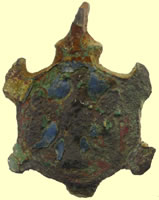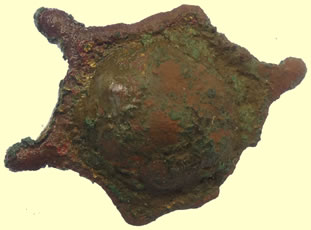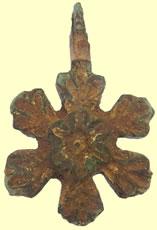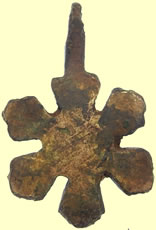
Metal detecting holidays in England with the World's most successful metal detecting club.20 years plus.
Twinned with Midwest Historical Research Society USA.
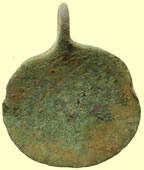
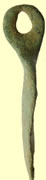
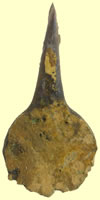
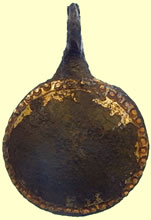
Harness mounts, pendants and decorations
|
|||
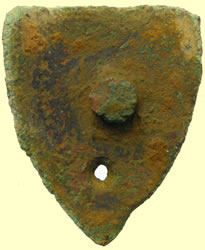
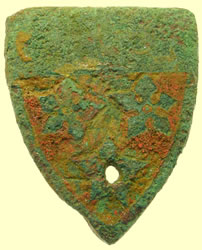
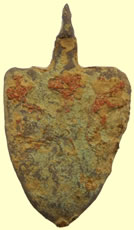
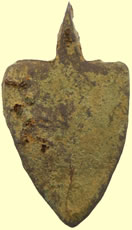
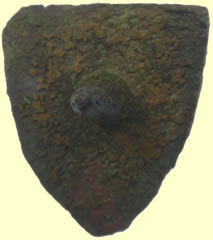
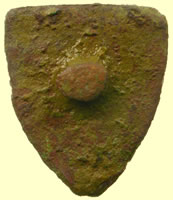
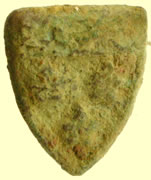
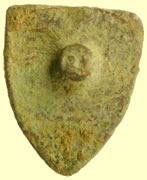
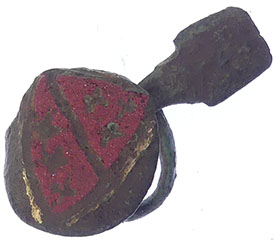
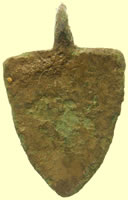
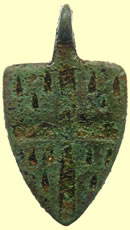
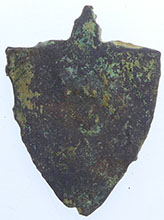
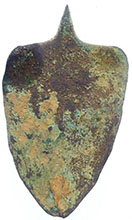
Harness PendantsCoats of arms on copper alloy, with gold, silver and enamel depending on the colours of the arms – they depicted the allegiance of the rider. However, a small proportion were used for decorative purposes only to show status.
|
|||
|
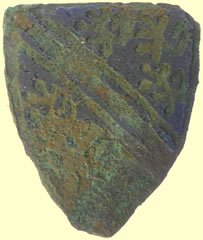
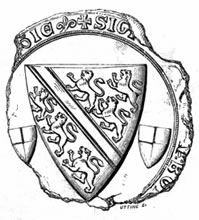
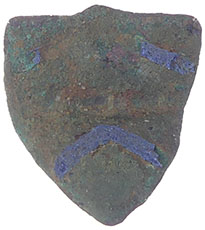
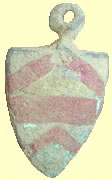
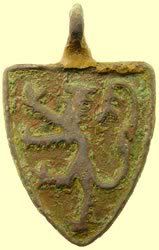
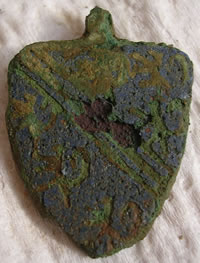
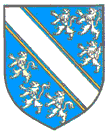
What an amazing find - Early Medieval harness pendant with rampant lions and cross banding design in blue and white enamel work This appears to be the arms of the Earl of Hereford 14thC - 30.13 mm L x 22.31 mm W
|
|||
Medieval heraldic shield pendant John de Warenne (June 1286 - June 1347), 7th Earl of Surrey, was the last Warenne earl of Surrey.
Medieval heraldic shield pendant 13th C Magna Carta Norfolk Suffolk Heraldry Coat of arms
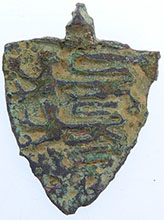
Medieval heraldic harness pendant The shield bears the arms of England before c.1340 (Three Lions)
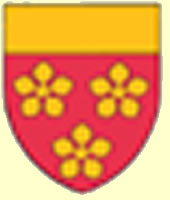
13thC heraldic shield mount - Gules three cinquefoils a chief or Cal Jim our club's heraldic expert has researched it and found the owner, Guillaume de Moncarvel
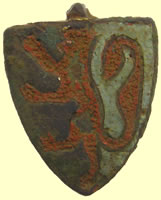
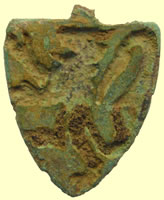
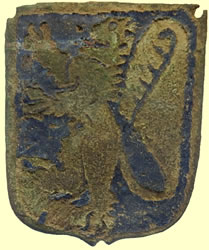
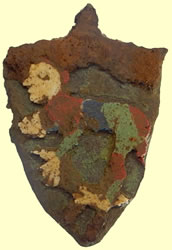
14thC Heraldic medieval shield pendant - rampant Lion with enameled inlay I would describe this shield as: " Per Pale or and vert overall a lion rampant gules". Cal Jim
Early Medieval harness pendant with rampant lions and cross banding design in blue and white enamel work This appears to be the arms of the Earl of Hereford 14thC Humphrey De Bohun
Medieval heraldic enamelled shield pendant
|
|||
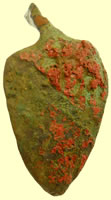 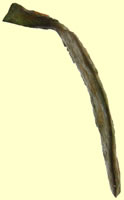  |
|||
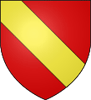
Medieval heraldic shield pendant - yellow and red enamelling remaining - Cal Jim just ID'd the family Jean de Chalon "le sage" (1190-1267) |
|||
   |
|||
|
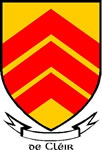
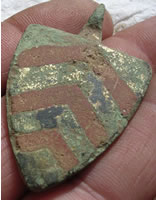
Medieval enameled gold and red harness shield pendant. 45.53mm L 28.70mm w 'Found more on De Clare-- seems there was a Gilbert "The Red" (red haired) de Clare & son of Richard-- was one of the Earls of Gloucstershire (7th , I think) and had a whole bunch of other lands in 20 counties in Eng and Ireland. Joined the Montfort rebellion against the king. Married a jaon (Johanna) daughter of Edward II Longshanks , she was born in Acre - the site in the holy land where the Crusaders / Templar's lost it all . He was born in 1243'. |
|||
Robert FitzWalter - 2 enameled 13thC heraldic shield pendants Or a fess between two chevrons gules 6Robert le FizWater
Small mount
In 1206 King John refused to agree to Pope Innocent III's choice of Archbishop of Canterbury after his own choice had been rejected. Because the king still challenged the pope, in 1207 he was excommunicated (not allowed to be a member of the church) and an 'interdict' was issued by the pope. Because of the interdict, the churches closed and their bells fell silent. With the church doors locked, services could not take place. The dead had to be buried in fields instead of in holy ground. People could not marry in church and baptisms had to be carried out in church porches. King John's excommunication also let off the barons from their oath of loyalty to him. Because they might rebel against him at any time, King John acted quickly against anyone who looked as though they might be disloyal. We know from the Medieval Chronicles that Robert FitzWalter, the 3rd Lord of Dunmow Castle, was accused of plotting to kill King John during a rebellion in 1212. The rebellion was quickly quashed. FitzWalter was outlawed and fled to France. Eventually in 1213, the Pope told King Philip of France that he could invade England and King John finally agreed to the Pope's terms including his choice of Archbishop. Robert FitzWalter returned home and, with the other Barons, he made peace with King John. This did not last long, however. It was found that FitzWalter was still plotting against the King and urging for the government to be reformed. Because of this, his home in London, the Castle of Baynard, was almost entirely destroyed Taxes, during King John's reign, were very high and became ever higher. In 1214, King John left England to fight a war in France. To make sure the army had enough supplies, the king's Regent of the time, Peter de Roches, raised a very big tax on the barons. The war was lost and, as in the story, on the Kings' return, Robert FitzWalter called a meeting at Bury St Edmunds Abbey where it was agreed that the King must agree to the laws and freedoms granted to the barons in the charter of Henry 1st, or they would declare war on him. Robert FitzWalter led the Baron's army under the title "Marshal of the Army of God and the Holy Church." In the end, the King was forced to sign the Magna Carta at Runnymede on 15th June 1215. Several copies of the Magna Carta documents still exist. Magna Carta means 'great charter'. To abide by Magna Carta, the King had to agree to certain laws and accept that his will was not above the law. It was not the first written document that put limits on the power of a king, but it was the first that was backed up by a council (of 25 barons) to try and make sure the king obeyed. It included a paragraph that said 'no free man shall be seized, imprisoned, disposed, outlawed, exiled or ruined in any way ? 'except by the lawful judgment of his peers?' John did not sign the document willingly and never intended to keep to it. In September 1215, just a few months after signing the charter, King John sent a message to the Pope asking him to annul the charter. The Pope agreed and excommunicated the barons that had signed it. As the fighting started again, FitzWalter slipped off to France and offered Prince Louis the English throne. Both Scottish and French armies invaded England. After fighting off the Scottish forces, King John's army changed direction to East Anglia, intending to quash the baron's rebellion. As his troops crossed the river Ouse on 11th October, they were caught by the rising tide and the crown Jewels sank into the Wash. Just a few days later, on 19th October, King John died at Newark. At the time of his death, the French flag flew over East Anglia. However, a French King did not rule England as no bishop would crown Prince Louis and many of the barons, who had rebelled against King John, now gave their support to his nine-year-old son Henry.
At the start of his reign, while he was away from England, he left Geoffrey FitzPeter in control as 'Regent'. He was a harsh man and did not worry about demanding heavy taxes and gave the local sheriffs a free hand to collect these by any means. He became very unpopular. Like most Kings of the time John was ruthless. It was also claimed that King John killed his nephew, Arthur, in 1206, to make sure of the future of the throne. However, history may not have been very fair to King John. At this time the historians, or chroniclers, were mainly monks. These monks would have been in sympathy with the parties that King John was arguing with - that is the church and the rich estate owners (barons). King John's reign was far from all bad for the country. Many towns such as Cambridge, Ipswich, King's Lynn and Norwich grew rich as they were given 'charters' and encouraged to govern themselves. The towns benefited from changes in the way taxes were paid and could get income from taxing market traders entering the town. R. Turner 1994 argued that John "...had intelligence, administrative ability and he was good at planning military campaigns. However, too many personality flaws held him back". Unfortunately for King John, no king of the time could have run the country successfully without the support of the powerful Barons and Noblemen. What of Matilda's supposed murder and her links with Robin Hood?
Matilda, his daughter, may indeed have been beautiful but very little is known of her life and death. After the rebellion of 1212, when FitzWalter and his family fled to France, it seems that he made his actions seem good, by saying the king was after his daughter and was plotting to kill his son-in-law. King John was not a pleasant man, but many historians do not believe FitzWalter's story. Robert FitzWalter had a shady past. He had surrendered Vaudreuil in France to the French king in 1203 under suspicious circumstances. So, whether what he did was because of King John's interest in his daughter or came from a wish for more power is difficult to say. The character of Maid Marion, like Friar Tuck, is not in the early ballads of Robin Hood. The character of Maid Marion probably came from an early French Pastoral romance ??he shepherd and shepherdess Robin and Marion'. Parts of this story and the Robin Hood stories probably merged and Maid Marion became Robin Hood's true love in the later versions of the legend. It is in Anthony Munday's Elizabethan "Huntingdon" plays; written in the 17th century that Marian becomes an alias employed by Matilda FitzWalter. A popular romance at the time was the legend of King John pursuing Matilda, daughter of Robert FitzWalter. Robin Hood or Robin of Loxley, if such a person existed, was not a well-known Nobleman but most likely a wronged landowner, fighting to regain his family seat. Dunmow Priory in Essex is said to be the resting-place of Robin Hood's Maid Marian. All that remains of Dunmow Priory is the present church of Dunmow; the south aisle of what was once a much larger building. However the story lives on, along with the many other tales of Robin Hood; and King John's jewels and royal regalia remain a treasure trove still to be found.
|
|||
Medieval heraldic enameled shield mount - Claret coloured fesse - 3 rosettes on red enameled background
He is Moncarvel Gules three cinquefoils or Jim
Medieval enamelled heraldic mount - looks like a spur fitting - red and gilding remains
|
|||
14thC Heraldic medieval shield pendant - rampant Lion with enameled inlay - researching the family Ok, as of yet, I only find one shield with the red rampant lion, and the background with split colors. Now, since we see a bit of gold on the back and on the top, I think it is safe to assume that the left side of this shield was gold. Cal Jim
Stunning 13thC Heraldic shield pendant - Blue enamelled bird with red feathers
Stunning large enamelled medieval heraldic shield mount - 40mm high The lion rampant was arguably the most common heraldic charge used during the 14th century, and an azure lion rampant or was used by a large number of families, but Cherry (1991, 21) suggests that these arms were assigned to Sir Hugh Neville of Essex in the Glovers Roll of c.1255, so it may be related to a branch of the Neville family. Cherry in Saunders (1991) illustrates harness pendants with a similar lion rampant in form and with blue enamel, on pages 24-25, figs.1-2, nos.3 & 10, which date from the 14th century. Read (2001) illustrates a similar harness pendant with a charge of a red enamelled lion rampant facing left on a gilt field, on page 53, fig.32, no.411, which is dated from the 14th century. Similar harness pendants with azure enamel on the lion and not in the background are recorded in NMS-ACA62C and IHS-899BD4
C13thC Medieval heraldic harness pendant - researching owner
Medieval heraldic harness mount 0 red, blue and green enamel remains
c14th C Medieval heraldic shield pendant The shield bears the arms of England before c.1340 (Three Lions) Cast copper alloy harness pendant with red enamel heraldic decoration. The pendant is shield shaped and has an oval suspension loop at the middle of the top edge (the pendant was suspended point downwards). The decoration is of three lions on a field of red enamel (gules, three lions passant guardant or).These were the Arms of England until they were combined with those of France by Edward III in 1340.
Medieval harness shield pendant
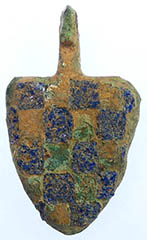
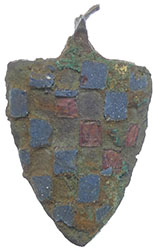
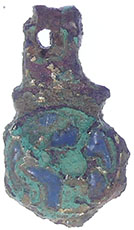
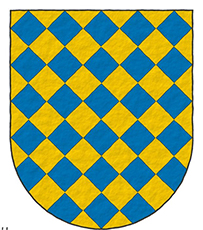
Large 13thC heraldic enamelled shield pendant - chequy type -researching owner Azure and Gules colours - some Or Previous PAS record Unique ID: IHS-1CD2A4 Arms: Gatton, de or Warenne, de There appear to be microscopic traces of dark blue in some surface pits, suggesting that the original tinctures were "chequy a metal and azure". Depending on whether the metal was gold or silver, the arms represented may have been those of Gatton or Warenne. Both Hamo de Gatton senior, and his supposed son, Hamo junior, used chequy argent and azure as their arms. Hamo senior, of Gatton in Surrey, served as sheriff of Kent in 1286; he was summoned to serve against the Welsh in 1277 and 1282, dying in 1292. Hamo junior was summoned to serve against the Scots in 1298, and died two years later, leaving a minor, Edmund, as his heir. The second, and perhaps most likely, possibility for the owners of these arms are the Warenne earls of Surrey who used chequy or and azure. The Warennes were arguably the wealthiest landowners in England in the twelfth and thirteenth centuries; their arms are thought to be some of the oldest known. The family's stature and wealth derived, to some degree, from their royal ancestry via one of Geoffrey of Anjou's illegitimate sons; Geoffrey was the father of Henry II, the founder of the Plantagenet dynasty. The Warennes' royal links were reinforced by the marriage of John de Warenne with Alice de Luisgnan, Henry III's half sister. John de Warenne generally served Edward I well: he was summoned to serve against the Welsh in 1277 and 1294, and against the Scots in 1291, 1297 and 1300, becoming 'Keeper of Scotland' in 1291. Warenne died in 1304, leaving a grandson, also John, as his heir.
Medieval heraldic enamelled harness pendant
Stunning 14thC enamelled harness pendants
Stunning gilded Viking type bronze harness pendant
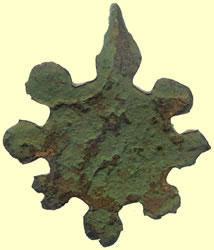
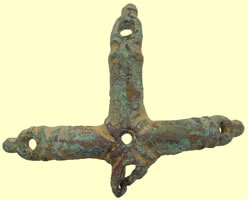
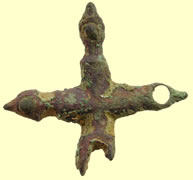
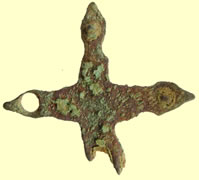
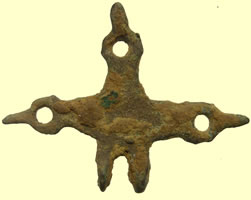
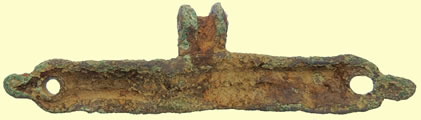
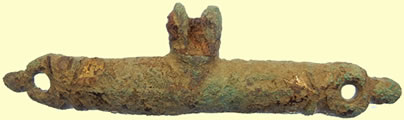
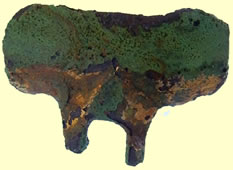
A cast copper alloy harness suspension mount of medieval date. The mount has four arms, one of which is perforated and folded over to form hinges. The remaining three arms have circular rivet holes which are preceeded by a collar groove. Each of the arms tapers towards the end and terminates in slight knops. The reverse is slightly concaved and undecorated. Traces of gilding survive on the obverse of the mount. The metal has a dark brownish-green patina and is worn. The mount is 39.98mm long, 32.46mm wide, 4.05mm thick and weighs 6.63g. Notes: 235ChronologyBroad period: MEDIEVAL Dimensions and weightLength: 39.98 mm Materials and constructionPrimary material: Copper alloy Manufacture method: Cast Completeness: Incomplete Surface Treatment: Gilded
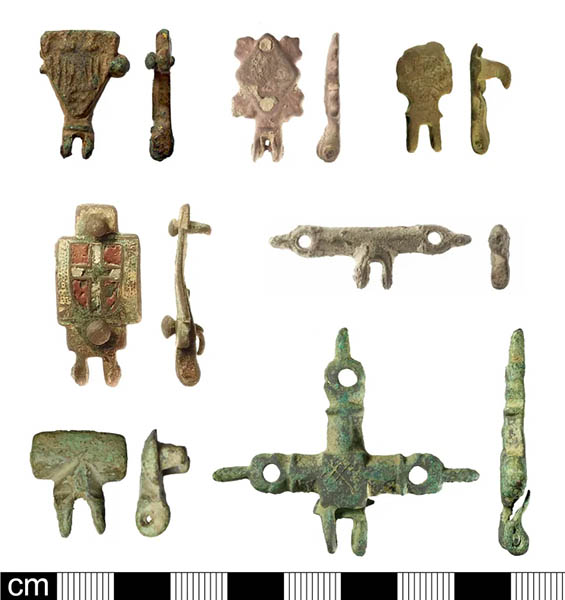
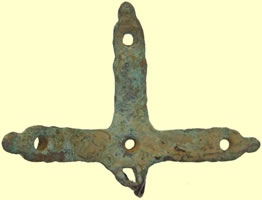
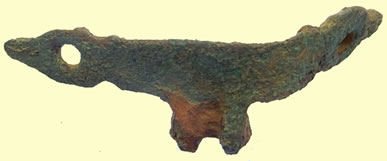
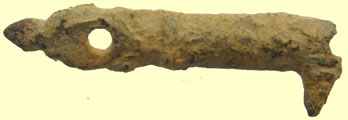
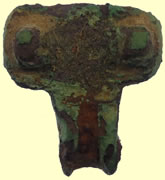
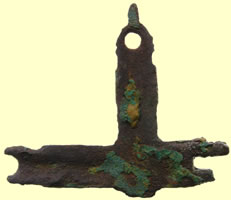
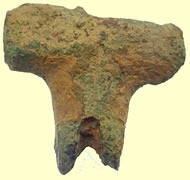
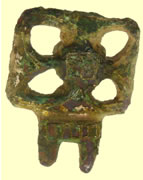
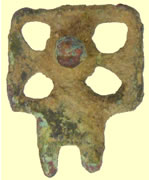
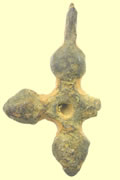
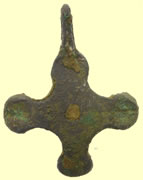
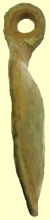
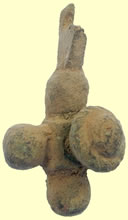
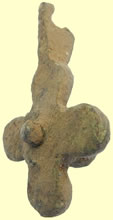
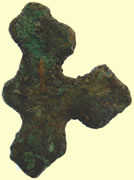
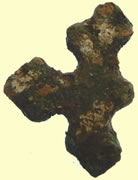
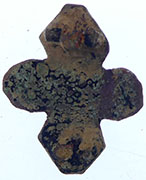
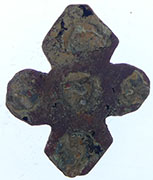
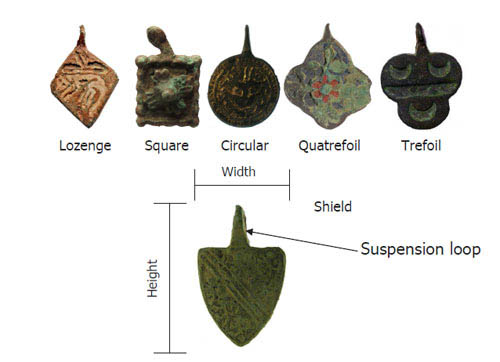
Medieval harness pendant hangers Sample medieval pendant suspension mounts: shield shaped (top left, SWYOR-6686DC); lozengiform (top centre, IOW-C49762); shell shaped (top right, SUR-189A43); square with tabs, heraldic (middle left, IOW-A5351B); bar (middle right, IOW-A9F343); T shaped (bottom left, WREX-643C29); cruciform (bottom right, BH-D2EF33).
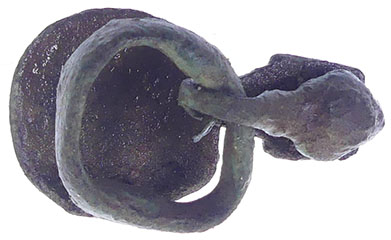
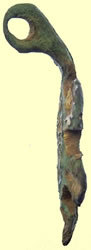
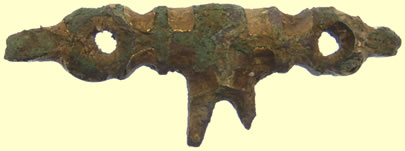
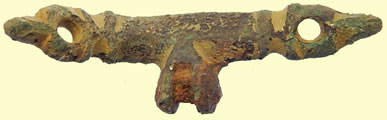
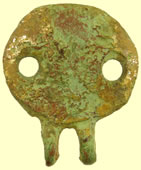
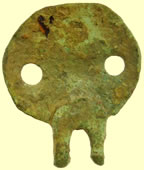
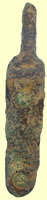
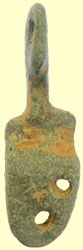
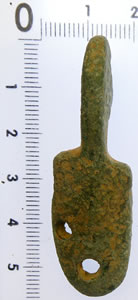
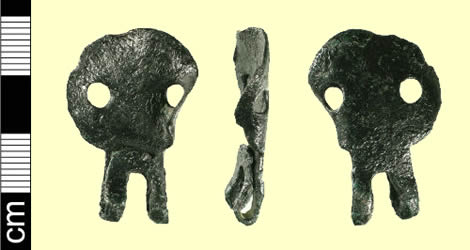
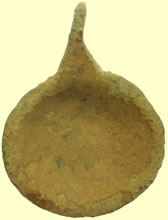
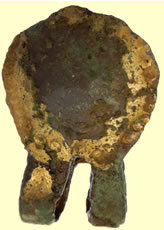
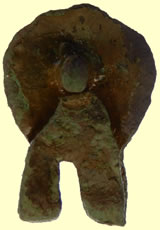
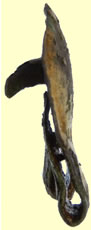
A copper-alloy harness pendant suspension mount of Medieval (12th to 14th century) date. The upper part of the mount consists of a circular plate containing two circular rivet holes. Protruding from the base is a tab with central slot. This tab has been folded backwards, creating a loop for the now-missing axis bar. The object is slightly bent and corroded. It measures 34mm long, 22.6mm wide and 5.1mm thick. The weight is 5.46g.
Class: Harness pendant suspension Subsequent actionsCurrent location of find: With finder ChronologyBroad period: MEDIEVAL
|
|||
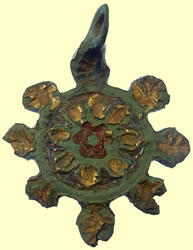
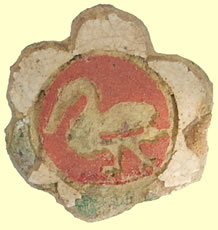
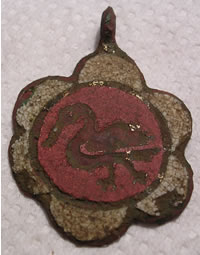
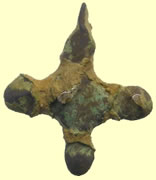
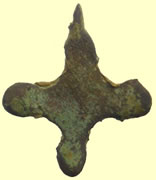
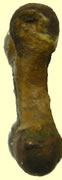
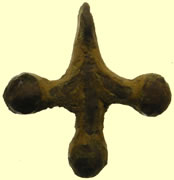
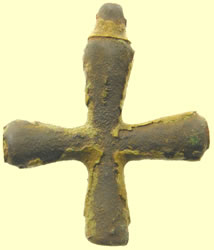
Medieval bronze horse harness pendant, dating to the 13th - 14th century. It is decorated with a swinging cross, within a quatrefoil frame. Such a pendant would have been attached to the elaborate leather harness, of a knightly steed. |
|||
|
|
||
  |
   |
||
  |
  |
||
  |
  |
||
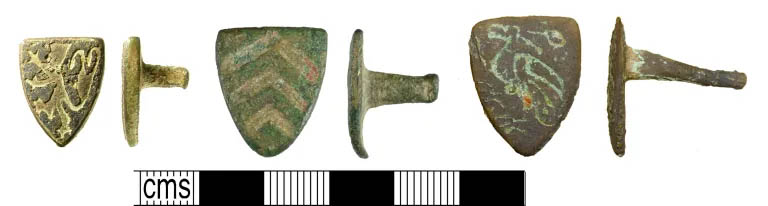
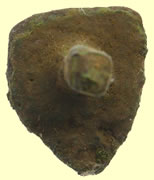
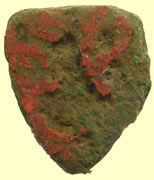
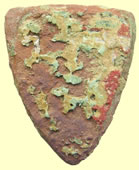
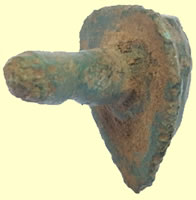
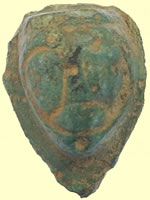
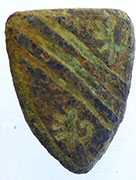
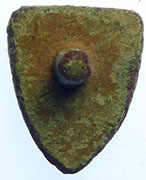
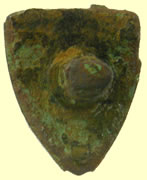
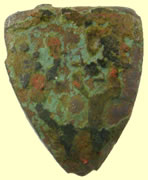
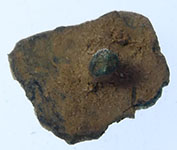
Medieval harness mounts – small, shield-shaped studs: uncertain arms (left, IOW-30D686); de Clare arms (centre, SF-D0D5AD), probably not armorial (SOM-055AF7). A group of chunky mounts differ from most medieval strap-fittings in having integral rivets. It is not impossible that these mounts were also fixed to things other than horse-harness, but they are so similar to pendants in their construction, decoration and so on that it seems likely that this was their primary use. |
|||
  |
  |
||
   |
|||
  |
  |
||
  |
  |
||
  |
  |
||
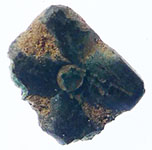
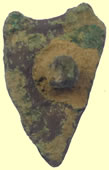
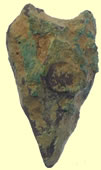
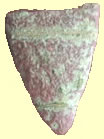
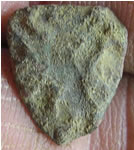
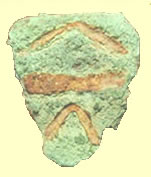
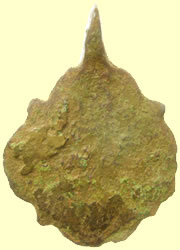
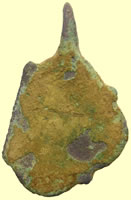
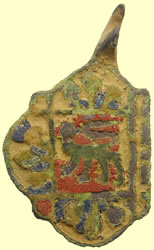
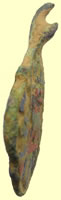
Medieval quadrefoil pendants |
|||
   |
   |
||
Medieval heraldic pendant - two silvered eagle heads facing outwards on red enamel - griffin in blue square enamelled back ground
|
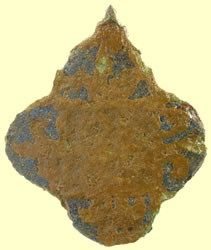
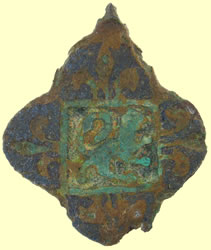
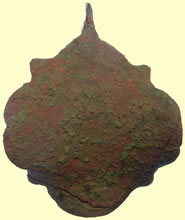
Medieval heraldic quadrefoil hanging pendant - animal facing left | ||
  |
  |
||
Medieval heraldic quadrefoil hanging pendant - Lion passant facing right |
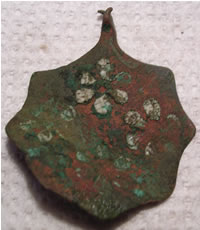
Medieval heraldic quadrefoil hanging pendant |
||
   |
 |
||
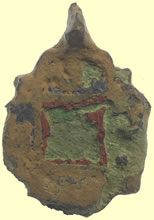
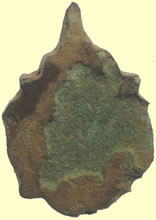
| Medieval heraldic quadrefoil hanging pendant - red and blue enamel remains | Medieval hanging pendant | ||
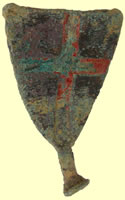
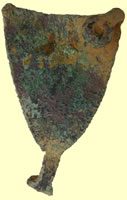
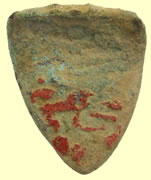
Mixed medieval pendants
|
|||
  |
  |
||
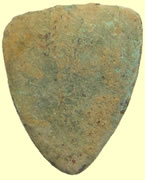
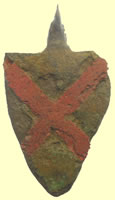
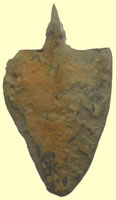
13thC Heraldic shield pendant |
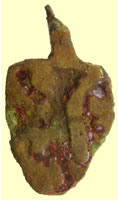
13thC Heraldic shield pendant - red and green enamel remains |
||
|
   |
||
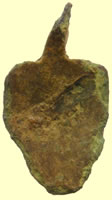
Enameled mount |
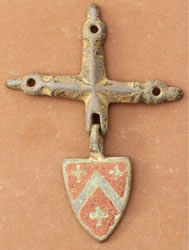
13thC heraldic shield pendant - prancing lion facing left - red enamel and traces of gold | ||
  |
   |
||
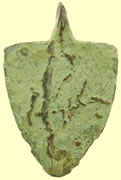
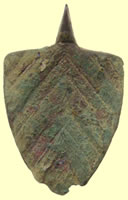
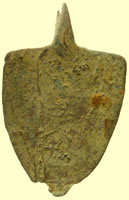
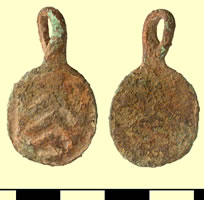
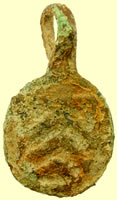
| Medieval heraldic shield pendant | Medieval heraldic shield pendant | ||
  |
  |
||
| Medieval heraldic shield pendant | Medieval heraldic harness pendant - some gilding remains | ||
 |
 |
 |
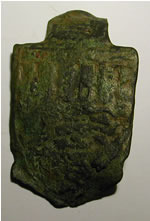 |
| Medieval heraldic shield pendant | Medieval pendant | Medieval pendant |
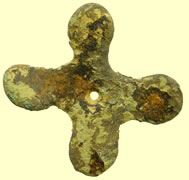
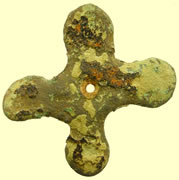
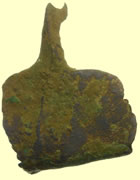
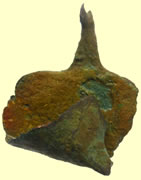
Heraldic
pendant with traces of red, blue and green enamelling remaining, First
Earl of Lancaster, Edmond " Crunchback" , son of King Henry
III. Around the end of `1200's |
  |
  |
||
Medieval pendant |
Medieval heraldic shield pendant | ||
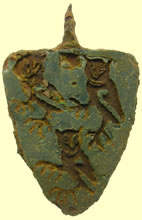
Medieval heraldic shield pendant A medieval copper alloy horse harness pendant, shield-shaped, red enamel survives. Gules three owls ?Or/Argent. Possibly for Sir Richard BERMINGHAM, Gules three huits (owles in margin, L) Argent (Papworth 1874, rep. 1985, p. 329). Inscription: Gules three owls ?Or/Argent.
Medieval heraldic shield pendant - red enamelled eagle
Medieval Harness Pendant Circa 14th century AD. Copper-alloy. A shield-shaped heraldic pendant displaying three lions on a field of red enamel. The arms of England. |
|||
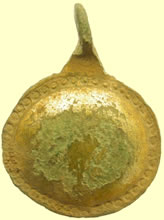
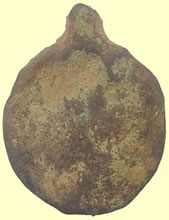
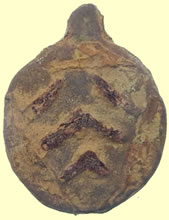
Early medieval gilded and circle decorated harness pendant |
|||
  |
  |
||
Medieval enamelled heraldic pendant - De Clare 'Found more on De Clare-- seems there was a Gilbert "The Red" (red haired) de Clare & son of Richard-- was one of the Earls of Gloucstershire (7th , I think) and had a whole bunch of other lands in 20 counties in Eng and Ireland. Joined the Montfort rebellion against the king. Married a jaon (Johanna) daughter of Edward II Longshanks , she was born in Acre - the site in the holy land where the Crusaders / Templar's lost it all . He was born in 1243'. |
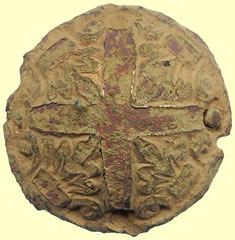
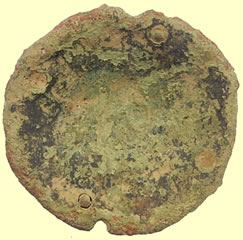
Large medieval decorated and gilded shield boss or mount - 4 rivet fixings Obv - Cross with 4 Fleur de Lis in qtrs |
||
| Medieval heraldic shield pendant - looks like 3 right prancing lions in shield | |||
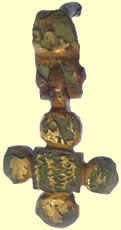
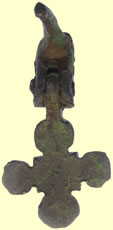
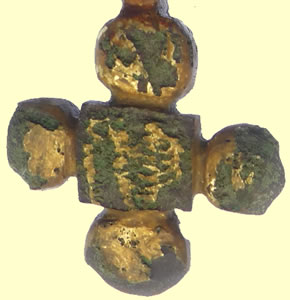
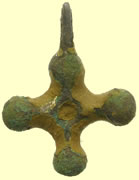
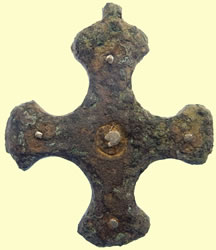
Simply stunning chunky early medieval gold decorated bronze cross pendant - The gold pin decoration is very interesting as it probably riveted a central inlaid emblem which is now missing- one for the museum to play with 18.76g, 41.18 mm L x 6.73 mm T
|
|||
  |
  |
||
| Medieval enamelled heraldic pendant | Medieval heraldic medieval shield pendant - rampant Lion with enameled inlay " Per Pale or and vert overall a lion rampant gules".
Cal Jim |
||
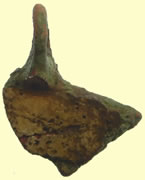 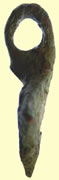 |
 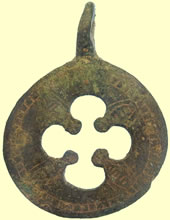  |
||
| Medieval shield pendant | Medieval harness pendant | ||
 |
|||
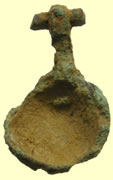   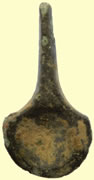 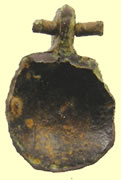 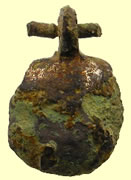 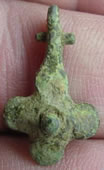 |
|||
| Medieval harness pendant | |||
  |
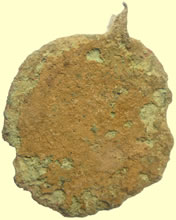 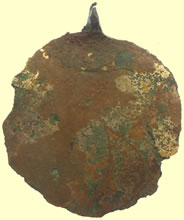 |
||
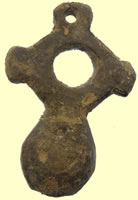
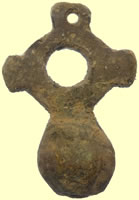
| Early medieval gilded harness pendant | Early medieval gilded harness pendant | ||
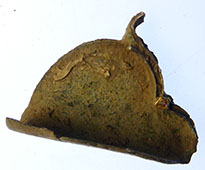 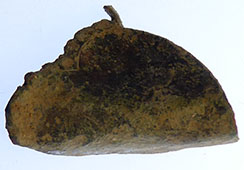 |
  |
||
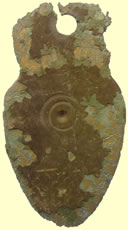
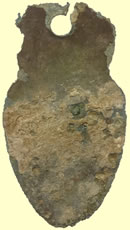
| Medieval gilded harness pendant | Medieval pendant | ||
  |
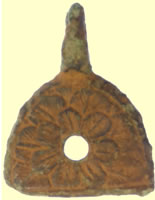   |
||
| Saxon gilded pendant - circule design | Medieval harness pendant | ||
   |
  |
||
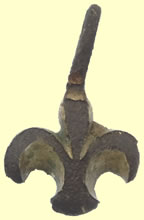
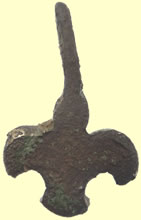
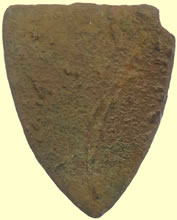
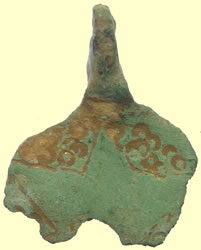
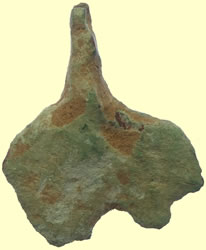
| Medieval gilded Fleur de Lis harness pendant | Medieval heraldic shield pendant | ||
 |
  |
||
Excellent medieval religious mount - gold and red enamell remain |
Early Medieval gilded harness pendant - circule design | ||
  |
  |
||
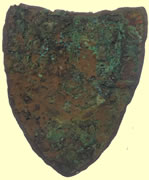
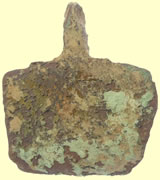
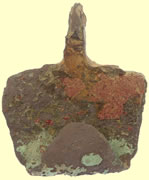
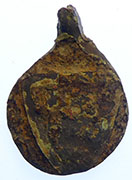
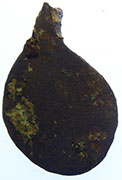
| Medieval enamelled heraldic shield pendant | Medieval enamelled heraldic shield pendant | ||
  |
  |
||
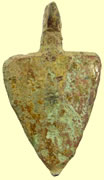
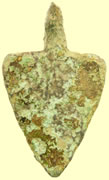
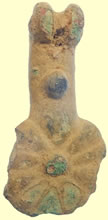
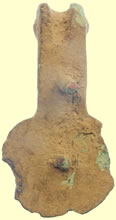
| Medieval enamelled heraldic shield pendant | Medieval enamelled harness pendant | ||
  |
|
||
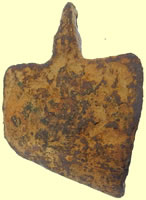
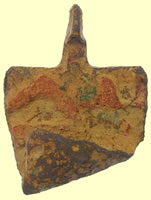
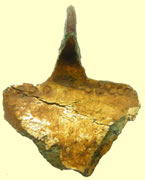
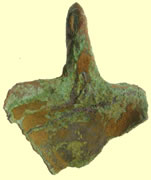
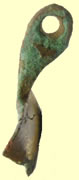
| Medieval pendant | Eary medieval gilded harness pendant hanger - circle design | ||
  |
   |
||
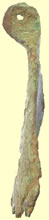
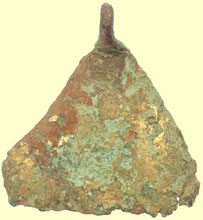
| Medieval enamelled heraldic shield pendant | Medieval pendant | ||
   |
|||
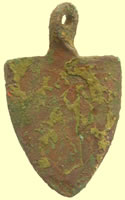
| Medieval pendant | |||
  |
  |
||
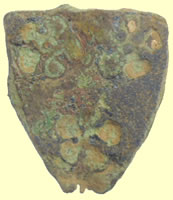
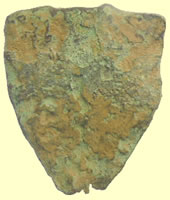
| Medieval enamelled heraldic shield pendant | Medieval enamelled heraldic shield pendant | ||
  |
  |
||
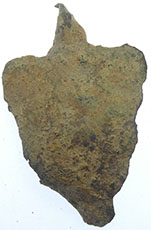
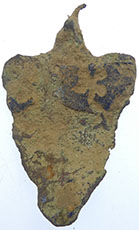
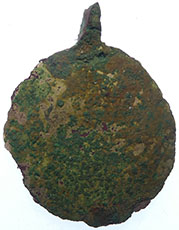
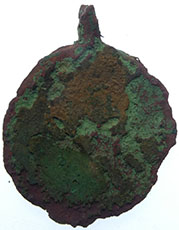
| Medieval enamelled heraldic shield pendant | Early medieval gilded harness pendant | ||
  |
|
||
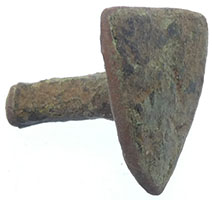
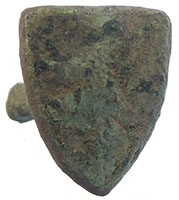
| Medieval heradlic shield mount | Enamelled medieval harness pendant | ||
Medieval heraldic enamelled shield mount - Thomas de Werblintone ? Lozengy azure and Or ? Lozengy azure and argent ?
|
|||
 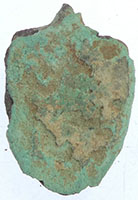 |
  |
||
| Medieval heraldic enamelled harness pendant | Medieval heradlic shield mount | ||
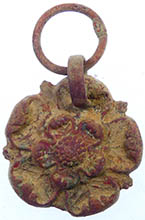
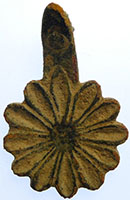
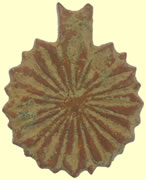
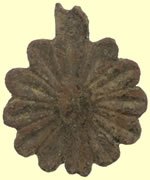
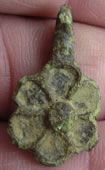
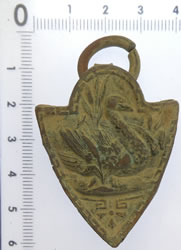
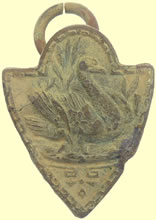
Post medieval pendants
|
|||
  |
  |
||
  |
 |
||
  |
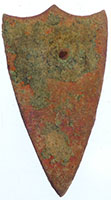 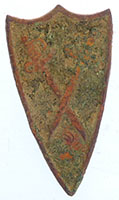 |
||
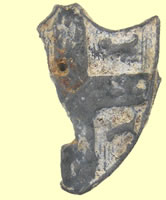 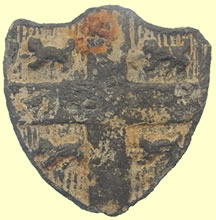   |
|||
  |
  |
||
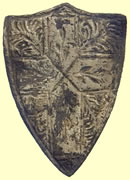 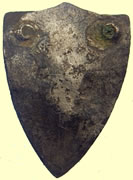 |
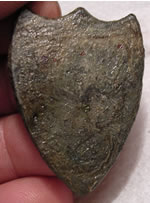  |
||
|
|||
|
|||
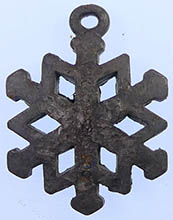
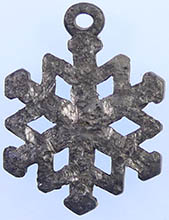
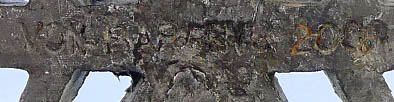
Very interesting heavy thick 6 point star pendant - military - not Id'd it yet Inscription reads VON RAP.PEN 2029 ?? |
|||
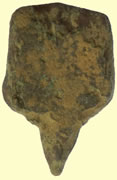
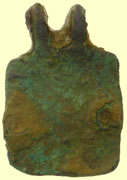
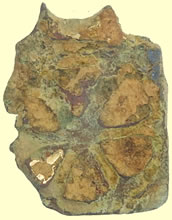
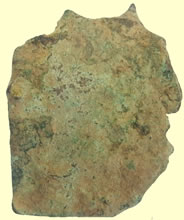
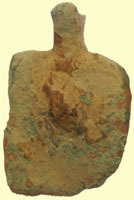
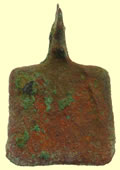
Rectangular typeA small medieval gilt copper alloy harness pendant, probably dating to the 12th to 14th centuries. The object consists of a square plate with a thin rectangular cross-section. |
|||
 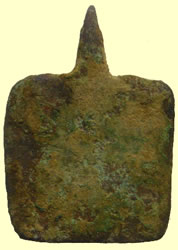 |
  |
||
  |
  |
||
  |
  |
||
  |
  |
||
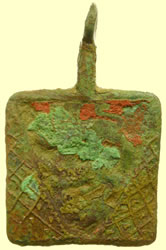 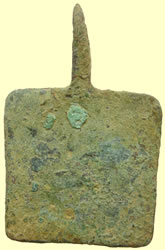 |
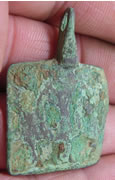 |
||
| 13thC Heraldic harness pendant - shield with 3 prancing lions facing left - red enamel and gilding | |||
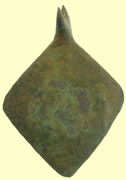
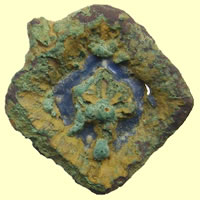
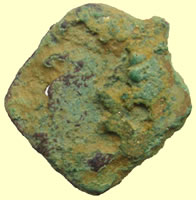
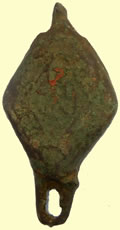
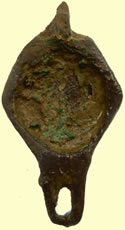
Lozenge type |
|||
 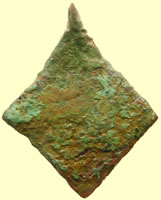 |
  |
||
  |
|||
| Medieval gilded enameled harness pendant - Red enameled lion prancing left in lozenge - green enamel and gilding remains | |||
 |
|||

 Humphrey
De Bohun
Humphrey
De Bohun